 Hacker Cinema
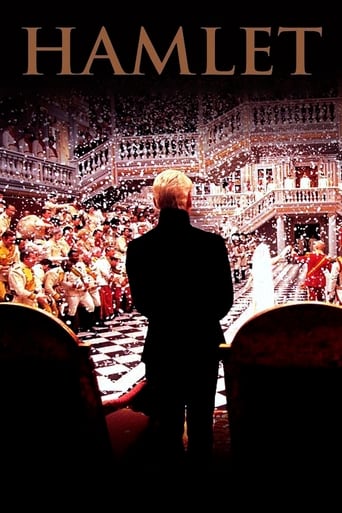
Hamlet
1996 · Film · 242 min
Directed by Kenneth Branagh
Hamlet, Prince of Denmark, returns home to find his father murdered and his mother now marrying the murderer... his uncle. Meanwhile, war is brewing.
4 positive3 negative1 mixed18 neutralfrom 26 commenters
Where to watch
No streaming data for this title.

28 comments on Hacker News
> As long as you're not directly copying things like characters, dialogue, etc., it's not a derivative work.
Define a character. Is another lion prince named Simba the same character? Is a lion prince named something else the same character? Is a human prince named Simba the same character? I'm no copyright expert, but from what I know about fanfics and fanart, the US courts ruled all of these violate copyright (you can win a book plagiarism lawsuit even if the other book has all names changed and every sentence went through thesaurus). The few cases where the obvious stand-in was ruled non-infringing were on the grounds of parody exception, not on the grounds of being non-derivative.
The many Titanic movies are not each other's derivatives because none of them are based on each other. They're all based on the historical events directly. Now, if the original Titanic was fictional like the famous Nautilus, then yes, the 1997 movie would be derivative, but not of the 1979 series.
Which part of Harry Potter is directly rips off Teen Witch the way Lion King directly rips off Hamlet? I'm not familiar with that movie.
You might enjoy the movie "Young Sherlock Holmes" than. If you haven't seen it, great fun. And it ends in a fencing scene like Hamlet.
> Even as a standalone metaphor it's confused: humans don't dream about sheep!
Sure but its meaningful in the context of the story. The main character does literally dream of an electric sheep (in the book this is a metaphor being able to love, and by extension be human)
I don't think title metaphors have to be standalone. Very few books are like that. Its like criticizing Hamlet because if you don't read the play you have no idea who hamlet is.
> In any case, we're now thinking about sheep, not a noir detective story set in a declining post-biosphere world.
That's the theme of the movie not the book.
> You're asking it as a moral question,
I'm asking questions about what I could only interpret as a moral proposition.
> I honestly care about the end result.
You're applying normative criteria to evaluate something, whether it is the initial action or the consequences that proceed from it.
But before we event get to normative evaluations, I'm trying to understand what the substantive difference in the two things you're comparing are. It's seems bizarre to consider something to be the cultural inheritance of humanity as a whole, and then complain about certain humans adapting it to cultural activities that you for some reason don't like.
> And the end result seems to be going in the same direction as movies, as the range gets narrower in terms of what's produced, and everything is a sequel, remix, reshuffle of previous work.
The vast majority of all creative work has always been a remix or reshuffle of previous work. When we were younger, and were being exposed to things for the first time, everything seemed novel and original.
Maybe the first time you saw The Lion King, it didn't occur to you that it's essentially a rework of Hamlet, or you never counted how many episodes of Star Trek: The Next Generation were based on recycled plots from Homer. But this has always been going on. Sure, it's a little bit more explicit today when you are dealing with big Hollywood productions, since Hollywood has built up a large library of its own output to remix and reshuffle, and people do want to see new iterations of the specific things they grew up with.
Still, amidst all that, there's a lot of novel independent creative work being produced. By definition, though, that's all going to be found in niches and not in the mass market -- but it's always been that way.
We've also had a massive shift in the specific media people use to express creativity, thanks to the internet. Lots of small-scale independent work just gets self-published on YouTube these days, and doesn't filter through the mass-market studios and publishers anymore. Consider that the increased ability for independent creators to work outside the legacy media has the effect of also limiting the amount of novel work that the legacy media have access to.
> There are exceptions, but their percentage is far lower than in previous decades.
And vastly higher than in previous previous decades. Compare modern movies to the stuff that Hollywood was putting out during the era of the Hays code. After the collapse of those restrictions, there was an outpouring of pent-up creativity that lasted a few decades. Maybe modern movies aren't as distinct or creative as the ones from the '70s, '80s, and '90s, but try comparing them to the average film from the '40s, '50s, or '60s.
That might get you pretty far in court, actually. You'd have to be pretty close in terms of the sequence of events, character names, etc. Especially considering how many Disney movies are based on pre-existing stories, if you were, to, say, make a movie featuring talking animals that more or less followed the plot of Hamlet, you would have a decent chance of prevailing in court, given the resources to fight their army of lawyers.
Guess you don’t like Hamlet either then, which is a reinvented Amleth.
I struggle to see how the gp here can still be so bothered by the “feminist” film that did just a couple hundred thousand in the box office five years ago personally. That is a tiny drop in the bucket.
I've read about half of them, seen more than a bunch live and in film, enough to annoy the kids.
Some versions I like:
* David Tenant's Much Ado about Nothing. Kenneth Branagh's is good too, and easier to find.
* Branagh's Henry V.
* I actually like Mel Gibson's Hamlet.
* Almost any Midsummer's Night Dream. It's just a fun play, even kids can enjoy it.
* The Coen Bros' Macbeth on AppleTV
* Rosencrantx and Guildenstern are Dead. Hamlet, but exits are entrances.
Dan Harmon is a great storyteller, but this system, and indeed all these "universal story structure" systems all either:
1) Are so generic they doesn't say anything useful (like a horoscope which fit everybody).
2) Only matches some select stories.
A good litmus test is if the system is compatible with Shakespeare's Hamlet. Given how populuar and well-regarded the play have been for centuries, we can safely say it is the system rather than the play which is at fault if the play does not fit the system.
We immediately notice that Hamlet does not "Then return to their familiar situation", since he dies (along with most other characters). Also it is not really clear he have changed. Indeed, the genre of tragedy does not match the requirement to have the protagonist safely home in the end, so Romeo and Juliet is also out. These are not obscure examples, these are the most famous and well-regarded plays in the English language.
TV-shows like Rick and Morty does tend to have the characters safely home in the end, so they can start in the "zone of comfort" in the next episode. On the other hand the characters rarely change. Even if they learn some lessons, they have usually forgotten them by start of the next episode. So I'm unsure if the system even matches Harmons own writing.
> It really depends on how you define a machine.
Sure, and depending on how you define a computer program hamlet is a computer program, and depending on your definition of Christmas movie, Planet of the Apes is Christmas movie.
The point is that for typical and sane definitions cells aren’t machines, hamlet isn’t a program and planet of the apes isn’t a Christmas movie (But Die Hard is).
My high school English teacher said the speech was parental cliches. (Which supports the interpretation that it's showing the hypocrisy of all the adults around troubled Hamlet).
"Those friends thou hast, and their adoption tried, Grapple them to thy soul with hoops of steel; But do not dull thy palm with entertainment Of each new-hatch'd, unfledged comrade..."
http://shakespeare.mit.edu/hamlet/hamlet.1.3.html
But maybe I'm just influenced by childhood memories of that Gilligan's Island episode where the castaways all stage an opera of Hamlet. (Where Polonius is played as a doddering parent by the Skipper...)
https://www.youtube.com/watch?v=bXId5jOTxdg
Absolutely. Those are both extraordinary films.
The Polanski Macbeth is a bit dated for my tastes, but it's definitely a great film. Some day (perhaps even now) those Branagh films are going to feel dates as well, which kinda scares me. (None of the adaptations he made after that were extraordinary, either. His Hamlet is certainly important, but I wouldn't recommend it to a new Shakespeare fan.)
> The problem is that this is very much a rear-view mirror perspective.
But analyzing art is a rear-view mirror perspective. History judges what is great art. Not the present audience.
You ramble about the same thing over and over again - human condition. Sure. That's a part of it. Silly pop music, formulaic romance novels, etc all have that. But what separates actual great art from entertaining art is it's affect on language/culture/thought/etc.
Whether marvel movies will be considered great art has nothing to do with "human condition" or how it emotionally affected the audience today. It'll be judged in time by its affect on language/culture/thought/etc. Any silly drone can create art that touches on the human condition. That's the easy part.
Shakespeare's hamlet, romeo and juliet, etc aren't considered great art because it "moves" you.
> and great art taps into this unchanging set of idealized forms.
No. Practically every art does.
But how many films are essentially just Hamlet or The Taming of the Shrew?
Would they stop making new Marvel movies? Largely yes as presumably someone would have already made todays Marvel movies 30 years ago. They tried rehashing the Spider Man origin story several times and people got bored because they had already seen it. I am not saying nobody would do movie adoptions, just that they would be made closer to the original content.
Consider every Shakespeare movie is in the public domain and sure every few years someone remakes Hamlet, but it isn’t a new major movie every year like clockwork. And nobody would be trying to stretch the Hobbit across three Movies to maximize profit.
It's a bit of an itch I've been scratching for a few years.
Most especially, given two or more instances of what you suspect to be the same or a substantively similar work, how can you assess this in a robust and format-independent manner, programmatically?
For works with well-formed metadata, this isn't an issue.
For identical duplicate copies of the same file, a hash is effective.
But for the circumstance most often encountered in reality --- different forms and formats derived from different sources but containing substantially the same work --- there is no simple solution of which I'm aware. As examples, say you have a reference document The Reference Document.
How do I determine that:
- An ACSCII-only textfile
- Markdown, HTML, DocBook, and LaTeX sources
- PDF, MS Word (which version), PS, DJVU, ePub, or .mobi files (sling any other formats you care to mention).
- Hardbound and paperback physical copies
- Scans made from the same or different physical books or instances, versions, and/or translations.
- Audiobooks based on a work. By the same or different readers.
- Dramatic performances, films, video series, comic-book adaptations, etc., of a work. (Say: Hamlet or Romeo and Juliet. What is the relationship to "West Side Story" (and which version), or Pyramus and Thisbe?)
- Re-typed or OCRed text
... all refer to the same work?
How do you define "work"?
How do you define "differences between works"?
How do you distinguish intentional, accidental, and incidental differences between instances? (Say: translations, errata, corrections, additions for the one, transcription errors for the second, and scanning or rendering artefacts for the third.)
If you're working in an environment in which instances of works come from different sources with different provenances, these questions arise. At least some of these questions are prominent in library science itself. It's the technical mapping of digitised formats I'm focusing on most closely, so the physical instantiations aren't as critical here, though the presumption is that these could be converted to some machine-readable form.
In bibliographic / library science, the term is "work, expression, manifestation"
https://www.loc.gov/marc/marbi/2011/2011-dp03.html
This is also exacerbated by the didactic approaches people like OP (and most teachers) take, about why the students -should- enjoy Shakespeare.
I bet I would have liked it more in school (rather than much afterwards, when I became acquainted with the Shakespeare Tavern in Atlanta, though props to the teachers who set up field trips there) if instead a teacher had said "Okay guys. We're watching a movie today. It's going to be a little hard to understand, but don't worry too much about it; it's less the words and more the performance. There won't be a test, but we will discuss it afterwards. I'll have subtitles on to help with understanding; it's kind of interesting to see how English has changed since this was made, but how it still has themes you'll recognize, and can still be emotionally charged even when you don't fully understand everything being said. It may be a little challenging given that, but I think you're up to it", and then put on Branagh's Hamlet.
I do both. And movies. If it’s not worth reading or watching a second or third time, it wasn’t worth it the first time. I read Hamlet every year or two. It gets me every time. I’ve seen the Maltese Falcon about five times, and it still amazes me with its perfection each time. I’ve seen the Pickle Rick episode of Rick and Morty three times, and I fully intend to watch it three more times. Pure genius. Anything good has layers and details that usually can not be fully appreciated the first time through. Do you only listen to a song you like once?
What we get today is the anti-hero. The inheritors of the tragedy are movies like Fight Club, The Godfather, etc. Shakespeare used the anti-hero very well: Richard III, Othello, and Macbeth all resonate very strongly with modern audiences.
I'm not entirely sure I'd put Hamlet in that category, and really points up what you're saying. Hamlet is tragic in the Greek sense, a concept we rarely get today. Hamlet's more heroic than anti-heroic: he's got a body count but he's not vicious about it. He at least wants to be a good person -- not just by his own lights but by what he thinks others expect of him. (Unlike the more vicious anti-heroes, who don't see themselves as evil but aren't averse to having other people see them that way.)
The interesting point underlying this rather silly discussion:
The genre of "tragedy" is nearly forgotten today, while having been extremely popular throughout history.
In most modern fiction we have a hero which is supposed to be virtuous and sympathetic ("likable"). If they have flaws they will either be insignificant and endearing, or the hero will overcome these flaws through the arc of the story. The villain is the antagonist in the story, and is a bad guy, but is eventually defeated by the hero through the strengths of the personal qualities of the hero. The hero is often a "nobody" in the beginning but achieves some respect and status at the end, while the bad guy gets justly punished for his evil deeds.
A tragedy is a completely different genre. In a tragedy we have a great person which is brought down by destiny and their own flaws. The protagonist of a tragedy is not supposed to an ideal of virtue. The author of the article seem surprised that Hamlet is not idealized but rather acts both stupidly and unfairly. But look at the other tragedy protagonists - Richard II, Richard III, Macbeth, Othello, King Lear, Romeo and Juliet. They are all severely flawed and make disastrous mistakes. We are supposed to empathize with these characters, not sympathize.
On the other hand the they are not getting "justly punished" either. Richard III is clearly an evil man, but Othello is the manipulated victim. Romeo and Juliet is not doomed through their own actions but through the destiny of their families which they are not able to escape. And poor Ofelia. A tragedy is not moralistic in the way that everyone get their just desert - destiny can be completely unfair.
So how could anyone designate Hamlet as the "worst villain" compared to someone like Macbeth or Richard III? Probably because the writer thinks Macbeth and Richard III are supposed to be "bad guys" but Hamlet is supposed to be a "good guy", and his flaws therefore are less acceptable. E.g if a bad guy is sexist, we consider it consistent with his badness, but if a good guy is sexist we consider it as if the author condones sexism, which is more problematic. But this is reading Hamlet if it was a Hollywood movie, not a tragedy.
So why have tragedy gone out of fashion to the extend that a person writing about Shakespeare does not understand the genre? Probably because in modern society we believe in meritocracy and the pursuit of happiness. We are supposed to take control over our own destiny, and so cannot believe that we have flaws which cannot be overcome, or in an unfair destiny which we have no say over.
She (Caroline Kennedy-Pipe ) - and the Hamlet thing is mostly colour but it did send me down a clickhole of tracking down 'Stalin hated Hamlet'. That the "story of bloody intrigue in the court of Denmark supposedly reminded Stalin of Kremlin politics" sounded a bit off to me - after all, Stalin famously commissioned Eisenstein's Ivan the Terrible.
It seems around 1940 or so Stalin did stop a Hamlet production (based on a Pasternak translation) at the Moscow Art Theatre. Recollections vary somewhat but the most plausible explanation is that Stalin felt Hamlet (the character) was weak. Completing the circle, the Russian wikipedia page on Ivan The Terrible has a quote from a Central Committee critique of a different movie in which, as an aside, part two of Eisenstein's film is criticized as ahistorical and as portraying Ivan as too weak "like Hamlet". The second part was not screened until some years after Stalin and Eisenstein's deaths. Hamlet itself was not staged in the last 12 years of Stalin's life.
> Hamlet talks about the human condition and coming to terms with your own mortality.
So? Who cares? I don't think I ever read Hamlet. It was just entertainment, no different than a television show today.
But in retrospect SIL isn't that bad of a movie, and has remained one of the few comedies that has won the best picture, and at least a token atonement for the many brilliant Shakespeare adaptations over the years (Including Kenneth Branagh's 1996 Hamlet) which the Academy has failed to adequately recognize.
Try watching a movie version - I really like Branagh's Hamlet and I never expected to (long though)
Try Cassandra from the tragedy Agamemnon by Aeschylus. Her psychological torment from having her true predictions go unheeded is every bit as relatable as Hamlet's suffering for very similar reasons. She is an incredibly sympathetic person, not at all a sitcom character.
Greek literature doesn’t have THAT much feelings. There’s nothing remotely in the realm of Hamlet in all of ancient greek lit to my knowledge. Calling it a return is a massive stretch of the Euripides example—I always viewed his works more like sitcoms than having any realistic human characters.
Much of what he writes about requires, I think, experience in the 'real world' in order to understand and relate to te play. In high school I couldn't understand why Hamlet dithers; what kind of hero feigns insanity and procrastinates? Heroes, everyone knows, charge right at the Death Star and the only question is whether he'll use the battle computer or the Force.
Sometimes I wondered, are these just random ravings of a lunatic? I could be bounded in a nut shell and count myself a king of infinite space, were it not that I have bad dreams.
Now I understand it and his genius is a a pleasure, an education in humanity, and a wonder to behold. But perhaps it's wasted in high school. Another problem is that there are so few good films of his plays, so people don't have a chance to see well-done versions of them. Some of the films are so poorly produced and such wooden film-making that I'm afraid they will scare people away.
I think there are a couple of factors here. This is a popularity contest, which means it's mass-market by default. If you listed the "favorite artists" or "favorite songs" from Facebook, it would be similarly easily accessible pop music that can be played on the radio when children are in the room. The average person is going to like a lot of easily accessible books and a few outliers in specific genres. So while you might get 95% of people liking Harry Potter, you gets 15% liking the Mistborn series and maybe 12% liking Snow Crash and 4% liking The Martian. There is likely a long tail that Facebook won't show you.
So people like pop literature, which means pop literature is going to be written so the mass market can read and enjoy it. I've read quite a few books where I've said "I liked it up until..." or "I like it but this part annoys me". I can't say the same about Harry Potter or The Hunger Games. They're inoffensive and appeal to everyone (or at least the 95%).
Social factors also play into it, such as the appearance of The Holy Bible so high in the list. Is the Bible actually so many people's favorite book? No, of course not. That would be like saying my favorite book is Learn Python the Hard Way. It's a textbook, really, something to study and learn from. But it's a way to easily identify with a group. If you want people to know you're serious about your religion, you say the Bible is your favorite book. Another social aspect, The Great Gatsby is known at The Great American Novel and also a popular movie recently. Did this many people read it? No. They watched the movie or they heard it's a great book so they "like" it in order to appear smart and well-read. Nobody likes Hamlet as a book. No one. Because it's not a book. But you were probably forced to read it like one in high school, and it's one of the few books you've ever read, so let put it on the list too. In fact, I would say most of these books are on there because they're the some of the only books the 95% have ever read.
I think you're over-analyzing it.
Speechwriters are largely unknown, at least relative to the "performer" -- the same goes for comedy (let's say stand-up comedy since it's differentiated from theater and film in your list), and even film, quite often. On the converse, when you see a performance of "Hamlet", who's better-known? The high school kid bemoaning Horatio, or Shakespeare? I think it's just a convenient shortcut for people to attribute a quote to a performer rather than original author, in cases where the original author may be difficult to discern.
I mean, I can go to imdb.com and find out who wrote the screenplay for "Air Force One", but that still doesn't tell me for sure who originated the line "Get off my plane!" Harrison Ford may have ad-libbed it, or the director may have added it, for all we know.
Thus far I guess our society hasn't found it that necessary to create a culture of strict attribution.