 Hacker Cinema
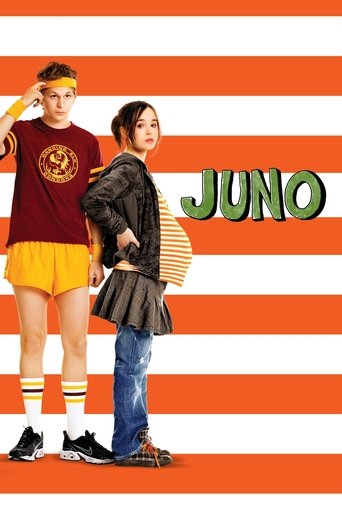
Juno
2007 · Film · 96 min
Directed by Jason Reitman
Faced with an unplanned pregnancy, sixteen year old high-schooler, Juno MacGuff, makes an unusual decision regarding her unborn child.
5 positive2 negative5 neutralfrom 12 commenters
Where to watch
No streaming data for this title.

12 comments on Hacker News
I can easily rattle off movies and music from the last decade
If you have recommendations for good recent drama, I'm interested to hear your suggestions. Let's limit it to interpersonal conflict, by which I mean a movie that follows multiple persons and multiple viewpoints. Think Closer or Dead Poets Society, not Lady Bird or Juno.
>i remember in 2007 i noticed that movies sucked… i was a teenager. and i was right
You had an opinion, it was neiter right nor wrong. I was a teenager and watched Juno, 300, Bay's Transformers, And Pirates of the Carribean 3. I thought it was a renaissance. It's all based on personal experience.
> things are not the same regardless of how much you want to believe that
So how is this related to a union in 2025?
This is the plot of the excellent movie Juno
https://en.wikipedia.org/wiki/Juno_(film)
> For an example, Juno: Yes, I get it, unwed mothers are bad.
What you perceive is your experience, but I think there might be other things there for you to percieve. My experience is 180 degrees different and I've never heard anyone say that about Juno. I thought it was very sympathetic, a movie about compassion, innocence and love overriding hardship.
To cover the comments, particularly the guy whose comment is dead, yes, raunchy comedies. Also 90% of the Blockbuster movies.
Perhaps I’d have done better if I said I don’t like being preached at.
For an example, Juno: Yes, I get it, unwed mothers are bad. Should I watch a Lifetime special about it just so I can cry about how horrible things are?
Since American TV and movies are popular, here are some pop culture examples I can think of to get a feel for the style:
* The house that Tony Soprano lives in.
* In the movie Juno, the title character drives though a sparse, affluent suburban development to meet prospective adoptive parents.
The theme is unusually large, new construction, details that look out of place. They are often built on roads with large stretches of them. Although in the town where I grew up, they sprouted up very gradually over ~20 years as remodels/teardowns of modest 1950s homes.
I never understood how a potential restriction of commercial speak would look like. Which of these consists of commercial speech and which should be protected?
1. MSNBC or Fox News hosts opining on TV
2. An unpaid op-ed in a for profit publication
3. A paid op-ed in a for profit publication
4. Someone handing out political leaflets in the street for free
5. Someone handing out political leaflets in the street for money or some other benefit
6. The movie Juno (could be both pro and anti abortion, depending on who you ask)
[edit formatting]
I think that Juno is notable mostly as one of the most commercially successful "indie" films. It exposed a lot of mainstream audiences to films with a lower budget.
> The only one I was surprised to see on there was Juno. I've never seen it, is it really that notable?
No. It was zeitgeisty in the way that some films are, and it got a lot of buzz among important demographics, but it's not "important".
Well done, in both data crunching and visualizing. I'd love to revisit this in 15 years and see what modern films held up. I doubt TDKR will last (even for being a decent movie). Avatar and TDK will probably continue to be notable films, as both were historic points in film.
The only one I was surprised to see on there was Juno. I've never seen it, is it really that notable?
>I did not think that the films were worse then before, is just that I'd seen so many films that no new films felt original.
I think it's both. One wearies of a film's efforts to tell a story (compared to a book and an active imagination), given certain limitations in the medium, but the filmmaking process is getting much worse as time passes -- there's the temptation to blow stuff up for two hours (the Michael Bay approach) instead of tell a story. Also flimmakers know high-quality films can't find an audience -- old-style films that respect the intelligence of the viewers end up in art houses and late-night TV.
To a first approximation, modern filmmaking is a bunch of business-school graduates getting together and trying to create a "new" film that's as much as possible like the last film that attracted a large audience. They do all they can to include elements that worked before, they're extremely risk-averse, and their cynicism about their audience is boundless (and largely justified).
Meanwhile, films like "Juno" and other first-rate films get a modest audience, but at high risk -- most courageous films like "Juno" fail, so the risks are high in producing a remarkable film that people also watch.
People need to realize that filmmaking is primarily a business, not an art form. When a modern film is justly described as art, that's an accident, not part of the original plan.
- I Heart Huckabees - You, Me And Everyone We Know - Juno - The Straight Story - My Neighbour Totoro
Are all straight forward feel good movies.
- Caché - The Lives Of Others - The White Ribbon - The Fountain - Amores Perros - City Of God - Fargo - Dune - Castle In The Sky - Nausicaä of the Valley of the Wind - Eternal Sunshine of the Spotless Mind - Festen
Make you feel good simply by the presence of their across the board brilliance.