 Hacker Cinema

Looker
1981 · Film · 94 min
Directed by Michael Crichton
Plastic surgeon Larry Roberts performs a series of minor alterations on a group of models who are seeking perfection. The operations are a resounding success. But when someone starts killing his beautiful patients, Dr. Roberts becomes suspicious and starts investigating. What he uncovers are the mysterious - and perhaps murderous - activities of a high-tech computer company called Digital Matrix.
5 positive2 negative8 neutralfrom 15 commenters
Where to watch
No streaming data for this title.
Videos commenters linked
From YouTube links in the comments below. Most are clips and trailers; “Full” means the uploader says so.


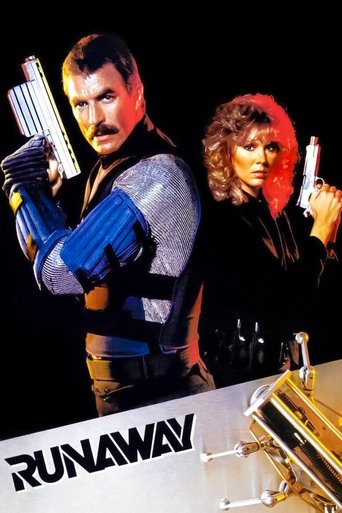
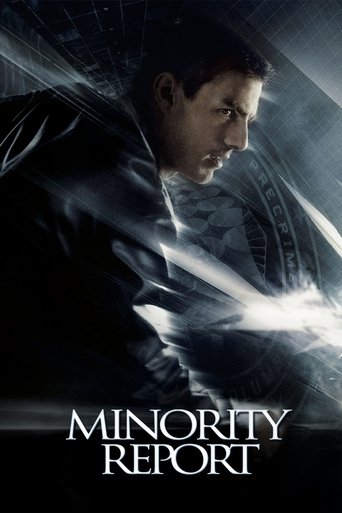
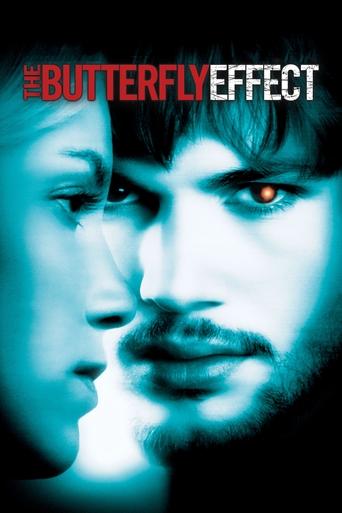


21 comments on Hacker News
I recently rewatched the movie Looker which was vastly ahead of its time in 1981
https://en.wikipedia.org/wiki/Looker
the same year as Baudrillard's Simulacra and Simulation, featuring computer generated characters, brainwashing television commercials, a light pulse gun that causes absence seizures, gun battles inside a plastic surgery clinic and an AR simulation environment, a sadistic computer, a physician who doubles as an action hero, and James Coburn giving a lecture explaining the enemy's evil plans in the opposite role that he played in the (excellent) The President's Analyst.
This time I was not so dazzled and saw it for as atrocious everyone else things it is. The minions of "Digital Matrix, Inc." manage several assassinations with the light-pulse L.O.O.K.E.R. gun but when they use real firearms they outdo Vader's stormtroopers by shooting each other. (Want to see the scene where somebody from E.Y. tells them to stick to the L.O.O.K.E.R. gun) The bad guys explain the penultimate secret to the protagonist early on but the ultimate secret is revealed in the L.O.O.K.E.R. lab which doesn't feel like a lab at all but rather a rather good room in a theme park experience where you're supposed to uncover the secret. (Contrast that to the lab Doug Trumbull outfitted in the Brainstorms movie a few years later which is packed with real surplus equipment... I've been to that lab!)
https://www.youtube.com/watch?v=cBlWxXqH8vA
Fun tangent.
The 1981 film Looker, written and directed by Michael Crichton, features a trope: the Looker gun, which induces a trance in its targets via flashes of light, such that they are unaware of the passage of many hours of time.
https://en.wikipedia.org/wiki/Looker
This movie
https://en.wikipedia.org/wiki/Looker
is usually panned but it has a lot of great ideas in it including a light pulse gun that reliably causes absence seizures. Probably my favorite weapon from sci-fi movies although I have a soft spot for the zap gun out of Battlefield Earth which must be like one of those ray guns that Hubbard thought people have been using to implant us with bad ideas for trillions of years.
Just a bit ahead of its time it's like a 1984 movie that came out in 1981.
Looker (1981) is a great film, but it's a stretch to call it depicting virtual reality. Perhaps you could say superimposing the computer-generated humans into real world scenery is like AR. (Yes, the computer can generate lifelike moving 3D representations of people, but static furniture is far beyond its capabilities ...)
https://www.imdb.com/title/tt0082677/
The 1981 movie LOOKER predicted this day, it also did the scans first:
"Trivia The first ever film to create 3D shading with a computer that produced the first ever CGI human character was the model Cindy (Susan Dey). This movie achieved this feat before Disney's more famous Tron (1982) hit the screens. The Web site Filmsite said of Cindy: "Her digitization was visualized by a computer-generated simulation of her body being scanned--notably the first use of shaded 3D CGI in a feature film. Polygonal models obtained by digitizing a human body were used to render the effects.""
https://www.imdb.com/title/tt0082677/?ref_=kw_li_i
See also the Michael Crichton movie Looker https://www.imdb.com/title/tt0082677/ which is about this topic
"Looker" is a Michael Crichton film from 1981 that features actors getting scanned and replaced with cheaper & more compliant CGI equivalents.
The 1981 cult classic movie Looker becomes real.
Do we have the understanding of neuro anatomy today to make a Light Ocular-Oriented Kinetic Emotive Responses (L.O.O.K.E.R.) device? We certainly have the technology.
https://www.imdb.com/title/tt0082677/?ref_=kw_li_i
The plot of the 1981 movie "Looker" was that models were being replaced with 3d renderings of them.
https://en.wikipedia.org/wiki/Looker
An EPIC scene from "The Congress" (2014): A short but entirely mesmerizing drug come-down, reality dissolving scene from the film "The Congress" (2014) based on the 1971 novel "The Futurological Congress" by Stanisław Lem. All rights to the makers.
https://www.youtube.com/watch?v=IMMI8HWhqEc
The comments on this youtube video are actually spot on and excellent!
https://news.ycombinator.com/item?id=8314622
DonHopkins on Sept 14, 2014 | parent | context | favorite | on: The Future According to Stanisław Lem
I just watched The Congress -- https://en.wikipedia.org/wiki/The_Congress_(2013_film) -- and WOW, it was excellent. Quite different from the book The Futurological Conference that it's based on: for example, it had cockroaches playing poker instead of sewer rats playing bridge. ;) But well worth watching for its unique take on the entertainment dictatorship. If you liked Who Framed Roger Rabbit, Looker, and Fear and Loathing in Las Vegas, you won't be disappointed! Something weird happens in the middle of the film, that's all I'll say...
>According to director Ari Folman, some elements of the film were inspired by the science fiction novel The Futurological Congress by Stanisław Lem in that similarly to Lem's Ijon Tichy, the actress is split between delusional and real mental states. Later, at the official website of the film, in an interview, Folman says that the idea to put Lem's work to film came to him during his film school. He describes how he reconsidered Lem's allegory of communist dictatorship into a more current setting, namely, the dictatorship in the entertainment business, and expresses his belief that he preserved the spirit of the book despite going far away from it.
It took longer than its length of two hours to watch, because I had to stop and rewind to replay and and freeze frames frequently. (Check out what's going on in the fish tank while she's saying "I wish you could see me animated, it's pretty sick. It's like a genius designer on a bad acid trip. Oh my god, I don't know, I look like a combination between Cinderella on heroin and an Egyptian queen on a bad hair day".)
I'm going to have to watch it many more times, because there were a lot of details to absorb -- time will tell if it's up there with Blade Runner as one of my favorite movies very loosely based on a great book.
https://culture.pl/en/article/ari-folman-on-the-genius-of-stanislaw-lem
https://news.ycombinator.com/item?id=15175516
DonHopkins on Sept 5, 2017 | parent | context | favorite | on: The sudden death and eternal life of Solaris
I really loved the movie The Congress, directed by Ari Folman, an adaptation of The Futurological Congress. Like Blade Runner's relationship to Do Androids Dream of Electric Sheep, it was a lot different than the book, but shares some deep ideas, and stands on its own as a great movie.
The scene in the USC ICT's motion capture studio was riveting, with Robin Wright playing a partly fictionalized version of herself, and Harvey Keitel playing her agent, baring their souls to the giant emotion capturing machine.
https://en.wikipedia.org/wiki/The_Congress_(2013_film)
https://www.youtube.com/watch?v=1rNSTizOsws
https://www.youtube.com/watch?v=pPAl5GwvdY8
https://news.ycombinator.com/item?id=30069100
DonHopkins 8 months ago | parent | prev | next [–]
Paul Debevec created the Light Stage to capture high dynamic range reflectance fields (including clean high resolution normal/bump/gloss/texture maps) of human faces. It uses hundreds polarized LED lights and cameras, plus lots of image processing, to separate the lighting effects of specular reflectance (glossy shine) from subsurface scattering (glowing skin), so you can reconstruct the 3D image and relight it under different conditions, environments, and viewing angles.
https://en.wikipedia.org/wiki/Paul_Debevec
https://www.pauldebevec.com/
https://en.wikipedia.org/wiki/Light_stage
"The Light Stage With Paul Debevec" - 360 Video (captured with JauntVR panoramic camera):
https://www.youtube.com/watch?v=xujwI4dimDA
Digitizing Photorealistic Humans Inside USC's Light Stage:
https://www.youtube.com/watch?v=c6QJT5CXl3o
Paul Debevec: Light Fields, Light Stages, and the Future of Virtual Production:
https://www.youtube.com/watch?v=bAe2dUJxe3w
A Light Stage was featured in the 2013 film "The Congress", which is a 2013 film adaptation of Stanislaw Lem's book, "The Futurological Congress", directed by Ari Folman:
https://en.wikipedia.org/wiki/The_Congress_(2013_film)
https://en.wikipedia.org/wiki/The_Futurological_Congress
I really love that movie and the book it was based on, which both raised some interesting issues: Like Blade Runner's relationship to Do Androids Dream of Electric Sheep, it was a lot different than the book, but shares some deep ideas, and stands on its own as a great movie.
The Congress Official Trailer (2014) Robin Wright, Jon Hamm HD:
https://www.youtube.com/watch?v=1rNSTizOsws
The scan scene in the Light Stage at USC ICT's motion capture studio was emotionally riveting and technically realistic, with Robin Wright playing a partially fictionalized version of herself, with Harvey Keitel playing her agent, baring her face and soul to the sparkling panoptic all encompassing emotion capturing machine.
The Congress (2013) Scan Scene:
https://www.youtube.com/watch?v=pPAl5GwvdY8
[...]
The cult classic movie LOOKER becomes real in the avatar sense. Sadly not in the hardware sense. Anyone one know how to build the actual LOOKER hardware?
Light Ocular-Oriented Kinetic Emotive Responses (L.O.O.K.E.R.) is effectively an optical stun gun. Those exposited to the device are stunned to stop moving and lose time. It would be considered "non-lethal weapon" today.
https://www.imdb.com/title/tt0082677/
I've written about the film "The Congress", based on Stanislaw Lem's book "The Futurological Congress", starring Robin Wright and Harvey Keitel, and featuring Paul Debevoc's Light Stage, which explores the issues of actors selling their likeness so their twin can star in movies:
https://news.ycombinator.com/item?id=8314622
DonHopkins on Sept 14, 2014 | parent | context | favorite | on: The Future According to Stanisław Lem
I just watched The Congress -- https://en.wikipedia.org/wiki/The_Congress_(2013_film) -- and WOW, it was excellent. Quite different from the book The Futurological Conference that it's based on: for example, it had cockroaches playing poker instead of sewer rats playing bridge. ;) But well worth watching for its unique take on the entertainment dictatorship. If you liked Who Framed Roger Rabbit, Looker, and Fear and Loathing in Las Vegas, you won't be disappointed! Something weird happens in the middle of the film, that's all I'll say...
>According to director Ari Folman, some elements of the film were inspired by the science fiction novel The Futurological Congress by Stanisław Lem in that similarly to Lem's Ijon Tichy, the actress is split between delusional and real mental states. Later, at the official website of the film, in an interview, Folman says that the idea to put Lem's work to film came to him during his film school. He describes how he reconsidered Lem's allegory of communist dictatorship into a more current setting, namely, the dictatorship in the entertainment business, and expresses his belief that he preserved the spirit of the book despite going far away from it.
It took longer than its length of two hours to watch, because I had to stop and rewind to replay and and freeze frames frequently. (Check out what's going on in the fish tank while she's saying "I wish you could see me animated, it's pretty sick. It's like a genius designer on a bad acid trip. Oh my god, I don't know, I look like a combination between Cinderella on heroin and an Egyptian queen on a bad hair day".)
I'm going to have to watch it many more times, because there were a lot of details to absorb -- time will tell if it's up there with Blade Runner as one of my favorite movies very loosely based on a great book.
https://culture.pl/en/article/ari-folman-on-the-genius-of-stanislaw-lem
https://news.ycombinator.com/item?id=15175516
DonHopkins on Sept 5, 2017 | parent | context | favorite | on: The sudden death and eternal life of Solaris
I really loved the movie The Congress, directed by Ari Folman, an adaptation of The Futurological Congress. Like Blade Runner's relationship to Do Androids Dream of Electric Sheep, it was a lot different than the book, but shares some deep ideas, and stands on its own as a great movie.
The scene in the USC ICT's motion capture studio was riveting, with Robin Wright playing a partly fictionalized version of herself, and Harvey Keitel playing her agent, baring their souls to the giant emotion capturing machine.
https://en.wikipedia.org/wiki/The_Congress_(2013_film)
https://www.youtube.com/watch?v=1rNSTizOsws
https://www.youtube.com/watch?v=pPAl5GwvdY8
https://news.ycombinator.com/item?id=30069100
DonHopkins 8 months ago | parent | prev | next [–]
Paul Debevec created the Light Stage to capture high dynamic range reflectance fields (including clean high resolution normal/bump/gloss/texture maps) of human faces. It uses hundreds polarized LED lights and cameras, plus lots of image processing, to separate the lighting effects of specular reflectance (glossy shine) from subsurface scattering (glowing skin), so you can reconstruct the 3D image and relight it under different conditions, environments, and viewing angles.
https://en.wikipedia.org/wiki/Paul_Debevec
https://www.pauldebevec.com/
https://en.wikipedia.org/wiki/Light_stage
"The Light Stage With Paul Debevec" - 360 Video (captured with JauntVR panoramic camera):
https://www.youtube.com/watch?v=xujwI4dimDA
Digitizing Photorealistic Humans Inside USC's Light Stage:
https://www.youtube.com/watch?v=c6QJT5CXl3o
Paul Debevec: Light Fields, Light Stages, and the Future of Virtual Production:
https://www.youtube.com/watch?v=bAe2dUJxe3w
A Light Stage was featured in the 2013 film "The Congress", which is a 2013 film adaptation of Stanislaw Lem's book, "The Futurological Congress", directed by Ari Folman:
https://en.wikipedia.org/wiki/The_Congress_(2013_film)
https://en.wikipedia.org/wiki/The_Futurological_Congress
I really love that movie and the book it was based on, which both raised some interesting issues: Like Blade Runner's relationship to Do Androids Dream of Electric Sheep, it was a lot different than the book, but shares some deep ideas, and stands on its own as a great movie.
The Congress Official Trailer (2014) Robin Wright, Jon Hamm HD:
https://www.youtube.com/watch?v=1rNSTizOsws
The scan scene in the Light Stage at USC ICT's motion capture studio was emotionally riveting and technically realistic, with Robin Wright playing a partially fictionalized version of herself, with Harvey Keitel playing her agent, baring her face and soul to the sparkling panoptic all encompassing emotion capturing machine.
The Congress (2013) Scan Scene:
https://www.youtube.com/watch?v=pPAl5GwvdY8
"Rouen Revisited" is an earlier interactive kiosk project that Paul Debevec and Golan Levin created in 1996 at Interval Research Corporation, based on photogrammetric modeling techniques he developed at UCB:
https://www.youtube.com/watch?v=Ao3kf0YQ31c
https://acg.media.mit.edu/people/golan/rouen/
>Between 1892 and 1894, the French Impressionist Claude Monet produced nearly 30 oil paintings of the main façade of the Rouen Cathedral in Normandy. Fascinated by the play of light and atmosphere over the Gothic church, Monet systematically painted the cathedral at different times of day, from slightly different angles, and in varied weather conditions. Each painting, quickly executed, offers a glimpse into a narrow slice of time and mood. We are interested in widening these slices, extending and connecting the dots occupied by Monet's paintings in the multidimensional space of turn-of-the-century Rouen. In Rouen Revisited, we present an interactive kiosk in which users are invited to explore the façade of the Rouen Cathedral, as Monet might have painted it, from any angle, time of day, and degree of atmospheric haze. Users can contrast these re-rendered paintings with similar views synthesized from century-old archival photographs, as well as from recent photographs that reveal the scars of a century of weathering and war.
>Rouen Revisited is our homage to the hundredth anniversary of Monet's cathedral paintings. Like Monet's series, our installation is a constellation of impressions, a document of moments and percepts played out over space and time. In our homage, we extend the scope of Monet's study to where he could not go, bringing forth his object of fascination from a hundred feet in the air and across a hundred years of history.
Here's a paper about "Multifocus HDR VIS/NIR hyperspectral imaging and its application to works of art" that references his work, about how you can capture the 3D texture and hyperspectral reflectance field of artwork in a way that you could dynamically relight in different conditions and environments, interactively view in VR, use in high quality computer games and renderings, etc:
https://www.osapublishing.org/oe/fulltext.cfm?uri=oe-27-8-11323&id=408878
>Multifocus HDR VIS/NIR hyperspectral imaging and its application to works of art
>Abstract: This paper presents a complete framework for capturing and processing hyperspectral reflectance images of artworks in situ, using a hyperspectral line scanner. These capturing systems are commonly used in laboratory conditions synchronized with scanning stages specifically designed for planar surfaces. However, when the intended application domain does not allow for image capture in these controlled conditions, achieving useful spectral reflectance image data can be a very challenging task (due to uncontrolled illumination, high-dynamic range (HDR) conditions in the scene, and the influence of chromatic aberration on the image quality, among other factors). We show, for the first time, all the necessary steps in the image capturing and post-processing in order to obtain high-quality HDR-based reflectance in the visible and near infrared, directly from the data captured by using a hyperspectral line scanner coupled to a rotating tripod. Our results show that the proposed method outperforms the normal capturing process in terms of dynamic range, color and spectral accuracy. To demonstrate the potential interest of this processing strategy for on-site analysis of artworks, we applied it to the study of a vintage copy of the famous painting “Transfiguration” by Raphael, as well as a facsimile of “The Golden Haggadah” from the British Library of London. The second piece has been studied for the identification of highly reflective gold-foil covered areas.
[...]
>5. Conclusions and future work: In this study, a complete framework is introduced for the hyperspectral reflectance capture of a painting in situ, and under high dynamic range conditions. Both the high dynamic range and the focusing problem due to chromatic aberrations have been overcome by using multiple captures with different focus positions and exposure times. A final hyperspectral reflectance cube has been computed using weighting maps calculated for both sample and flat fields and the quality of this cube has been tested and compared with a spectral cube captured in the usual LDR and single focus way. Our results show that the proposed method outperforms the best low dynamic range capture acquired. The sharpness index, as well as the color and spectral metrics show that it is possible to achieve good quality spectral reflectance images using a hyperspectral scanner in non-controlled illumination conditions. Moreover, as an example application, highly reflective golden material has been segmented from a facsimile. Our results show that by applying the proposed framework for capturing and processing, those areas which saturate the sensor in the usual capturingway, can be correctly exposed and segmented using the HDR multifocus capture. In future research, a new version of this framework will be developed including piecewise cube stitching for blending different cubes captured in different regions of big paintings. This will allow us to get closer to the painting and retrieve higher spatial resolution data, whilst still maintaining the spectral resolution and performance achieved in this study. Moreover, we will use the spectral reflectance images computed in this study, together with X-ray fluorescence measurements for the non-invasive pigment identification, in order to help the dating of ancient paintings and other works of art.
https://en.wikipedia.org/wiki/Hyperspectral_imaging
Reminds me of the Michael Chrichton movie named "Looker" https://www.imdb.com/title/tt0082677/
Related: check out this movie, younger HN:
https://en.wikipedia.org/wiki/Looker [1981]
"During his investigation, Roberts discovers some advanced technology that the Digital Matrix corporation is using to hypnotize consumers into buying the products they advertise. He also discovers a light pulse device, the Light Ocular-Oriented Kinetic Emotive Responses (L.O.O.K.E.R.) gun, that gives the illusion of invisibility by instantly mesmerizing its victims into losing all sense of time."
:)
If you can find it, consider the movie "Looker" with Susan Dey in it. The guy who wrote it had been looking at influencing brain state with flickering lights.
Presaged eerily in 1981 by Michael Crichton's terrible movie "Looker":
https://youtu.be/2IZfSr891bE (warning, nudity)
Two additional scenes stand out:
1. The protagonist watches a prototype perfume commercial with eye-tracking glasses, and the computer ends up superimposing the closing logo over the part he watched the most often (this being 1981, I'm sure you can imagine...)
2. The implication that the computer can determine the 'perfect' poses and actions for optimal viewer response ("Not enough body twist according to the computer"), and the physical model having to contort herself to fit the ideal (you can see a few seconds of this at 0:39 in the trailer - https://youtu.be/yoT-r1slAZ4)
Also, the Michael Crichton movie Looker: https://en.wikipedia.org/wiki/Looker
As foreseen by Looker (1981), written and directed by Michael Crichton.
The juggler and 'computer plastic surgery' segments were created by Information International, Inc., the latter being for the movie "Looker".
Information International, Inc. 1982 Demo Reel: https://www.youtube.com/watch?v=ADF3-6owY0A
A scene from "Looker": https://www.youtube.com/watch?v=q_wK74Ejnqc
I just watched The Congress -- https://en.wikipedia.org/wiki/The_Congress_(2013_film) -- and WOW, it was excellent. Quite different from the book The Futurological Conference that it's based on: for example, it had cockroaches playing poker instead of sewer rats playing bridge. ;) But well worth watching for its unique take on the entertainment dictatorship. If you liked Who Framed Roger Rabbit, Looker, and Fear and Loathing in Las Vegas, you won't be disappointed! Something weird happens in the middle of the film, that's all I'll say...
>According to director Ari Folman, some elements of the film were inspired by the science fiction novel The Futurological Congress by Stanisław Lem in that similarly to Lem's Ijon Tichy, the actress is split between delusional and real mental states. Later, at the official website of the film, in an interview, Folman says that the idea to put Lem's work to film came to him during his film school. He describes how he reconsidered Lem's allegory of communist dictatorship into a more current setting, namely, the dictatorship in the entertainment business, and expresses his belief that he preserved the spirit of the book despite going far away from it.
It took longer than its length of two hours to watch, because I had to stop and rewind to replay and and freeze frames frequently. (Check out what's going on in the fish tank while she's saying "I wish you could see me animated, it's pretty sick. It's like a genius designer on a bad acid trip. Oh my god, I don't know, I look like a combination between Cinderella on heroin and an Egyptian queen on a bad hair day".)
I'm going to have to watch it many more times, because there were a lot of details to absorb -- time will tell if it's up there with Blade Runner as one of my favorite movies very loosely based on a great book.
http://culture.pl/en/article/ari-folman-on-the-genius-of-stanislaw-lem
I like his milder films, like Looker and Rising Sun