 Hacker Cinema
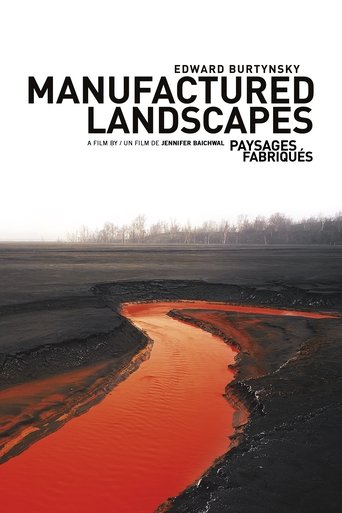
Manufactured Landscapes
2006 · Film · documentary · 90 min
Directed by Jennifer Baichwal
MANUFACTURED LANDSCAPES is the striking new documentary on the world and work of renowned artist Edward Burtynsky. Internationally acclaimed for his large-scale photographs of “manufactured landscapes”—quarries, recycling yards, factories, mines and dams—Burtynsky creates stunningly beautiful art from civilization’s materials and debris.
11 positive2 neutralfrom 13 commenters
Where to watch
No streaming data for this title.
Videos commenters linked
From YouTube links in the comments below. Most are clips and trailers; “Full” means the uploader says so.






15 comments on Hacker News
It's actually the first in what became a series!
Watermark [0] and The Anthropocene[1] are both phenomenal. In fact, in terms of cinematography, I think Watermark is the best. Manufactured Landscapes was absolutely earth-shattering in my own consideration of humans and our ecologies though.
If you find yourself liking Burtynsky may I also suggest checking out Richard Misrach and the classic book of Manfred Hamm photography, Dead Tech [2].
(We'd be remiss to leave out the contributions of Jennifer Baichwal to all three films and Nicholas de Pencier on The Anthropocene.)
[0] https://www.edwardburtynsky.com/projects/films/watermark
[1] https://www.edwardburtynsky.com/projects/films/anthropocene-the-human-epoch/
[2] https://www.amazon.com/Dead-Tech-Guide-Archaeology-Tomorrow/dp/094051222X (Only linked to Amazon because people have posted images)
There's a fantastic documentary about Burtynsky's work, Manufactured Landscapes. I highly recommend it, even if you just watch the opening. https://www.edwardburtynsky.com/projects/films/manufactured-landscapes
Wow Ed Burtynsky on the front page of Hacker News! I worked on his film Anthropocene (https://theanthropocene.org/film/). Also recommend the film Manufactured Landscapes by him, which he also gave a TED talk about (https://www.youtube.com/watch?v=U2Dd4k63-zM&t=930s).
These pics are 2000 (Chittagong, Bangladesh) posted around 2009 as you can see from the low rez. The photographer has a doco - https://www.imdb.com/title/tt0832903/
As others are posting there are better videos / pics out.
Good book, not too long, easy read - "Ship Breaker" by "Paolo Bacigalupi" - https://booko.us/9780316056199/Ship-Breaker I think cyberpunk, Amazon says dystopian romance.
A film (well worth watching) about this sort of place is Manufactured Landscapes: https://archive.org/details/ManufacturedLandscapes_201902 -- you don't really get the whole scale of things until you see something like this.
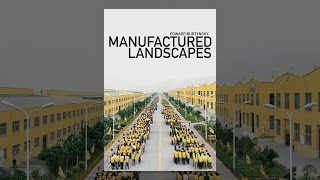
Trivia note: This movie has the longest opening tracking shot of any movie of the time (according to a film professor friend).
A classic trilogy. See also this list of films in the category: https://en.wikipedia.org/wiki/List_of_feature_films_described_as_non-narrative
I can also recommend Manufactured Landscapes.
a film called manufactured landscapes(o) completely shook me when i saw it in theatres when it was first released
the film addresses ewaste issues like the fact that a lot of electronics rely on toxic elements, but there is also the shear vastness of dumpsites
there is shot of a dump of motor armatures which could be argued to be one of the least likely failure points in consumer goods that use motors like washing machines, blenders, drills, et al
the film was even released in 2006, one year before smartphones become a cultural ubiquity
it is also wild to think that most of what is being documented is a result of manufacture happening only over the previous 50 or so years.. which is only 0.00025% of the hypothesised almost 200k year human history
it is a film 'documenting a photographer's technique' so retains an air of lacking bias but the subject matter is just so affecting that audience bias becomes seemingly inevitable
you could just as easily goog 'ewaste concerns' and find a myriad of issues but i highly recommend this film.. i was in awe from the opening sequence
(o) https://en.wikipedia.org/wiki/Manufactured_Landscapes
The entire genre of 'non-narrative documentary' film https://www.imdb.com/list/ls073014744/ notably Manufactured Landscapes @ https://en.wikipedia.org/wiki/Manufactured_Landscapes
Many BBC documentary series. Personal favourites include History of India and Islamic History of Europe.
The extremely unique (probably never to be repeated in spirit) and zeitgeist-defining Julian Assange Show @ https://www.rt.com/tags/the-julian-assange-show/ and Citizenfour.
A post-facto interview based documentary whose name I forget, perhaps Real War, about Russian military human rights abuses in the Caucasus, which was extremely shocking.
Many SBS Dateline reports.
It's a strange thing, with the scales (I presume) are involved (here as well). I worked a bit with refurbishing "small" oil-rigs, now used mostly for search drilling. They "only" stand about 70m above sea level when elevated for refurbishing.
But even these "small" rigs (typically built in the 70s, with a goal of lasting 5-10 years) -- are so huge -- that most people that worked on them had no issues with vertigo/fear of heights. When you stand on top, looking down, all the sizes are so big, that your brain doesn't see a 70m drop down to the ocean as all that far, because the support towers are so huge, that you just cannot fathom their size. Sometimes you can look down, and make out the ant-like forms of people working -- but even then, the brain just can't process the dimensions.
I think I have some illustrative photos on a drive somewhere, but apparently not on hand.
One of the few photography projects I'm aware of that comes close to both capturing the size, and displaying the size, is the series by Edward Burtynsky that I became aware of through the film "Manufactured Landscapes" - scenes like:
http://www.edwardburtynsky.com/site_contents/Photographs/Mines.html
The magnitude quite literally boggles the mind - the size is just super human. And that usually transfers quite poorly to film.
have you seen manufactured landscapes?
http://en.wikipedia.org/wiki/Manufactured_Landscapes
https://www.youtube.com/watch?v=o8cpCL8FSFM
beautiful film, there is one scene where the camera is tight on a 2 meter diameter tire dump truck and then slowly pans out until the dump truck is only the size of a pixel revealing a mining operation that fills the whole scene
http://en.wikipedia.org/wiki/Manufactured_Landscapes
Awards: Best Documentary – 2007 Genie Awards[1] Best Canadian Film – Toronto International Film Festival[1] Best Canadian Film & Best Documentary - Toronto Film Critics Association Awards[1] Nominated for Grand Jury Prize - 2007 Sundance Film Festival[1] Won the Reel Current Award (presented by Al Gore) - 2007 Nashville Film Festival
Two great documentaries that focus on China, which I have not seen listed:
Manufactured Landscapes: http://en.wikipedia.org/wiki/Manufactured_Landscapes
Up The Yangtze: http://en.wikipedia.org/wiki/Up_the_Yangtze
It's quite a coincidence that you both mention Manufactured Landscapes and I happen to be currently watching it on Sundance. I'm a fan of Burtynsky but had never heard of the movie before. Synchronicity.
I read a couple of specialized news blogs written mostly by people out of Hong Kong about things going on in China. It's pretty amazing story involving 1/6th of humanity.
Here's some good blogs if you want to follow along:
http://www.zonaeuropa.com/weblog.htm
http://www.chinahush.com/
http://www.danwei.org/
There are many others. A good movie to watch is "Manufactured Landscapes" if you want to see the dark side of all this.
Also, "Dwelling Narrowness" is a good mainland Chinese drama. Some versions on the Internet are available with fan contributed English subtitles. It does a pretty good job IMHO of talking about a lot of the apolitical transformations that are going on in Chinese society.
While I agree with some of the points in the article, I want to stress that this is only one possible scenario. (Sorry for this long post. It's my first.)
A couple of times, the article mentions a country's wealth and power. In the long run, national competitiveness determines a nation's wealth. Currency changes are a mechanism that can influence competitiveness in the short term. (As mentioned by others, devaluation can increase competitiveness and wealth.) National competitiveness has been studied exhaustively. While there are still a lot of questions, we seem to agree that a nation needs to produce goods/services that the rest of the human race values and are willing to pay for at an efficient cost. The nation also needs to attact the most able and willing workers, call them the "talent". The nation needs a mechanism to identify and provide opportunities to the talent. Thus far, U.S. is recognized as the nation still most able to provide these conditions. Less universally agreed upon is the need for a rule of law including rights to personal property, the opportunity for the talent to accumulate much more property than the average person, and efficient access to capital. As those on this website know, access to capital and entrepreneurial support is pretty good here :)
There are two additional trends that I think have influenced the Asian Currency Crisis. One is the broad aging of the population in the wealthy contries. There is a net savings effect that is still going on. Younger people have more need of loans and older people have more need to invest. Right now, the need to invest outweights the need for loans. Money has been cheap for several decades. No one know what effect this will have when an equilibrium is reached, sometime in 2030. Another effect is land. The U.S. is said to have about the same livable land as China. You can see what this might mean. China has about 1.5 billion people to U.S.'s 300 million. A lot of Chinese will want to immigrate to US to get away from extreme over-crowding and the destroyed environment. (If you get the chance, watch the documentary "Manufactured Landscapes.") This will cause land values in US to rise, in proportion to the rise in China's per capita income.
National economies have changed drastically over a relative short time period -- a few decades. One of the scenarios discussed by experts is similar to the doomsday scenarios caused by a US dollar devalution versus the Chinese yuan. In most estimates, if this particular scenario does occur, it takes about 30-50 years. Interestingly, if you listen to most Chinese government and financial representatives, they present a doomsday scenario where China is the one going bust. They are very familiar with their own potential dangers, while we are much more aware of our own problems. For example, China has a very serious pension issue. Due to the one child policy, their workers-to-retired ratio is far smaller than in the U.S. They have not begun to create a Social Security program. (Think of Logan's Run. Actually, there are scary stories that I've heard from some of my Chinese friends.) I'm just giving another angle to this whole national competitiveness issue.