 Hacker Cinema
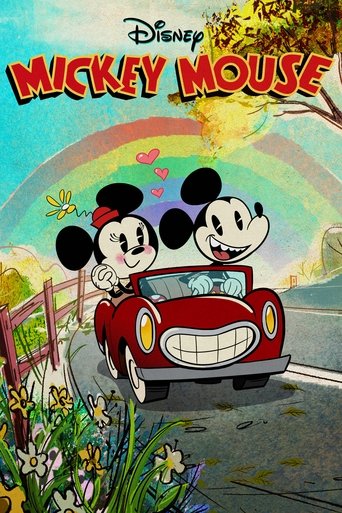
Mickey Mouse
2013 · TV series · 3 min episodes · 5 seasons
Created by Paul Rudish
AnimationComedyFamilyActionAdventure
In this series of cartoon shorts, Mickey Mouse finds himself in silly situations all around the world! From New York to Paris to Tokyo, Mickey experiences new adventures with his friends!
1 positive1 negative13 neutralfrom 15 commenters
Where to watch
No streaming data for this title.


15 comments on Hacker News
It's amazing to read what people think is fair use. Have a read of the wikpedia article, it's definitely not as straight forward as adding a slight variation and then I'm good.
If that was the case all of the following would be fair use (hint they typically are not).
- making a movie from a book (I mean it's a pretty big variation) - making a sequel/prequel to a book, movie using the characters of the book - making new comic stories using Mickey Mouse/Batman/Superman... - Making merchandise using redrawn characters from comic books... ...
Also it's important to note that one of the important aspects to judge fair use is commercial interest, i.e. what is allowed for an individual privately, might very well be copyright infringement for a company (like Midjourney) who sells a commercial product.
> If artists can look at each others copyright-in-full-force works and then imitate it, why can't AI?
AI can reconstruct many training images in surprising detail. Show me an artist who can draw you an image they practiced on 10 years ago including the rough shape of the watermark.
> Of course generating pictures is different from using them, let's say in ads.
Microsoft's Copilot is a paid service, same with OpenAI's upcoming ChatGPT Plus subscription. Nobody here claims that it's illegal to draw Mickey Mouse and hang it on your fridge, but those AI models aren't trained just for fun. If Microsoft is allowed to make money from ignoring countless license terms I should be allowed to make my own short film trained with Disney cartoons and sell it. But we all know how well that would turn out.
> For example, under copyright, you can't take Mickey Mouse, throw sunglasses on him, then re-release all of the existing work, because it's not protected by the fair use clause. However, if you were to create something demonstrably different to the point where it does qualify for fair use, then suddenly you've created new media that you have the copyright for and can do whatever you wish (including sell it; whether or not it's used for commercial purposes is only a factor in fair use determinations, it doesn't instantly disqualify it for fair use).
Your understanding of fair use seems quite flawed.
Tell me, have you _ever_ seen Mickey Mouse used for _anything_ even remotely interesting that wasn't made by Disney?
One of the most well-known characters of all time, if fair use wasn't too restrictive, there'd be some derivative works out there, right?
The reason you don't is because what's allowed by fair use is _very_ limited and ambiguous (ie dependent on how much money you want to spend on a lawyer to defend yourself).
You can do reviews of shows/movies, you could probably do a really obvious parody, you could report on some Mickey Mouse news, and that's essentially it. Anything else will get you sued _hard_ and you will not win.
Half of those games you listed are actually game series. Most people can probably name Mickey Mouse, a movie character from the 30s.
You're ignoring all the copyrighted movies Disney made based off of public domain works. Good luck just "deriving" off of those too much. With your Steamboat Willie argument, derivative work would have to be based off him, not from works based off him (ie Mickey Mouse).
Disclaimer: I might or might not agree with EU but I think I see the mechanism of action.
Now, the thought about "the EU attempting to regulate the internet" is rather myopic. EU is not initiating anything, the EU is simply continuing a process which was started long ago.
This is part of the same copyright enforcement continuum which ("long" ago) caused the US organization MPAA to work with the US government to exert political pressure on Sweden to shut down the The Pirate Bay (BitTorrent tracker).
The argument then was The Pirate Bay was helping people distribute copyright-protected content while getting money from this process.
Now, there are companies which do substantially the same thing: users upload copyright protected content to the service, the service disseminates the content back to users while the service is monetized e.g. with advertisements. In some cases the content is individual pictures, in some cases music tracks or albums or even entire movies.
Now, either this mechanism as a whole is OK or it is not OK. The EU is basically saying that the mechanism is not OK within EU regardless of whether the company is from USA or not.
If you observe this development over time, it has been about tightening of copyright enforcement everywhere. From that perspective it makes sense to tick-tock two of the biggest players in turn, to tighten the law in one, then make the other one follow.
I hope I'm wrong. Looking forward to see Mickey Mouse in public domain.
Maybe it is just me but in older episodes of Simpsons, there was a lot more music for different situations and at times, classic or what I would term 'wholesome' music was played to highlight cathartic situations or trials/tribulations of human lives.
These are things that to me play a major part as a viewer. To me, a TV serial is not about 30 min episode, it is a mini-play or chapter in a play.
Think back to days of Tom and Jerry (the ones before mid-1960s) as well as the older Mickey Mouse & Co (up till 1970s) and you will see the recurring pattern -- music was just great and played a huge part in involving the user.
That and also, there is something about the super-sharp, ultra modern type of animation modern day Simpsons have. I understand it is high-tech and latest stuff, but it does take away from the art and appreciation of what the viewer experiences. If you don't believe me, watch an episode of 1940s/1950s Mickey Mouse or Tom & Jerry and compare with their modern day renditions.
No, but trademark protections are very limited compared to copyright protections. For instance, if you wanted to make a movie like League of Extraordinary Gentlemen but with cartoon characters, once Mickey Mouse's copyright has expired you would be free to use his character in the movie, you would just have to avoid using him in advertisements for the movie in a way that would mislead people into thinking the movie was affiliated with Disney.
I like your idea of a compromise with the Rat: Mickey Mouse copyright literally forever but only with registration so that we can have all the regular works of the era back in the public domain.
But it raises a question about preservation. Why don't the libraries and collections just lend their books and movies to a Canadian version of Project Gutenberg to be digitized and preserved? Canada has life plus fifty copyright.
As a matter of fact, I can't tell for sure but it looks like Mickey Mouse might be fair game in Canada well before 2019.
The copyright laws are obviously a result of corporate lobbying, but there is simply no way to argue that extending the copyright on Mickey Mouse has reduced the quantity or quality of literary or other artistic work. It has only made it more expensive to (legally) watch old movies or read old books.
"People who know nothing about intellectual property still get extremely upset when they perceive that someone else "stole their idea" or "ripped them off.""
That is because they want credit for the idea. Give them credit and share it freely, and most people will not complain, even if they never intended for their ideas to be shared by millions of people (many will be happy with the fame, even if they don't see millions of dollars for it -- again, as long as they are getting credit, or at least as long as nobody else gets the credit).
Only people who want to exploit ideas for profit use terms like "intellectual property," because they are desperate to convince everyone else that ideas are a form of capital. The rest of us use words like "idea," "song," "movie," "book," "equation," "name," "DNA sequence," etc. to describe things that might be copyrighted, patented, trademarked, or whatever else. That is because the rest of us have not been brainwashed to the point of thinking that copying things is a destructive activity.
"Also, claiming the copyright regime is not the product of democracy is utterly ludicrous"
Yes, because as we all know, hundreds of millions of Americans care deeply about Sonny Bono's vision of lifelong copyrights and the end of the public domain; all that money donated by Hollywood and the recording industry, all their lobbying, all the revolving door politics, none of it had anything to do with the Mickey Mouse act, the DMCA, or TPP. No, this is all highly democratic -- we just heard Obama and Romney talking about the importance of ensuring that websites like Megaupload be removed from the Internet, and that programs like deCSS remain outside of America.
"If people cared so much about this"
People don't care; people ignore copyrights when they want to share things with each other, which is in no way a new situation. People were singing Happy Birthday at public events without giving a damn about the copyright status of that song. Copyrights are a regulation on industry, and it is absurd to try to apply copyrights to the day-to-day lives of ordinary people. The only reason copyrights became a major issue in the past 30 years is that the industries that depend on copyright to turn a profit discovered that they are no longer necessary, and so they tried to expand copyright to turn back the technological clock. We have seen this sort of laughably misguided behavior before, and thankfully we stopped the nonsense before ruining good things:
https://en.wikipedia.org/wiki/Red_flag_traffic_laws
"Claiming that the results of the democratic process are in fact not democratic"
This is not democratic:
https://en.wikipedia.org/wiki/Bribery
It is, however, the way copyright expansions happen, at least according to one prominent insider:
http://www.foxnews.com/politics/2012/01/19/exclusive-hollywood-lobbyist-threatens-to-cut-off-obama-2012-money-over-anti/
>I think he's saying if you invent a new tech, YouHolodeck, you're not magically exempt from copyright law and you can't just post existing copyrighted material ("but it's different, it's holographic"). Existing laws should apply, without needing constant updating ("on the internet", "in the holodeck", "in the singularity").
I don't agree that he's saying that. The issue is that (leaving DRM circumvention tools aside) standard copyright law doesn't prohibit distribution technologies at all, just infringement. Hollywood doesn't like that -- they want to be in charge of what distribution technologies people are allowed to create, regardless of what they're used for. So their end run around it has two parts: 1) They refuse to sanction the use of the new technology for their own content, and then 2) they argue that because it isn't sanctioned by the major players, substantially all use must be infringing and dissemination of the technology itself (regardless of use) therefore induces that infringement and has no substantial non-infringing use.
It isn't about Mickey Mouse and the local mime. Aereo doesn't pick which channels its users watch. Its users can use the technology to watch PBS broadcasts (e.g. of your local mime) that are distributed under Creative Commons or other permissive licenses, or Presidential speeches that as U.S. government works fall immediately into the public domain, or use the technology to record video that the users have negotiated a separate license for with the copyright holders, or make a variety of legal fair uses of the plaintiffs' copyrighted material. Or the users can use it for blatant infringement, e.g. to record sitcoms and burn them to DVDs to sell in the street. But that's all between the copyright holders and the individual users. Aereo is just providing the technology -- and Hollywood is trying to stop the technology, not the infringement.
On the issue of copyright terms, one thing I've not seen discussed much is the idea of having different terms for different copyright rights. Copyright is not a monolithic things--it encompasses several rights. In particular, there is the right to make and distribute copies, and there is the right to make derivative works. (There are other rights, but those are the most important).
I think a good case can be made that different durations are appropriate for these rights, and also that different durations are appropriate for different kinds of works.
Let's start with artistic works. In particular, let's consider the infamous Mickey Mouse copyrights.
The reproduction right should be fairly short. It's purpose is to allow the creator to get paid for their time and effort in creating the work. We maximize creating of new works if creators can get paid for creating. If creators cannot do so, and so have to turn to ancillary methods of making money, they have less time for creating. (This is why the argument that musicians can make their living touring is not persuasive to me. I'd much rather have great musicians creating new music than spending a lot of time playing their old songs over and over and over to make a living. How would we feel as programmers if employers did not pay us to program--they hired us to do tech support, and then told us that we should be writing programs on our down time so there would be something to provide tech support for?).
I think it is quite reasonable for the derivative works right, on the other hand, to have a very long term. That encourages other artists to come up with new characters to tell their stories. I think we'd have a lot less great cartoon characters if everyone who wants to make a cartoon could just make their own Mickey Mouse cartoon.
A long derivative works right also helps preserve our culture, by preserving the artistic integrity of bodies of work. A fictional character, such as a Mickey Mouse, or a Frodo, or a Harry Potter, or a Sherlock Holmes, has a personality, character, mannerisms, morals, etc., developed by the creator. They become in a sense real and part of our culture. If someone else comes along and starts producing fiction with those characters that does not fit in with how those characters should behave, it diminishes the value of the original to society. If you want to write stories about hot boy on boy wizard sex, make up your own wizards--leave Harry and Ron alone.
To summarize so far, for artistic works like films (including cartoons) and fictional books, I'd like to see a relatively short reproduction right combined with very long derivative works rights.
For utilitarian works, such as computer programs, it would not make sense to have a long derivative works right. Programs do not become beloved parts of our culture. (Characters introduced in programs sometimes do--Mario and Zelda are good examples, so I'd argue that while the game code for a Zelda game should have a short derivative work right because it is a program, if you make a game based on it you would have to come up with new characters).
Thanks.
I'm curious about your comment about intellectual "property" being a red herring. I certainly don't mean to mean to defend the current regime, but I'd be really interested to learn more about your ideas.
From a historical perspective, why is the notion of intellectual property any less legitimate than the notion of real property? In both cases, we are granting to a private concern the exclusive right to exploit something that used to be in the commons. Land "ownership" seems obvious now, but once, it seemed absurd to many people that anyone could own the space on Earth that we all occupy.
In the case of both real and intellectual "property", there is a resource from which limited value can be extracted. There are a limited number of cows that can graze in a given number of acres, there is a limited amount of money that can be made by selling a particular molecule as a drug, and there is a limited number of tickets that can be sold during opening weekend of a film.
In both real and intellectual property, there are multiple possible uses of the resource, and they can conflict. If I chop down the forest and plant wheat, you can't hunt there. If you make Mickey Mouse porn and promote it in infomercials, it changes who Mickey Mouse is in our culture. (Maybe we think it's in the public interest to allow that to happen, but it could definitely conflict with what Walt Disney wants to have happen, and prevent them from starting creative projects that they otherwise would have started.)
So it seems to me that opposition to intellectual property can't come from "legitimacy," unless we also consider ownership of real estate to be illegitimate. That would be a sad state of affairs, because I think the human race would be worse off without the idea of land deeds.
Edit: RF spectrum is another example, I suppose -- there's a limited amount of value to extract (only so many channels), and there are conflicting uses that create different kinds of value (which applications to run on which frequencies with which propagation characteristics.) And the policy tradeoffs in spectrum "property" seem to be different again from those in real or intellectual property. For one thing, there's the rapid advance of technology, and the possibility of spread spectrum.
Another interesting read. I'd like to note that (while it wasn't the focus of the essay), many of the expensive "checks" aren't there for monetary reasons, but rather human safety and the dire consequences of a poor decision.
Working at Motorola on cell phone code could be a great way to give everyone in the modern world a cool new feature - or accidentally break 20+% of all phones out there. A terrible Mickey Mouse movie could destroy a brand. Take it a step further to NASA, vehicle engine design (and safety), oil pipelining and refining, etc. and the cost could be human lives.
That said, I'm very interested in the cost of these "checks" on those industries. Not monetary costs (although important), but rather the cost in stifled future innovation.
Thoughts?