 Hacker Cinema
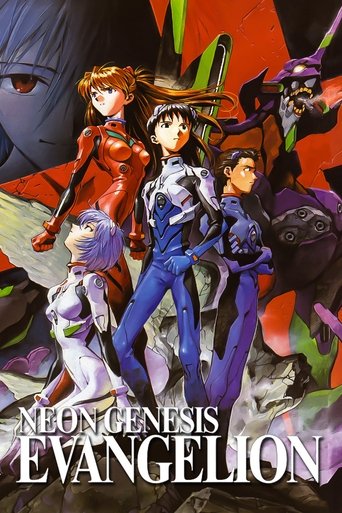
Neon Genesis Evangelion
新世紀エヴァンゲリオン
1995 · TV series · 25 min episodes · 1 season
Science FictionFantasyAnimationDrama
At the turn of the century, the Angels returned to Earth, seeking to wipe out humanity in an apocalyptic fury. Devastated, mankind's last remnants moved underground to wait for the day when the Angels would come back to finish the job. Fifteen years later, that day has come... but this time, humanity is ready to fight back with terrifying bio-mechanical weapons known as the Evangelions. Watch as Shinji, Rei, Asuka and the rest of the mysterious shadow agency Nerv battle to save earth from total annihilation.
12 positive2 negative10 neutralfrom 24 commenters
Where to watch
No streaming data for this title.


24 comments on Hacker News
Seconding Fullmetal Alchemist. I hear the remake (Fullmetal Alchemist: Brotherhood) is usually regarded as the better version. More suggestions: Neon Genesis Evangelion, Death Note, Sousou no Frieren, Cowboy Bebop, Nichijou, Tengen Toppa Gurren Lagann, Bakemonogatari. There's also quite a few good movies, anything by Studio Ghibli is great, and so are Akira, Perfect Blue, and Ghost in the Shell.
I sort of like it. Looks like a Neon Genesis Evangelion episode card
> sky rains blood
This reminds me of Neon Genesis Evangelion.
Of course, no one realized (at least publicly) that it is a metaphor for "everyone claps at the end" (also the ending of the original series).
Sound of rain sounds like an audience clapping. "Blood rain" means real claps, not some fake condescending simulacra of it.
"So that is how democracy dies? With thunderous applause." is also a reference to the same metaphor.
Both movies relate to the theme of sacrifice, worthiness, humanity survival.
Are you guys are too much into giant robots to even notice those things?
While the 1995 Japanese anime series, Neon Genesis Evangelion revolves around human-shaped weapons called "Evangelions", the "Neon Genesis" part of the title is neither part of the original Japanese name, nor its direct translation. The Japanese name is 新世紀エヴァンゲリオン / Shin-seiki evangerion, "Evangelion of a new era/century". The series has other non-direct translations too, and apparently this style was approved of the original creators, but it was always a bit of a mystery whether the gap in the interpretation was intentional or not.
However, over two decades later, with the re-boot movie series Rebuild of Evangelion, in the final scenes of the final movie, the protagonist name-drops the words "neon genesis" in appropriate context. I've never grinned as hard in movie theater.
> The other GUI I really like is MAGI from Evangelion - all these black screens with classic amber color accompanied by red, green and teal fit very well together - especially with the volumetric-holographic displays from new tetralogy
You will probably appreciate this site and especially this post, which is an exploration of the typography of the series.
https://fontsinuse.com/uses/28760/neon-genesis-evangelion
Previously on HN [2019] 415 points 111 comments:
https://news.ycombinator.com/item?id=21323736
Choice quote from that prior submission:
https://news.ycombinator.com/item?id=21328512
> “Whatever you now find weird, ugly, uncomfortable and nasty about a new medium will surely become its signature. CD distortion, the jitteriness of digital video, the crap sound of 8-bit - all of these will be cherished and emulated as soon as they can be avoided. It’s the sound of failure: so much modern art is the sound of things going out of control, of a medium pushing to its limits and breaking apart. The distorted guitar sound is the sound of something too loud for the medium supposed to carry it. The blues singer with the cracked voice is the sound of an emotional cry too powerful for the throat that releases it. The excitement of grainy film, of bleached-out black and white, is the excitement of witnessing events too momentous for the medium assigned to record them.”
> Brian Eno
https://www.goodreads.com/quotes/649039-whatever-you-now-find-weird-ugly-uncomfortable-and-nasty-about
What a great question! Many interesting movies to check out in these comments!
My own list, I re-watch movies the same way I re-listen to music, often to get in a particular mode of thinking, as they become familiar, I mostly daydream while appreciating some particular concept and whatever new minutiae, or ways of understanding, creeps into my mind.
Hackers - 30+ times, for dreaming about a world that never was and never will be, for reminding myself how cool computers used to seem.
The Crow - 20+ times, for thinking about the world
Koyaanisqatsi - 15+ times, for thinking about my life in the world
Alien - 10+ times, for thinking about the future that passed us by
Terminator 1 and 2 - 10+ times, for examining a time that never was, or passed me by, and because Arnold is awesome!
A Clockwork Orange, 10+ times, to reflect on violence and aesthetic
Event Horizon, 10+ times, mostly for the aesthetic, and who dosen't love spaceships from hell ?
1984 - 5+ times, for thinking about humanity and society
Requiem for a Dream - 5+ times, for thinking about the value of life, and what society is
Once upon a time in the west - 5+ times, for thinking about loss, revenge and justice
Genocyber - 5+ times, to think about what life is for anyway
Stalker - 5+ times, frankly, mostly to look at the pretty pictures.
Lots of other amazing movies, I probably forgot some (time to watch again?)
Bonus:
TV Shows I've watched more than 10 times:
Star Trek TNG
Neon Genesis Evangelion
If you want another known bad case: https://sephirotic.wordpress.com/2015/10/11/neon-genesis-evangelion-an-article-about-color-correction-the-hideous-renewals-episode-19/
Honestly, that'll be boring. I don't want to be a star of a movie, that's not what pulls me in.
I want to see what the person has imagined, what the story carries from the author, what the humans in it added to it and what they got out of it.
When I read a book, I look from another human's eyes, with their thoughts and imagination. That's interesting and life-changing actually. Also, the author's life and inner world leaks into the thing they created.
The most notable example for me is Neon Genesis Evangelion. The psychological aspects of it (which hits very hard actually) is a reflection of Hideaki Anno's clinical depression. You can't fake this even if you want.
This is what makes human creation special. It's a precipitation of a thousand and one thing in an unforeseen way, and this is what feeds us, albeit we are not aware of this and love to deny it at the same time.
A sibling comment mentions Neon Genesis Evangelion, which was “made” in the 90s but still had the original end credits song “Fly Me to the Moon” on the ADV Films DVDs (2008), losing it in the Netflix release (2019) and the GKIDS Blu‐Ray (2021).
It's weird making a divide between western and asian here, especially on an article based on South Korea. Asia is very diverse, and there's massive differences in the content produced across different countries. South Korea is essentially on-par with the US in terms of production quality, whereas live-action Japanese shows are b-films at best.
Also, I don't know what shows you're watching, but it's hard to understand what you're describing. A lot of anime (including some of the most popular) are full of cynicism and irony. Evangelion, attack on titan, ghost in the shell, etc.
Korean shows especially tend to have this. Squid game being a prime example, but also most of the revenge shows (itaewon class, the glory, etc).
Also, overacting is purposeful in Japanese shows (annoyingly), but less so in serious Korean dramas. Rom-coms everywhere purposely have overacting, because it's funny.
> PsychoPass, Akira, Cowboy Bebop, Neon Genesis Evangelion, Attack on Titan.
I totally agree with everything on this list, except Akira and NGE. And I am saying that as someone for whom NGE is the all-time personal favorite piece of animated media (and I like Akira a lot too, just not as much).
Akira and NGE are pretty much deconstructions of genres, and are really heavy on at least some basic level of previous exposure and understanding of the context. I am fairly certain that if you make someone without much previous exposure to the context watch Akira, you will get a very resounding "what the fuck did you just make me watch". Watched it in a movie theater myself around 5 years ago, and it was definitely a wild ride. With NGE, I rewatched it many times, partially because I almost always discovered something new on subsequent rewatches.
The rest of the ones you've mentioned are great for easing-in though, and are not shallow even in the slightest. I would also add Ghost in the Shell: Stand-alone Complex series to the list of recommendations.
There are quite a few recommendations for the classics, but if someone doesn't enjoy the slow burn of those deep books, maybe they should start with something lot more dopaminergic: animes and movies!
PsychoPass, Akira, Cowboy Bebop, Neon Genesis Evangelion, Attack on Titan.
So, movies. I only saw The Shawshank Redemption a few years ago, and it's really really good. Classic. Human. Touching. I'm not even sure how to characterize it except yes, really go see it, it's really at the top of the power distribution of movies.
12 Angry Men. At this point it's the cliché of old but good movies. At this point it's a satire of a socially interesting movie due to its naivete, yet for someone who seems a bit close minded it might be just the right thing. (Or not? :D)
The Pianist. Again, simple. Brutal. Or the recent Joker.
. . .
But really when it comes to AI and fiction.
Blade Runner. If that's not fiction that's worth investing time into, then what is? Even typing this I've got the chills thinking about Roy Batty.
My favorite re-watch movie (or in this case, series) have been Neon genesis Evangelion.
I have mixed opinions about the show but rewatching it in different stage of life (early teen, depressed high schooler, stressed college kid, anxious junior to the worklife) I always saw some new things.
As a kid the robots and fighting the angels were the focus, as a depressed teen the religious symbolism and reading too much in to it was the focus, as a stressed college kid it was the relation between the characters (and their parents) was the focus, and finally as an "adult" it was seeing how completely dysfunctional every single adult is in the series.
A hallmark of good rewatchable show is to always explore new stuff. I wonder what I'll explore if I re-watch it in my next step of life
I think R&M is an unusual message, in that it tries to take a Nihilist stance on a lot of subjects. Combined with pop-culture references and technobabble, it can come off as more high-brow than it really is IMO.
Neon Genesis Evangelion, really did the Nihilist thing better though. No matter what Shinji tried, things kept getting worse. Rick is "too obvious" of an asshole. Gendo (Shinji's father) is better, because nominally speaking, Gendo is working on a project to literally cancel out the apocalypse that's occurring in the series.
So when Gendo says "Get in the mech and fight that monster", you generally know that Shinji (probably) should do that, you know, to save the world. The long-term effects of this decision (as well as the alternative decision: for Shinji to run away from this responsibility) are explored in the short 26 episodes of the series.
When Rick says "shove these 'Mega Seeds' up your ass Morty", I'm not entirely sure if Morty should comply with that. They have some foreshadowing going on for the "what if Morty stopped listening to Rick all the time", thanks to the "Alternate Universe Evil Morty" plotline going on, but we've had like 4 episodes so far with that character? And most of the time, that character doesn't interact with mainline Rick/mainline Morty.
---------
The show is randomly pretty good with some relationships. Rick x Unity was a good episode, as was Morty x Planetina. Otherwise, I think its largely just a comedy show where ridiculous things happen in a crude manner, with a mildly Nihilist perspective on events.
A lot of R&M scenes are due to incredibly poor decisions of the main characters: Rick outright lying to Morty and then hiding the lie through toxic interactions (its your fault Morty). Morty becoming so overly influenced by his sexual desire to potentially cause a world-ending (or universe-ending) event. Jerry wimping out of some fight. And these decisions are largely encoded into the format of these characters. These characters rarely "try something else", because doing so would break the serialization format (ie: the golden rule of American cartoons. Do not change the characters).
Like the author, I thought Lost in Translation was okay when I first watched it in my late teens. I watched it again when I was living in Japan and it brought me to tears, particularly that scene where she's calls up her relative from her hotel room. I think the original Neon Genesis Evangelion is a masterpiece and hits differently as an adult compared to when I first watched it when I was the same age as the teenage protagonists.
Anything worth watching is worth watching again, and again, and again. I may be behind the times and have to silently take the back seat whenever discussions move towards the latest episode of Breaking Thrones 99, but I'd rather consume media when it's been divorced from the hype.
"The best thing, though, in that museum was that everything always stayed right where it was. Nobody’d move. . . . Nobody’d be different. The only thing that would be different would be you." - The Catcher in the Rye.
Relevant: https://fontsinuse.com/uses/28760/neon-genesis-evangelion
Neon Genesis Evangelion made heavy (and iconic) use of Helvetica and Century in the English episode title cards.
A month or so ago I finally watched the Neon Genesis Evangelion series after hearing about it for more than 20 years. After slogging through a few episodes of predictable awkard-teenagers-pilot-giant-robots-to-save-the-world it finally reveals itself as a stunning exploration into the minds of troubled youth who are, effectively, subjected to a barrage of traumatic crises. It's a deep, rich world with complex characters, all with Herculean responsibilities and human weaknesses.
I'll have to watch Lain now, thanks to your comment.
I enjoy the usual suspects: Akira, Ghost in the Shell (including Standalone Complex), and Cowboy Bebop immensely. I like Robotech, though much of it is nostalgia. But I've found straying from the essentials to be challenging for my very Western tastes.
I tried to watch Stein's Gate and thought it was very clever, but the awkward romance and over-the-top characteristics of the main character were a bit too much. Knights of Sidonia and Attack on Titan got too weird, too quickly. I was too old for Dragonball. There's a lot of Western-focused, Japanese-animated options out there, but they almost universally lack the depth of their anime counterparts.
I'd love some recommendations if you have any, whether they be newer stuff or classics that I've overlooked.
Word of warning to anyone that might give Neon Genesis Evangelion a watch after seeing this - a lot of people include it in the "mecha" genre but if you're looking for a light-hearted, Saturday-morning, big-robots-punching-each-other kind of experience that's definitely not what Evangelion is.
It certainly includes big robots as a plot point, but that's really just a backdrop for the character drama and deeper (and pretty heavy at times) emotional themes of the story. Things get very avant-garde towards the end, and the studio producing the series basically ran out of money to animate the last few episodes so you'll have to jump between the movie adaptations if you want a complete experience. I'd still probably recommend at least giving it a try sometime, as it's personally one of my favorite anime series and a landmark work in the medium as a whole.
Neon Genesis Evangelion. It's an older anime (90s) but it had a series of movies afterwards that expand on the ending. It starts as a typical "big robot fight" style anime but quickly evolves into much more.
> If anything, anime is notorious for making any Christian in it a distaff version of shinto, just glammed up; TV Tropes has the trope "All nuns are mikos" to show it. (2)
Also see "Anime Catholicism[0]."
But then again, how many accurate portrayals of Eastern religions do you find in popular Western tv and film? It's usually vague mysticism and dragon talismans and nonsense.
I don't think your comment and the parent's necessarily disagree. It's entirely possible that Japan's view of Christianity in general has changed in the intervening centuries, or is more complex than one or the other. I'm reminded of the story that Hideaki Anno added the Christian symbolism to Neon Genesis Evangelion because of it's "exotic" appeal, and only recently there was a moe-blob slice of life anime about Christian archangels and demons hanging out in modern Japan (Gabriel Dropout.)
And while not all anime portrays Christianity accurately, they also don't do Shinto or Buddhism correctly either, just more so because they're more familiar with those religions. There aren't a lot of actual mikos running around slaying demons and aliens, after all. And some modern writers do put in a surprising amount of research into Western religion and mythology, although it is true that, in most cases, they don't care about accuracy.
[0]http://tvtropes.org/pmwiki/pmwiki.php/Main/AnimeCatholicism
I don't know where to read, but it seems to me that end of the 90s, TV shows (real and anime) became less episode based but got a whole story arc, like we know from current TV shows like "Game of Thrones", "Breaking Bad" or "The Wire".
I always hear people talking about how "The Sopranos" was the first TV show that did this, but anime like "Neon Genesis Evangelion" and "Cowboy Bebop" came out years before it.
I sure found that article difficult to read. Considering it was done by someone with a PhD in Literature, I guess it's just me.
Welcome to the NHK was a great watch. Someone would call it terribly depressing but surely not to the degree of Elfen Lied or Neon Genesis Evangelion.
The author mentions:
> An identikit of an average Hikikomori: likely a school dropout, may or may not have specific skills, most likely unemployed unless he has an online gig of sort, lives in his room in his parents' house, never steps out of the house, spends the day daydreaming, reading, roaming the internet, flipping TV channels, floating in his room.
It's comfortable being at home, especially your family home. I could spend all day reading online, offline, watching adultswim's marathon streams or just taking naps. When I walk outside the safety of my home I meet people that are different from me.
These people don't speak by reciting lines from early Simpsons episodes. These people don't think my jokes are funny. These people don't talk about the things I like to talk about.
The Internet solves this. Reddit gives me subs. IRC gives me channels. Twitter gives me the ability to follow only those that interest me. I'm able to be someone else online, the best extension of me or the me that I want seen.
Now if my parents continue to pay and let me stay at home, I'll do just that. Eventually, that routine will be too difficult to break.
In my darkest moments, I thought exactly that. It was simply easier and more comfortable being at home and socializing online. When I read articles like these I relate and think back to those dire moments when my room had a leaning tower of pizza boxes and I hadn't showered in over a month.
Very few countries are successful in exporting culture at all.
For instance, the EU is requiring that 20% of content on Netflix be European in origin and considering the population size and economic weight of Europe that is more a guarantee that Europe doesn't get shut out instead of a level playing field.
India has a huge movie industry (which is unusual enough) but it gets almost no attention from outside India except by expats.
See https://en.wikipedia.org/wiki/The_Global_Trap
Another aspect is that Anime has developed a postmodernism that is very different from the navel-gazing postmodernism of Hollywood which could be characterized by the movie "Pulp Fiction" Anime is easy to relate to, if you are inclined to relate to it, is because it is about a very small world. When you see anime for the first time (for me some early inputs were "Star Blazers", "Urusei Yatsura" and "Nadia") it looks like a huge world. Nadia in particularly uses the trick of making it seem like the world gets bigger in every episode.
After you have seen enough anime you realize that Ataru Morobishi, Usagi Tsukino, and Haruhi Suzumiya all go to the same high school, that the monsters in "Nadia" and "Neon Genesis Evangelion" look the same, etc. It's not about a large universe, but it is really one of those closed spaces that Haruhi wants to move into.
I read fiction based on recommendations or liking other works by the author, but more importantly, based on hearing people saying interesting things about the work. A good recent example is this gwern article, that finally convinced me that I must watch Neon Genesis Evangelion:
http://www.gwern.net/Wikipedia%20and%20Dark%20Side%20Editing
I read nonfiction in a project-learning approach - if I need Partial Differential Equations for a game I'm writing, I'll read an article or book about PDEs. I sometimes read a nonfiction book simply because I love the author or topic (Feynman's Lectures, Hamming's The Art Of Doing Science And Engineering), but it usually doesn't work as well (project-based is awesome because you always have "how can I use this in practice?" in the back of your head, leading you to process the material in interesting ways.
Skimming also helps.
The most fun I've had studying a book was Steven Smith's DSP book, at http://www.dspguide.com/ (I recommend that you learn how to make music with synthesizers before you start reading.)
My online reading diet is more of the fast-food-and-candy type, which is something I really should solve.