 Hacker Cinema
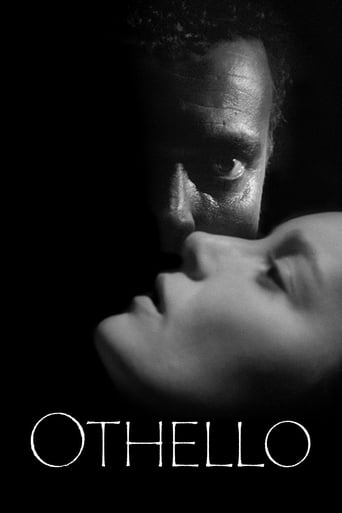
Othello
1951 · Film · 93 min
Directed by Orson Welles
Manipulated by his jealous ensign Iago, the Moorish general Othello is driven to believe that his new wife Desdemona is unfaithful, setting in motion a chain of deception, jealousy, and violence that leads to tragedy.
1 negative4 neutralfrom 5 commenters
Where to watch
No streaming data for this title.

5 comments on Hacker News
What we get today is the anti-hero. The inheritors of the tragedy are movies like Fight Club, The Godfather, etc. Shakespeare used the anti-hero very well: Richard III, Othello, and Macbeth all resonate very strongly with modern audiences.
I'm not entirely sure I'd put Hamlet in that category, and really points up what you're saying. Hamlet is tragic in the Greek sense, a concept we rarely get today. Hamlet's more heroic than anti-heroic: he's got a body count but he's not vicious about it. He at least wants to be a good person -- not just by his own lights but by what he thinks others expect of him. (Unlike the more vicious anti-heroes, who don't see themselves as evil but aren't averse to having other people see them that way.)
The interesting point underlying this rather silly discussion:
The genre of "tragedy" is nearly forgotten today, while having been extremely popular throughout history.
In most modern fiction we have a hero which is supposed to be virtuous and sympathetic ("likable"). If they have flaws they will either be insignificant and endearing, or the hero will overcome these flaws through the arc of the story. The villain is the antagonist in the story, and is a bad guy, but is eventually defeated by the hero through the strengths of the personal qualities of the hero. The hero is often a "nobody" in the beginning but achieves some respect and status at the end, while the bad guy gets justly punished for his evil deeds.
A tragedy is a completely different genre. In a tragedy we have a great person which is brought down by destiny and their own flaws. The protagonist of a tragedy is not supposed to an ideal of virtue. The author of the article seem surprised that Hamlet is not idealized but rather acts both stupidly and unfairly. But look at the other tragedy protagonists - Richard II, Richard III, Macbeth, Othello, King Lear, Romeo and Juliet. They are all severely flawed and make disastrous mistakes. We are supposed to empathize with these characters, not sympathize.
On the other hand the they are not getting "justly punished" either. Richard III is clearly an evil man, but Othello is the manipulated victim. Romeo and Juliet is not doomed through their own actions but through the destiny of their families which they are not able to escape. And poor Ofelia. A tragedy is not moralistic in the way that everyone get their just desert - destiny can be completely unfair.
So how could anyone designate Hamlet as the "worst villain" compared to someone like Macbeth or Richard III? Probably because the writer thinks Macbeth and Richard III are supposed to be "bad guys" but Hamlet is supposed to be a "good guy", and his flaws therefore are less acceptable. E.g if a bad guy is sexist, we consider it consistent with his badness, but if a good guy is sexist we consider it as if the author condones sexism, which is more problematic. But this is reading Hamlet if it was a Hollywood movie, not a tragedy.
So why have tragedy gone out of fashion to the extend that a person writing about Shakespeare does not understand the genre? Probably because in modern society we believe in meritocracy and the pursuit of happiness. We are supposed to take control over our own destiny, and so cannot believe that we have flaws which cannot be overcome, or in an unfair destiny which we have no say over.
It is about someone who is sleazy. I don't really understand the modern trend that if story that is about (or includes) a character that is sexist/racist/etc, that then makes the story or it's creator sexist/racist/etc. It's quite absurd.
Lolita is about a pedophile, does that make Vladimir Nabokov a pedophile? Othello's Iago was incredibly racist, does that make Shakespeare racist?
That's not to say this game is on the same level as Shakespeare, but the point applies to any number of movies that include contentious character motivations.
The idea that a creator has an absolute moral right to control of their characters is a fairly recent one, and it certainly isn't a widely respected one -- imagine how many movies, books, etc. would have never been written if people had considered Dracula, Don Quixote, Frankenstein's Monster, Othello, etc. to be inviolable property of their authors. I don't think it's a particularly strong argument for state protection of copyright.
My wife pointed out is that one of the disposable lines in the article mentioned that until "talkies," movies were less of a "bread and circuses" pasttime - the illiterate don't get the full experience of a silent film.
Considering the storylines of many silent films, I'm rather amused to contemplate what that implies. Seriously, "Keystone Cops" is kind of like the "America's Got Talent" of its day - "Othello" it ain't.