 Hacker Cinema
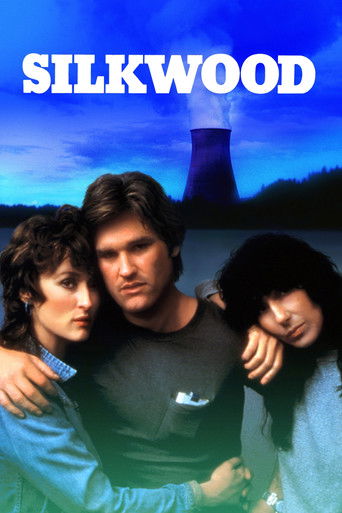
Silkwood
1983 · Film · 131 min
Directed by Mike Nichols
Like most of the people in her town, Karen Silkwood works at the local nuclear plant producing highly radioactive plutonium. Exposed one day to a lethal dose of radiation, Karen faces the blank walls of corporate indifference and denial. As her illness increases, her protest grows louder and she becomes an obvious danger to the powers that be.
3 positive4 neutralfrom 7 commenters
Where to watch
No streaming data for this title.

7 comments on Hacker News
There's a really good movie about it too.
https://en.wikipedia.org/wiki/Silkwood
A similar film is Silkwood, which is about the life of Karen Silkwood, who reported concerns about corporate practices related to health and safety in a nuclear facility where she worked. She was severely harassed by her employer and then died in a suspicious car accident.
https://en.wikipedia.org/wiki/Karen_Silkwood
https://www.rottentomatoes.com/m/silkwood
:-( I've been a subscriber nearly from the start and I've watched hundreds of movies via this service. It is a tragedy simply because so much content is not available any other way or a myriad of disparate streaming services that I am not going to subscribe to. There was a good article about this topic in the WSJ from a few months ago [0]. As the article states:
"This month the Washington Post’s Ty Burr reminds us of some movies we can’t stream: “Cocoon” (1985), directed by Ron Howard, “Short Cuts” (1993) by Robert Altman, “New York, New York” (1977) by Martin Scorsese, “Henry & June” (1990) by Philip Kaufman and “Silkwood” (1983) by Mike Nichols."
The only silver lining is I am probably going to start exploring the Kanopy catalog more which may be available via your local public library.
[0] https://www.wsj.com/articles/dvds-demise-leaves-many-films-gone-with-the-wind-netflix-streaming-culture-tv-movies-cdee40b3
Fun fact: Anadarko is the company formerly known as Kerr Mc-Gee and made famous by the movie Silkwood.
"Remind me again why we can't have nuclear power?"
Ignorance and fear.
The Three Mile Island accident (1979) took place less than two weeks after the release of the movie The China Syndrome, the plot of which featured a coverup of a major nuclear accident. Activists seized the opportunity, and then-President Jimmy Carter (who had personal experience with nuclear engineering) failed to properly rein in public fears or beliefs about the accident (https://news.google.com/newspapers?id=sM1RAAAAIBAJ&sjid=W20DAAAAIBAJ&pg=7107%2C772506). Despite a tenuous-at-best link between the accident and human health (https://en.wikipedia.org/wiki/Three_Mile_Island_accident#Health_effects_and_epidemiology), for the longest time it was considered a "disaster". Growth of the nuclear industry in the United States took a major hit at this point.
Subsequent films such as Silkwood and general Cold War nuclear war fears did little to change the opinion of the layman that nuclear == bad.
The 1986 Chernobyl accident further reinforced these beliefs. People focused on the aftermath of the explosion and the Soviet coverup and generally ignored the underlying causes such as the antiquated design of the reactor and operator error. This incident had a major negative effect on the nuclear industry.
The 2011 Fukushima accident was an trainwreck of corporate negligence and insufficient government oversight. The facility, which had been operating since 1971, performed as intended when the earthquake struck but the subsequent tsunami breached the insufficient (identified as such since 2008) seawall and took out the generators powering the shutdown.
All these incidents demonstrate cases where negligence or antiquated design can lead to disaster. But few take a look at the successes. France, for instance, is a major user of nuclear energy and has avoided catastrophe (https://en.wikipedia.org/wiki/Nuclear_power_in_France#Accidents_and_incidents).
Fear of nuclear power is akin to "reefer madness" nonsense in the 1940s and 1950s.
FINALLY! Someone who understands the reality of the situation and backs it up with FACTS!
If people weren't so terrified of nuclear energy by movies like Silkwood or TV shows like The Simpsons they might actually look past their own emotional hinderances and do some trivial comparisons, like, say, the extraction-to-power-generation death rates of nuclear energy versus coal and oil (not to mention air pollution) of the last 50 years and come to a simple conclusion: nuclear energy is perfectly safe if you do it right.
Worth a read is the story of Karen Silkwood:
https://en.wikipedia.org/wiki/Karen_Silkwood
Also worth a watch is the film Silkwood based on her time at Kerr McGee:
http://www.imdb.com/title/tt0086312/