 Hacker Cinema
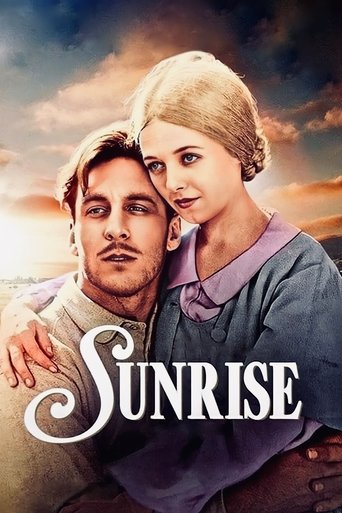
Sunrise: A Song of Two Humans
1927 · Film · 94 min
Directed by F. W. Murnau
A married farmer falls under the spell of a slatternly woman from the city, who tries to convince him to drown his wife.
4 positive1 negativefrom 5 commenters
Where to watch
No streaming data for this title.


6 comments on Hacker News
That's the case for a few old movies. Sunrise: A Song of Two Humans is another one you can watch on Wiki, for example.
Yeah. For anyone who appreciates really, really good cinema and hasn't seen Passion—I dunno, drop everything and go watch it, I guess. It's one of a handful of silent films that truly, today, "historical importance" entirely put aside, stands with the rest of the greats—and might even shoulder past more than a few of them.
Sunrise is great and important—sure, yes, it's good, even, kinda. Metropolis looms large—yeah, true, and I enjoyed it, but it's clunky as hell, if we're being honest. A dozen other greats—yes, they're good, but I can name a hundred ways they could have been better. A bunch of others are more-or-less flawless but are also weird and niche. Passion? No notes. Perfect movie.
This is the craziest thing about copyright law. Maybe it's fair that an author and his family should receive compensation for their work even after their deaths.
But Sunrise was released 95 years ago - the odds are that there is nobody alive who worked on this movie, nobody alive that even saw it in theaters. Why is it not publicly available? I doubt anyone is earning significant money off of an extremely old movie that caters to a niche audience - if the media is so old that it is both literally and aesthetically irrelevant in society, it's astounding that it wouldn't have been in the public domain already. It's a massive shame that Disney's corporate plots have been a detriment to other media that isn't generating huge profits. I only wish that "Steamboat Willie" going into the public domain will bring about some sort of copyright reform.
> Jan 1, 2023 will also be a fine day for film in the public domain, with Metropolis, The Jazz Singer, and Laurel and Hardy's Battle of the Century entering the commons. Also notable: Wings, winner of the first-ever best picture Academy Award; The Lodger, Hitchcock's first thriller; and FW "Nosferatu" Mirnau's Sunrise.
Metropolis is so influential that I'd call it a must-watch for... well, basically any fan of popular media of any kind. Film, literature, graphic arts, video games, music(!). Its influence is everywhere.
Sunrise is one hell of a roller-coaster of a movie. As with anything in the silent era (especially the non-comedy films) it's a bit of an acquired taste but it's among the earliest films that I didn't just find interesting or funny, but that really got me on the edge of my seat, several times. It's got some real "yell at the screen" moments :-) I enjoyed it way more than the director's more-iconic Nosferatu. Though, for my money, it's no M or The Passion of Joan of Arc, as silent film dramas go. Still, really good, and I think a lot of critics hold it in far higher regard than I do.
Haven't seen the rest.
> On the literary front, we have Virginia Woolf's To The Lighthouse, AA Milne's Now We Are Six, Hemingway's Men Without Women, Faulkner's Mosquitoes, Christie's The Big Four, Wharton's Twilight Sleep, Hesse's Steppenwolf (in German), Kafka's Amerika (in German), and Proust's Le Temps retrouvé (in French).
Damn, what a powerhouse year in literature. And look at that, my favorite novel (To the Lighthouse) is about to be public domain!
The Holmes news is awesome, too. Bunch of copyright troll dicks have been making doing anything with Holmes risky for years. Great that everyone can more-easily ignore them.
I recently watched a film from 1927[1] that is as good as any movie I've ever seen. The technology of film has improved, but good storytelling is timeless.
[1] Sunrise: A Song of Two Humans
The technology associated with film-making has evolved incrementally ever since its inception: from the 1890's Edison Kinetoscope shorts that could be watched by only one person at a time to the 2-reeler comedy shorts circa 1915 to D.W. Griffith's breakthrough with silent feature-length films in Birth of a Nation to the first talkies with 1927's The Jazz Singer to the introduction of color in select 1920's movies such as The Black Pirate (eventually evolving into beautiful technicolor productions) to Disney's feature animations in the 1930's to the first experimentation with 3-D in the 1950's with The Blue Lagoon and other gimmick films featuring knives and other assorted objects being hurled gratuitously at the audience to the widescreen film techniques of the 1950's featuring elongated landscapes that made one dizzy watching them to the modern digital special effects movies featuring CGI in a leading role.
Throughout this history, film-makers have continually experimented with different camera techniques and different types of cameras.
This item relating to Mr. Cameron appears to be another incremental step in this long process. It looks to be interesting and possibly intriguing.
What is being lost in the modern film innovations, however, is what I would call the essence of film-making, which is a play-acted script featuring real people but presented as human drama/comedy/satire/etc. using the recognized camera techniques that distinguish cinema from a live play - rapid cutting, point-of-view camera angles, etc. As things go increasingly digital, and become more and more subject to manipulation of images bearing less and less connection with our real world experiences, we get more and more a sense of watching a cartoon as opposed to real people. It is no coincidence that, in this context, many of the modern plots are drawn from cartoon sources (Batman, Spider Man, many others). As this emphasis on special effects has increased, what has become increasingly lost is the quality scripts (with their corresponding wit, drama, fantasy) that once could be taken for granted in quality film-making. The result is an increasingly artificial experience to which it becomes harder and harder to relate.
Over the centuries, it is the great stories that have moved us, from epic poems to the great novels and, yes, even to the cinema of old warhorses such as Gone with the Wind. Today, technology has become as much a substitute for story-telling as anything else. Yes, it constitutes progress in a real sense (incremental though it may be) but, insofar as it has detracted from inspiring story-telling by serving as a tin-hat means of attracting audiences without the need to develop a great story, it has brought a net loss. Just watch a silent movie like Sunrise (1927) and tell me that CGI and other gimmicks have brought a net improvement to what truly can be inspiring about film.
It is, of course, possible to combine great new technology with great stories but not when the technology itself is being featured as the primary attraction.