 Hacker Cinema
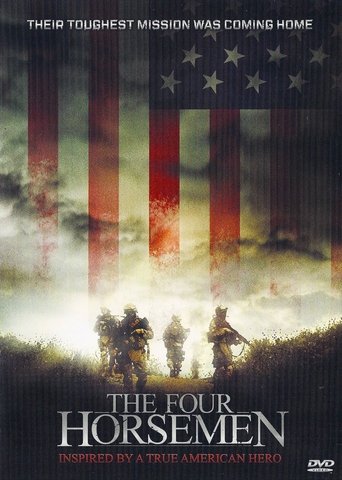
The Four Horsemen
2008 · Film · 118 min
Directed by Sidney J. Furie
Four high school football stars enlist in the Marines and head off to fight in the war in Iraq. When one of them is killed and another wounded, they return home only to find is extremely difficult to pick up the threads of their old lives. The memories of events in Iraq combined with the lack of public support pushes many of these men to the breaking point.
2 positive1 neutralfrom 3 commenters
Where to watch
No streaming data for this title.
Videos commenters linked
From YouTube links in the comments below. Most are clips and trailers; “Full” means the uploader says so.





3 comments on Hacker News
I recognized person mentioned at the end of the article: Tarek El Diwany (same first name as me spelled differently) had a part in the "Four Horsemen" documentary (https://youtu.be/5fbvquHSPJU?t=3479). I found an article about him in https://meic.cfainstitute.org/2012/03/21/islamic-finance-tarek-el-diwany-on-the-problem-with-interest/ .
People learn through stories and pictures. The documentary is a powerful teaching tool. Not perfect, and it can mislead, but powerful.
I've spent more hours than I care to admit over the past year going through a range of material from slick and well-prepared documentaries (including several on this list: "Inside Job", "The Four Horsemen", "Capitalism in Crisis", How Many People Can Live on Planet Earth", "The Fog of War", "The Ascent of Money" (well, I read the book). "Collapse" with Michael Ruppert.
And a few which aren't on the list: "The Prize", on the story of petroleum, based on Daniel Yergin's book of the same name. James Burke's "Connections" and "The Day the Universe Changed". And numerous conference presentations, interviews, and various other presentations.
What's particularly useful is watching these not online through a crappy video player, but by downloading the videos, where I can stop and start playback, and by checking up on points (did that really happen? is there documentation of that fact?), and taking notes. Sometimes I'll breeze through a light topic at 140% realtime, in others it may take me most of a week to get through a 90 minute lecture.
Yes, books have their place, but a well-made documentary or series which mixes spoken word, visual imagery, demonstration, and other effects, hits on the keys your mind uses to form memories. I'd watched "Connections" decades ago as a child, but bits stuck with me, and it was interesting to watch myself anticipating Burke reciting "Hardwick Hall, more glass than wall", which I'd last heard some 30 years earlier.
Yes, there's material that tends toward the bogus, but sometimes watching good bogosity is decent training, or you can simply skip over that part of the list. I tackled an instance of this a few weeks back with an RT interview that was posted to HN: https://news.ycombinator.com/item?id=6905655 Dissecting the elements of conspiracy (or finding out that the conspiracists were right -- reading up on COINTELPRO and Operation HOODWINK (an attempt to set the Communist Party of the US and La Cosa Nostra against one another) from the FBI's own website a couple of days ago was sobering in context of Snowden and related allegations: http://vault.fbi.gov/cointel-pro/hoodwink).
Ruppert's a case of one of the shakier videos. His history's pretty solid, his near-term future somewhat bleaker than I suspect is strictly accurate. If you read on background, the director notes that the story is as much about a man unmade by his own pursuit of an idea: "What I hoped to reveal was ... that his obsession with the collapse of industrial civilization has led to the collapse of his life. In the end, it is a character study about his obsession." (Ruppert's since continued to have a pretty hard time).
Still, anyone not planning to be dead within fifteen years had better consider what happens on the energy, resources, population, and sustainability fronts to be the biggest factors in their lifetime.
Dismissing the documentary format out-of-hand as some have done here, is simply uncalled for. Actually, it's pretty much straight out of the old FBI playbook. Perhaps even the current one.
Hopefully hackers can bring us sound money again. Sound money as in money not debt money created out of thin air.
The FED is privately owned by the big banks, see "The creature from Jekyll Island". The senator Aldrichs daughter who was on the island was married to one of the bankers. The by bank created new debt money out of thin air blows up assets bubbles that the central bankers later ride in and try and save, by saving the debt bubbles losses are socialized ie its burden is put to the people through inflation instead of the bank owners/bond holders taking the losses. Central banks centrally plan the price of new money by controlling the interest rate.
It would be good if more viewed the documentary film "The four horsemen".