 Hacker Cinema
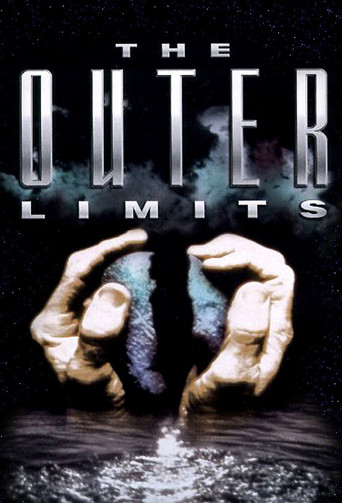
The Outer Limits
1995 · TV series · 44 min episodes · 7 seasons
Created by Leslie Stevens
Anthology series composed of distinct story episodes, sometimes with a plot twist at the end, with occasional recurring story elements that were often tied together during season-finale clip shows.
10 positive1 negative25 neutralfrom 36 commenters
Where to watch
No streaming data for this title.




39 comments on Hacker News
besides already recommended Fringe, Millennium and Halt and catch fire I enjoyed at same time as X Files in 90s also new Outer Limits, opening credits were great and episodes are always thought challenging, I'm just rewatching it and still enjoy it, though technical quality is horrible since I think FHD was never released
but if you wanna straight up X Files just based on 50s check out Project Blue Book, it's like retro X Files, you won't get closer than that to X Files
>What if a US official definitively states this and is totally BSing?
It's far more likely that any official "disclosure" is part of some kind of psyop than it is that aliens are actually here on Earth. I'm reminded of that old Outer Limits episode where the government surgically altered a soldier to look like an alien in order to fake an alien invasion, so that humanity would unite under a common enemy (and presumably a common American imperialist regime.) Of course there are tons of conspiracy theories along these lines (Blue Beam) and I would have written it all off as insane until a few years ago. Now I don't doubt that they would try and I don't doubt people would fall for it. Even when it was proven a hoax, people would still believe it.
Same for indie music and culture, except for DB, where in 1990 in Spain Goku was more widely known and read than Superman. We finished DBZ in 1995-6 with the translated manga. Marvel/DC existed, but DB was everywhere. For the rest, almost 100% the same. Mangas were for kids wich cool elder brothers, they were expensive, but shared like drugs. At least regional TV's aired tons of anime back in the day (Sakura, Doraemon, Lupin...), we were covered.
But for the music, the crappy pop was on every radio and TV, altough it was far more variety than today where's 90% reaggeton (even faking Latin American accents from Spaniards) and mediocre pop singers. When I got some discount CD's - Def con Dos, similar to Public Enemy- and the like, it was like crossing to a different universe being myself a son of a blue collar worker.
Oh, and thanks again for the regional TV's in Spain (from autonomous regions), as they reran The Outer Limits in mid 90's instead the usual shitty sitcoms. That drove me into scifi, among getting 1984, Brave New World and the like from dollar stores at very cheap prices in early 2000's. Yes, once they sold classic in "Spanish Dollar Stores" (under a different name), it was glorious to find pulp fiction books, staunch joke books and often an Asimov or Bradbury book. That under ~$1 back in the day, almost the price of a bread baguette or your daily newspaper. A damn bargain compared to the $10 pocket cardboard cover book or worse the normal, thick volume $20 book. Comics from Tintin and Astérix were expensive too. But the English edition of these were also available in these stores, so often I bought them understanding maybe a 30% of it, 80% with a dictionary.
Video games? A single one per year and that's it. Choose wisely. An RPG? Great, tons of replaying. In order to save money, the next year I could get a Chinese pirate 21 in 1 cartridge with platformers and games like Batman, Goal, Metroid II... in order to disconnect from the RPG.
But when I could get scifi games, text adventures and the like from cybercafés 2000-2002 the 1990's felt rancid, outdated and tacky compared to Emule, Soulseek, Deus Ex, the first Linux distros...
Yes, I think it's reasonable. We humans adjust to our environments. Whether physical, social, or informational.
Spoiler for DC's Legends of Tomorrow season 5.
I don't know enough to look for existing research, but what you wrote reminded me of a DC's Legends of Tomorrow episode (Swan Thong). In it the three fates of Greek mythology have established effective control over the world through a smartwatch app that people ask for decisions from (earlier they had tried direct totalitarianism, but the Legends had foiled that). https://youtu.be/aJZlJcmPUnc?t=75
In the episode, people adjust mentally somewhat, but I don't think it gets quite to the detail you ask about.
The Outer Limits episode Stream of Consciousness also deals with this topic a bit: https://theouterlimits.fandom.com/wiki/Stream_of_Consciousness
And I just participated in a conversation here on HN somewhat along those lines: https://news.ycombinator.com/item?id=46070610
This reminded me of the 1995 The Outer Limits episode "The New Breed".
There's an Outer Limits episode about this: https://breezewiki.com/theouterlimits/wiki/The_Haven
Season 5, Episode 15 (1999)
Lots of prior art for this concept. For example, this is almost exactly the plot of The Outer Limits (1995), Season 4 Episode 3 "Hearts and Minds".
This concept has been explored in the "The Outer Limits (1995)" episode 5 of season 2: "Mind Over Matter"
"A doctor uses a virtual reality A.I. device that gives him direct access inside the human mind to enter the mind of a colleague he deeply cares about and help her after she's hit by a car and slips into a coma. Things go horribly wrong."
https://www.imdb.com/title/tt0667922/
>humanoid aliens -- are kept as pets by the ships, for amusement, basically as clowns.
So this is what inspired The Outer Limits: Season 5, Episode 7 'Human Operators' https://theouterlimits.fandom.com/wiki/The_Human_Operators
Try this episode of The Outer Limits https://www.imdb.com/title/tt0667983/
It explores this theme and it's rather interesting conclusion.
Well, you have a point, but the separation is hardly as stark as all that. Both film and television have works that definitely qualify as Science Fiction, and some are even original rather than adaptations from books.
A few examples: 2001: A Space Odyssey, Fantastic Voyage, Moon, much of Twilight Zone and Outer Limits, Prospect, etc.
And for that matter there is plenty of SciFi in print as well, and it isn't all novelizations of movies and TV shows.
There is certainly more room for exposition in a novel (a fact which plenty of authors have abused over the decades, and plenty of directors have abdicated responsibility for by tacking on lengthy voiceover or on-screen text introductions), which often allows for more complete worldbuilding to explore whatever contrafactual premise the story is built around, but it is possible on-screen as well, as long as you don't rely solely on the dialog to convey it. For that matter, books shouldn't rely solely on the dialog for that purpose either.
Of course, on-screen dramatic works aren't the only ones that face the problem of conveying a setting in few words. Novellas, novelettes, and short stories have similar constraints to various degrees.
Reminds me of an episode of an old TV show (I think it was [0]), where one night, the Moon was shining unusually bright. While everyone else marveled at the beauty of the phenomenon, the protagonist is one of the few who understood that if the Moon is this bright, it means the other side of the Earth is currently on fire, and they all have but a few hours left to live.
--
[0] - https://en.wikipedia.org/wiki/List_of_The_Outer_Limits_(1995_TV_series)_episodes#ep33
I honestly don't like how we treat our pets (and especially so here in the United States). I keep imagining that the situation will end up feeling--at best--like this episode of (The New) Outer Limits. :(
https://theouterlimits.fandom.com/wiki/The_Human_Operators
I think there was an episode of the Outer Limits like this where some scientist made contact via wormhole with aliens and they looked suspiciously like demons with the horns and everything. The aliens of course said “we have a bad rep but we’re actually good guys!”, then proceeded to do something like drain the oceans or boil them for terraforming or something apocalyptic after convincing the scientist to let them teleport through.
Not a book, but it sounds very similar to an Outer Limits episode. Maybe that's what you're thinking of.
The nanobots cause his body to "adapt" very quickly to any environment. A scene that freaked me out as a kid was when he was in this water tank for some kind of test or whatever, and the nanobots caused his body to develop gills.
https://www.imdb.com/title/tt0667978/
A few episodes of The Outer Limits come to mind.
Maybe not an entire TV show, but it could make a good episode of a series like Twilight Zone or The Outer Limits, if it didn't happen already.
Like a lot of SCP material, really.
I know it's a parody of Outer Limits and the Twilight Zone, but it always made me think of the "Lost room" (https://www.imdb.com/title/tt0830361/)
This concept is addressed in the short story "Think Like a Dinosaur"[0], which also became an episode of "The Outer Limits".
[0] https://en.wikipedia.org/wiki/Think_Like_a_Dinosaur
It didn't go well on that episode of The Outer Limits. John-Boy Walton grew eyes in the back of his head.
I keep remembering that episode from The Outer Limits (the 90s series). I think the title was "The stream". It was set in the future, where everybody had an implant that they could use to access 'the stream' to get access to all the world's knowledge and information. (I.e. the internet, but back then even dialup internet was an uncommon thing for most people to have.)
The story was that there was a single guy who could not have the implant and he was, of course, and outcast. And then there was a virus that started to spread through the stream and people started to show strange symptoms. Well, maybe not that strange: they started to consume more and more information. First the infected just started to look up and quote seemingly irrelevant pieces of information. You know, like the things you'd see on Quora (or during a random trip to Wikipedia) and then they would spend more and more time fetching more knowledge and have more and more information hunger.
I'd say it's not unlike what we see around ourselves the past few years.
There's an Outer Limits episode that's exactly as you describe. As with all it's episodes, it takes an unexpected twist that was not anticipated.
https://theouterlimits.fandom.com/wiki/The_New_Breed
Most games except adventures and text adventures have a worse script (lit wise) than any average episode of X-Files/The Outer Limits and so on.
Heck, Half Life looks like a -mediocre- episode of The Outer Limits.
Watch Outer Limits, Galaxy Being episode!!!
I don't know, I saw this on an Outer Limits episode once, those tumbleweeds are up to no good or maybe they are trying to communicate.......
https://en.wikipedia.org/wiki/Cry_of_Silence
It's definitely been discussed for a while. Recent takes on it include a really interesting Outer Limits episode and the recent Netflix show Living with Yourself.
This is easy to say if you're not the one dying. If you know a perfect clone of your current self is going to live from this point forward, are you still comfortable with being killed?
Old movie spoilers ahead
I watched a short movie (an episode from the Outer Limits? It was ~20 years ago) about some army rangers who stumble upon, track and ultimately kill an alien.
When observing it closely afterwards, they realized it was an alien child sent to Earth on some kind of children camp.
The primitive livings on that planet killed the child. The parents were not happy, blew up the camp (and our planet).
So yes, I also favor the Dark Forest approach
You can see it on TV if you are a scifi fan. Look at the x-files, Outer Limits, and early Stargate episodes filmed in 1990s Vancouver. Vancouver's wet climate gave them a very specific tone that became an industry standard. 1990's scifi was generally dark, as opposed to the more colorful productions filmed in California (Trek) or Australia (farscape). But today Vancouver suffers droughts every summer. The Flash is a colourful production. The foggy grey backdrop is now a blue sky. Rainfall numbers might not be very different, but the perpetual cloud that coloured scifi for a generation is gone.
Not really. I'm not giving away which of these happens in which episode and a lot of the technology is recurring throughout the different stories. In most episodes the general idea of how the tech works is given away fairly early on and the real plot points are more about how it affects the characters.
In fact the parental controls idea is literally this: http://j.aufbix.org/plif/archive/wc161.gif and I'm pretty sure the soldier one was taken from an episode of Outer Limits or Twilight Zone.
They made that story into an episode of Outer Limits (the less-good reboot).
Both UV and the BM episode strongly reminded me of an Outer Limits (I think?) episode about a perpetual war between humans and aliens in some underground cave. The reveal is pretty similar to that in Men Against Fire, except the justification is different.
Makes me think of the outer limits episode where the suoerhuman man grows gills because he nearly drowns
This is rather scary, and reminds me a of a 90s episode of The Outer Limits where all the middle-aged people are losing their jobs because they're not as smart as the 20-somethings who are all genetically modified (even though it's illegal).
I think you're underestimating Asimov. I agree the final two Foundation books are dire, and not just because of the characters.
The characters in his short stories - which I certainly recommend reading - wouldn't be out of place on an old SF TV show like The Outer Limits, but they're certainly not badly written. He's a very deft, economic writer.
What he doesn't write are the staple chracters of traditional litfic - intellectual/academic, neurotic, possibly violent or latently so, more or less obvious sexually frustrated, middle class people. Or maybe middle class people looking at working class people.
Like a small mammal, a lot of modern litfic has an unexpectedly limited emotional range. It may be cute, but it's not often clever.
Your post reminded me of "The Outer Limits" Final Exam episode (1998) http://www.imdb.com/title/tt0667892
http://www.dailymotion.com/video/xinb18_outer-limits-final-exam-5of5_shortfilms
There was another movie/short film that I vaguely remember with protagonist arguing same thing (with a woman on train?), that inventions are simply inevitable once we reach appropriate technological level. Radio and telephone were cited as examples with multiple inventors popping at the same time all over the world.
You might be thinking of 'The Outer Limits' episode 'The Light Brigade'[1] va juvpu jr yrnea nobhg gur vzcbegnapr bs vapyhqvat orggre snvyfnsrf va bhe cynarg-ohfgref. [rotted for spoilers]
[1] https://en.wikipedia.org/wiki/The_Light_Brigade_%28The_Outer_Limits%29
Also loved them all, with episode 2 ("15 Million Merits") my favorite. It was almost like a modern update of THX-1138, and as good or better than any classic 'Twilight Zone' or 'Outer Limits'.
Back in the 90s there was an episode of the Outer Limits that touched on this subject. Effectively there was a nexus of information that everyone connected to through their minds. Anytime they wanted to know something, they just looked it up by thought and presto, instant expert. One guy couldn't connect, so he had to learn things the old fashioned way by research and practice. Naturally, the nexus goes down and people can barely function. He goes from being the village idiot to the village savior.
Funny, I just watched an episode of the Outer Limits ("Tourist Attraction") in which a biologist proposed communicating with a strange sea creature by decoding its vocalizations and synthesizing messages in its language, the same way people talked to dolphins. I didn't realize the part about dolphins was fiction, not science, and my reaction was, "Of course! If we know what the sounds mean, then obviously we can synthesize our own messages. Huh, if people have been doing it since the sixties, I wonder why I've never read about it...."
Now I'm wondering why it has taken us so long to do something that science fiction predicted fifty years ago and which wasn't blocked by any technological limitations.