 Hacker Cinema

Traffic
2000 · Film · 147 min
Directed by Steven Soderbergh
An exploration of the United States of America's war on drugs from multiple perspectives. For the new head of the Office of National Drug Control Policy, the war becomes personal when he discovers his well-educated daughter is abusing cocaine within their comfortable suburban home. In Mexico, a flawed, but noble policeman agrees to testify against a powerful general in league with a cartel, and in San Diego, a drug kingpin's sheltered trophy wife must learn her husband's ruthless business after he is arrested, endangering her luxurious lifestyle.
6 positive8 neutralfrom 14 commenters
Where to watch
No streaming data for this title.
Videos commenters linked
From YouTube links in the comments below. Most are clips and trailers; “Full” means the uploader says so.

14 comments on Hacker News
I'll quote Michael Douglas from Traffic, "If there is a war on drugs, then many of our family members are the enemy. And I don’t know how you wage war on your own family". His daughter was knee deep in heroin addiction as he was tasked to criminalize everyone. By the end of the movie he was changed imo.
We have no way of giving such an experience to those in power. The best we can do going forward is pick more well rounded people, and no, that doesn't mean great schools and great wealth. You must be experienced in life.
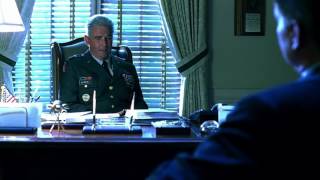
There's a version in the movie Traffic (2000) that uses "two letters": https://www.youtube.com/watch?v=3gmpyjSW6WQ
The movie Traffic already said it. "Treatment of addiction? Addicts treat themselves. They overdose and then there's one less to worry about."
The great film "Traffic" (explores drug use and trafficking and implications from many angles) used a similar strategy ... US scenes brightly colored and clear, Latin America scenes washed out and grainy.
The last paragraph of the piece kinda struck me:
"And perhaps if others saw more realistic portrayals of poverty in the movies, they might be more receptive to programs that would help them instead of demeaning and punishing them."
I would love an example where 'realistic portrayals' of a given subject in movies led to changes in public policy / public perception.
If anything, I would argue that popular films, just like other art forms, are more likely to serve as a barometer of society's perception/reception of a given subject than as something that ignites the change.
Take the war in Vietnam in the 60's and 70's - I'm not sure you could make 'The Deer Hunter' in '68, or 'The Green Berets' in '78.
Or the war on drugs - movies like Trainspotting, Requiem for a Dream, or Traffic certainly showed a realistic side of drugs and addiction... and yet the war on drugs has only intensified since their popular releases.
My girlfriend and I noticed this in 2001 with the movies "Sword Fish" and "Traffic", We made fun of it and called it the cool movie filter. lol.
Moviebarcode [0] provides some nice visualizations [1][2][3] of the color palette of movies and other things.
[0] http://moviebarcode.tumblr.com/
[1] http://moviebarcode.tumblr.com/post/104685404787/transformers-age-of-extinction-2014
[2] http://moviebarcode.tumblr.com/post/3432016573/traffic-2000
[3] http://moviebarcode.tumblr.com/post/8951346287/tron-legacy-2010-prints
One movie that seemed to play with color to a fantastic effect is Traffic - http://www.imdb.com/title/tt0181865/ I noticed when it came out that color played a subtle role in setting the mood of each scene and aspect. For instance, near the border towns and where where the "hot zone" of illegal drug traffic occurred, it was more yellow/orange tinted. Then when you head back to the suburbs and see privileged kids doing drugs in their large homes, the color was much more blue and lighting was much softer. I wish that more movies would employ tricks like this without using a "template"...
edit: looked on IMDB and it looks like 3 different films stocks were used:
To achieve a distinctive look for each different vignette in the story, Steven Soderbergh used three different film stocks (and post-production techniques), each with their own color treatment and grain for the print. The "Wakefield" story features a colder, bluer tone to match the sad, depressive emotion. The "Ayala" story is bright, shiny, and saturated in primary colors, especially red, to match the glitzy surface of Helena's life. The "Mexican" story appears grainy, rough, and hot to go with the rugged Mexican landscape and congested cities.
It seems with all the media that's been produced about heroin addiction (movies like Requiem for a Dream, Trainspotting, Traffic, etc...) that the risks of shooting up are fairly well known.
Yet, people still continue to use and get addicted to the drug. I feel a great deal of pity for the people whose lives have been destroyed by heroin, not just because of their addiction, but because of the underlying pain that must have been there for them to get to that point.
Khrushchev is rumored to have left Brezhnev these 2 letters.
http://www.dailykos.com/story/2009/05/25/735217/-Khrushchev-and-Brezhnev-A-story-from-the-USSR
The anecdote was cited in the 2000 film Traffic.
Opinions on some of the movies from the list I've seen:
Idiocracy – Basically an ordinary comedy, with an above average plot, but overall nothing that special or interesting. Overrated.
Fight Club – One of my favourite movies, perhaps in my top 10. Really loved it.
The Game – Another great movie from David Fincher, I love the mysterious atmosphere of his movies.
The Man From Earth. – Huge disappointment, I never understood why people like this movie. It's basically one guy telling a predictable and boring story. One of the most overrated movies ever. (I mean overrated in subjective sense obviously.)
Traffic – One of the best movies about drugs and organized crime.
Inception – Above average but overrated, logically inconsistent, nothing really special about this movie. The Cell is another movie where people enter someone else's dreams and even though it has only 6.2 on IMDB, I think I enjoyed it more. The depictions of the dreams were definitely more creative and looked more dreamy.
Of the top of my head I would recommend these:
* Something from David Lynch – Lost Highway, Blue Velvet or Mullholland Drive.
* Requiem for Dream
* Evil (2003)
* Sin City
* Crank – not very known, but wow, this is the best action movie ever.
* Elite squad – another great action movie, very realistic, borderline documentary.
If you haven't seen the movie Traffic (http://www.imdb.com/title/tt0181865/), I highly recommend it. There's a scene where Michael Douglas' character, who plays the role of US Drug Czar, is in a room full of politicians and lobbyists. He is told by one of them that basically this is a war that will never be won nor end. The only success would be vaguely getting usage down. There will always be a demand that creates the supply.
edit: this scene from The Wire also has a great perspective on the war on drugs -- http://www.youtube.com/watch?v=BA5za4VsskM
If I remember right, this joke is also told in the Hollywood drug-flick "Traffic", from 2000 or so. In the movie, the burnt-out drug czar of the old US administration mentions this joke to his ambitious successor, played by Michael Douglas.
I first noticed this in the movie "Traffic." Great movie and cinematography in my opinion, but I noticed how the orange came out in the Mexican drug cartel scenes and a heavy blue in the DC ones.