 Hacker Cinema
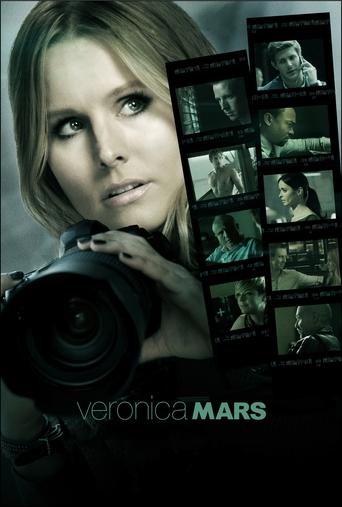
Veronica Mars
2014 · Film · 107 min
Directed by Rob Thomas
Years after walking away from her past as a teenage private eye, Veronica Mars gets pulled back to her hometown - just in time for her high school reunion - in order to help her old flame Logan Echolls, who's embroiled in a murder mystery.
4 positive3 negative19 neutralfrom 26 commenters
Where to watch
No streaming data for this title.
31 comments on Hacker News
That would be cool! This is how the Veronica Mars movie got made.
Since moving out of my parents' house ~15 years ago, I have lived without cable TV of any kind, and I miss it.
Live TV offers a 'channel surfing' experience that does not exist on streaming. I want to be able to come home from work and plop down on my couch and just turn the TV on and have something be showing. If I don't like it, I switch channels. I have discovered numerous TV shows, movies and documentaries this way, even if I come across it halfway through an episode.
It is a completely different experience from streaming, where my home screen is basically a billboard, and I have to invest time in selecting something and then start it from Season 1, Episode 1, timestamp 00:00. That seems like a big commitment for something that's recreational, especially when TV shows start off slowly to introduce all the characters.
I come to this realization every time I am in a hotel room that has cable TV. If it's 1 in the morning, I'm fine with watching the Veronica Mars movie or Baby Driver even if it started an hour ago.
Veronica Mars movie was made through kickstarter way back when. That was successful, and specifically covered cost of production. I can't remember the donation system, but most tiers got free digital copy of the film.
OK, but do you have any numbers to back up the economic side of the argument? I get that it's an ethical issue for you, but you lose me when you talk about 'sick minded publishers,' because different editions with or without DRM are simply what they have available to sell, and they're just allocating to wherever they see the best price.
If Alice will pay $10 for a streaming copy (with DRM), Bob will pay $30 for a DRM-free copy, but Carol will pay $50 for an exclusive DRM-free copy, the rational approach is to sell to Alice and Carol for a total of $60. Bob says that other people would be willing to buy the DRM-free copy later, but from the producer's standpoint the only thing that matters is who's willing to pay money up front because a) there are a lot of costs that have to be paid up front* and b) backend revenue is uncertain.
* Of course you can defray those up-front costs by asking people to work for free or deferred pay, which has been a very popular trend over the last decade. But it's awful to work that way and none of the projects I've ever done that for ever turned a profit.
Unfortunately Kickstarter doesn't provide a way to play the two off against each other, eg setting up 2 projects for DRM advocates vs owners and going with whichever one outraises the others.
Take a look at fiasco with Veronica Mars crowdfunded film which was released with DRM.
I did. I think it was a storm in a teacup, because the intersection between fans of a TV show and people who care passionately about DRM is just not that big. The primary issue seemed to be that people did not care for getting their digital download through Flixster and would rather have redeemed through iTunes or Amazon. As best I can see from the project page, ~22k people were willing to pay a $10 premium over the next reward to get a digital download in addition to a T-shirt, but not another $15 to get a DVD. About 10% of the comments post-release consisted of grumbling about the Flixster download (primarily that it was slow and/or buggy and unreliable; I'm not sure what percentage of them cared about the underlying principle), so it looks like maybe 2500 people who spent about $25,000 were pissed off, or ~4% of the backers contributing 0.5% of the budget.
The basic problem for producers is this: you can estimate the number of people interested in purchasing a restricted version of the film by looking at other projects which offer that and seeing how many of those reward offerings actually sold. I believe you that there are people sitting on the sidelines instead of donating/purchasing because they care about a DRM-free release, but how do I quantify what that demographic is worth?
If I see a project that's interesting to me, I consider supporting it on condition that it doesn't plan to use such unethical garbage as DRM in result. How much would I invest in it? That depends on the project. I don't do it out of having unlimited funds. Not at all - my funds are pretty limited. I do it because I care for those projects and without my support they are less likely to be created.
OK, but your lack of support has to be set against the number of people who are willing to pay for some exclusive right. In the case of Kung Fury that was about $90,000 - ~6000 people were willing to pay $20 for a 1080p download with exclusive content, vs $5 for the DRM-hobbled streaming version you paid for. So what I'm asking is: if you see a film you think you would like, what extra amount are you willing to pay to ensure it is made available DRM-free? It doesn't matter if you'd make a big donation of $1000 once a year to advance the cause, or you'd rather donate and extra $20 to 50 different projects, or even just 5.
But right now I have no idea how much you and other people who care about DRM are holding back. I looked at several different Kickstarter projects that offer DRM-free downloads (including Game Loading - Rise of the Indies, which raised over $60k AUD) doing a similar analysis (trying to ID how much people were willing to contribute for the digital download only, rather than the next reward with additional swag) and the numbers seem to be in the low thousands. Even if I scale budgets the numbers are a good bit lower, eg about $45,000 in DRM-free download purchases if I imagine that other projects had brought in the same overall revenue as Kung Fury and allocate the appropriate amount to download rewards.
This suggests that there's only half as much money on offer up front for DRM-free downloads as for exclusive offerings, and so that it's more rational to use a market segmentation strategy than to offer the same thing at the same price to everyone. From a producer standpoint, cash is the only thing that people are willing to accept as payment for work, and real cash now is much more persuasive than hypothetical cash later.
I mean, maybe you and other anti-DRM people should set up a fund and disburse grants or something, but only to people who commit to DRM-free movie and game releasing. That's how other people promote their causes. Money talks, as they say.
> My theory is that most people don't care about DRM the same way you do
It's a common practice for many crowdfunded projects to pitch for more backers by stating that release is DRM-free. You can see people commenting about it, if it's not stated (and projects clarifying this point).
Take a look at fiasco with Veronica Mars crowdfunded film which was released with DRM. Backers of the film said all they thought about this failure. Interest in DRM-free releases was expressed very clearly there. If anything, crowdfunding is a major driver in putting an end to approach of the sick-minded publishers obsessed with DRM.
> In all seriousness, how much do you care for art?
As much as I'm interested in something. If I see a project that's interesting to me, I consider supporting it on condition that it doesn't plan to use such unethical garbage as DRM in result. How much would I invest in it? That depends on the project. I don't do it out of having unlimited funds. Not at all - my funds are pretty limited. I do it because I care for those projects and without my support they are less likely to be created. I don't see how exclusivity fits into this. It doesn't mean I'm against perks - if someone wants to invest more, it's OK if they get more rewards. But DRM is not something that should be added as a distinguishing factor to anything. Because it shouldn't exist to begin with. Would you support the project which says that if you pay more, they'll give ecological wrap for you, but for the rest they'll ship the product in poisonous package?
Another reason to support some projects is to demonstrate demand. For instance, I would support games which are released for Linux (if I'm interested in them too), but won't support those which don't plan a Linux release.
For instance, Underworld Ascendant added Linux support to the base goal after getting feedback about it. As you can see, this also reduces exclusivity - it's inclusive, because more users are reached when release is cross platform. DRM-free release is similar in this sense.
Good grief you guys. How many films do you think make that kind of money? Billion dollar film franchises happen about as often as billion dollar startups - often enough to be something you might get lucky with, but the odds of that happening for you are staggeringly low. And even then, those films have as much or more spent on advertising as on the production, which is part of why it's such a high-risk business and major studio offerings are so conservative in terms of storytelling, casting etc..
A prepay model is what we have now. The largest 6 studios have the resources to open a film globally if they really want to (eg this will probably happen with the new Star Wars movie, and most likely the new Avengers one coming out in a few days), but generally international distributors sign contracts to buy a film in advance at a certain price and those are used as collateral in obtaining financing, but this model is falling apart under pressures from piracy, Netflix, and other factors.
If you mean prepay as in Kickstarter, that model doesn't work for features. Well, I should qualify a little - it can work for feature documentaries, because there is an existing community for many interests and people are very interested in seeing their pet interest/issue treated in movie form, without being too picky on quality. And of course it works well if you have a book or a comic or an unfashionable old TV show or something that has a small number of very dedicated fans, eg the Veronica Mars project last year, or fans of a particular actor. I call these 'fanservice' films - they're basically franchise properties, but franchises too small for Hollywood to care about. You can also get some mileage out of community fanservice, eg if your story appeals to people of an under-represented demographic like people from a particular country, LGBT people, or similar.
But if you just want to make an ordinary narrative film pitched at a broad audience - a drama, thriller, whatever - it doesn't work well at all. Dig through the major (and some minor) crowdfunding sites, and you see hardly any feature projects meet their funding targets. This should (I hope) change a bit later this year or early next, when the SEC finally opens up the possibility of crowdfunding equity under title III of the JOBS act, because while the risk is high at least there's an incentive to invest, whereas under existing crowdfunding models you have to come up with a mix of merchandising swag (which is not free to provide) and weird high-ticket rewards like getting a hot air balloon trip with the lead actor or something to land a couple of big donations.
Considering the Veronica Mars movie[1] hit 5MUSD funding, I wonder what it would take for a subscriber-only Dr. Dobbs journal to hit 3M with the premier tier being a one year subscription? At 10 USD/month, that's 25 000 backers?
[1] https://www.kickstarter.com/projects/559914737/the-veronica-mars-movie-project?ref=most_funded
[Edit: I forgot a big thank you! I still remember reading the article on red-black trees in my teens. Took me many years to realize the significance - but we learn best by streching up, to that which is just out of reach.]
>The closest thing I can think of is Veronica Mars which was Kickstarted many years later and raised ~5 million dollars from 91,000 backers to make a single movie.
That everyone regretted backing.
> Right now, supposedly "unpopular" shows are cancelled, and then immediately get a successful Kickstarter from what turns out to be millions of fans who happened to be watching only through Netflix, or iTunes, or DVD box sets.
Can you name any examples of this?
The closest thing I can think of is Veronica Mars which was Kickstarted many years later and raised ~5 million dollars from 91,000 backers to make a single movie.
I think perhaps the "alternate consumption streams" viewers are not as lucrative as you think.
It depends what sort of film you want to make. For documentaries, that model can work quite well. If you want to make a narrative feature it's a great deal trickier. That's why the most successful Kickstarter projects in this area have been tied to existing franchises, eg the Veronica Mars film.
But suppose you have an original concept that's not a film version of a graphic novel and doesn't have a built-in fanbase: that's an awful lot harder to get interest for, and the methods you can use to get interest (eg sharing the script or key art or storyboards) can also limit your upside, ie the more you reveal to potential backers the less suspense you can create in the work itself.
It's doable and crowdfunding is definitely going to become an increasingly important business model, but it's still very far from an ideal approach. When I look at narrative projects on Kickstarter I can tell a lot just from the tagline, picture, and budget they're seeking. And for 90% of people trying to do a feature the prognosis is negative - either the quality is going to be dreadful, or the producers clearly don't know what they're doing, or everyone in front of and behind the camera is going to be working for free (with a correspondingly higher risk of non-completion). Unfortunately, the most competent ones (in terms of demonstrable ability to deliver a marketable film) are less likely to get funded, because of the amount of money they need to raise.
You can kickstart a product like the Veronica Mars movie or Bee and Puppycat show. This looks like a product to me, a web serial. It just has ancillary aids for classroom presentation.
> DRM certainly serves a purpose, which (as articulated in the source article) is to provide publishers with leverage over distributors
So, it means they lie when they insist that DRM is about piracy. And if they lie about this, they can lie about whatever else it is for. So it's logical to assume it's something bad. The unethical nature of DRM and its derivatives like DMCA-1201 which are forced on people through undemocratic means only prove the point that intentions behind it are never good.
> It's a great example of the reality of film industry economics
I meant it's a bad example of competition that can be used as a case study. Because it didn't turn out to be DRM-free despite being crowdfunded. My point above was not to debate the benefits or downsides of crowdfunding vs. publisher funded production but to say that successful DRM-free examples provide practical ways to demonstrate that DRM is not needed. So Veronica Mars is not relevant to the subject at hand.
> First, backers of the movie were entitled to a digital download as part of the Kickstarter reward.
They made a mistake of assuming it means what any normal person would expect - a DRM-free video file. Not some DRM Flixter garbage. Their second mistake was trusting WB to act decently like many other authors of the crowdfunded projects who release their works DRM-free. But WB is WB. They had to know better that if the pledge never said "DRM-free" explicitly, they were risking never to get it.
> As a rule of thumb, about 30-35% of respondents in surveys cite DRM policy as a major influence on buying decisions, in fields from e-books to videogames.
Very interesting, good to know. Do you have any links to such surveys?
> Here's an alternative scenario: a big studio decides to do DRM-free releases, and its domestic and overseas distribution network cuts presale revenue offers by half.
What does the network care? Network is the middleman, not the owner of the IP. According to Netflix for example, they don't care about DRM and wouldn't use it if not for publishers' demands (I don't believe them though, since they have some content which they own, and it's not available DRM-free either). So why would distributors care about DRM? Usually they blame all that on the publishers, not the other way around.
And if some distributors want exclusivity - they can get it. They can agree that the publisher will sell that content only through their channel. What does it have to do with requiring DRM? Same thing can happen with a DRM free release.
DRM certainly serves a purpose, which (as articulated in the source article) is to provide publishers with leverage over distributors. Distributors provide by far the largest chunk of revenue to publishers, and the fact that many of them are in other legal jurisdictions from the publisher gives them considerable leverage. Absent DRM, distributors can promise a lot to publishers but will suffer little loss if they breach the contract. DRM provides publishers with a way to track distribution and to lock out dishonest distributors in a way that will withstand legal scrutiny.
You keep looking at it as consumers v producers in a zero sum game. This is a wholly inaccurate model. distribution is a business fundamental for reasons that I've explained above. In fact, it's a legal fundamental as well, because thanks to antitrust laws in the US film studios are prohibited from owning distribution channels like chains of cinemas
That's a bad example. WB didn't allow it to come out DRM-free despite it being crowdfunded. It should be a lesson not to trust these backwards thinking publishers ever.
It's a great example of the reality of film industry economics, even though it doesn't support your point. So what if they didn't let it come out DRM-free? Are you saying it would have been a runaway hit otherwise? No chance. At that, they gave refunds to annoyed customers who had problems with the Flixster purchase. If you think that the mediocre sales are the result of DRM you're looking at it from inside a bubble.
First, backers of the movie were entitled to a digital download as part of the Kickstarter reward. they didn't like Flixter, so WB issued refunds to people who had filed a support ticket, allowing them to download it via more popular outlets like iTunes or Amazon. This had zero effect on buyers who downloaded through those two main platforms. It may have deterred some potential online purchasers, but not many, I don't think.
As a rule of thumb, about 30-35% of respondents in surveys cite DRM policy as a major influence on buying decisions, in fields from e-books to videogames. As a second rule of thumb, home viewing revenue is about 50% of theatrical box office. (I'd have to write a few thousand words to fully describe sales channels and common deal structures in the industry. studios are very tight-lipped about the terms of individual deals, because that's very valuable commercial information, but we can also rely on the aggregate sums shown on tax returns and compare them with known box-office revenue, historical models, and so on. I'll skip the in-depth explanation and a raft of citations if you're OK with that; I have no reason to mislead you about this). So we can figure that potential lost sales from WB's DRM policy - which they are likely contractually obliged to stick to anyway - is about 1/6th of box office. Let's be generous and say it's 20% due to the extra publicity. It would actually be a lot less since core fans who were Kickstarter backers got digital copies and would not have had any incentive to purchase them separately absent DRM, but let's leave that aside.
Now, VM had production (including marketing) costs of ~$5.7 million. Box office revenue after 6 weeks in about 300 theaters is $3.3m, plus a few hundred thousand $ for worldwide (unsurprisingly low, given the limited international audience for the TV show). That's pretty bad from the studio's point of view. The studio (qua publisher) gets ~50% of the box office, so to break even the film needed to make $12m. Of course, the upside is that Kickstarter backers wanted a Veronica Mars movie more than they wanted financial profit, so Warner Brothers hasn't actually lost any money, but that's beside the point here. If we take our guess above that 20% of potential home viewer revenue was lost due to anti-DRM sentiment, that's about $700,000 at the very most. ---
Those will be forced by hard competition only. I.e. imagine a big publisher coming which doesn't want to be a part of their cartel and makes DRM-free releases. Many would prefer that, and it can force other publishers to drop their crooked reasons when they'll start losing profit.
Jeepers, biased much? Look, that's not going to make any difference because audiences don't go out saying things like 'let's go watch a Paramount film tonight' or '20th century Fox is my preferred studio.' Marvel, Disney and Pixar are unusual because they have such strong brands, but they operate within pretty narrow market/genre parameters. Film products are not easily substitutable, so your basic supply-and-demand model isn't applicable here because we're not talking about commodities.
Here's an alternative scenario: a big studio decides to do DRM-free releases, and its domestic and overseas distribution network cuts presale revenue offers by half. The upside potential is maybe 11-12%. The downside potential is not being able to take large projects into production because you either can't raise sufficient funding or you can't get a financial institution to provide bridge financing or issue a completion bond (which is essentially production insurance).
I'm sorry, but you seem to view studios like cartoon villains twirling their mustachios as they sit on top of piles of ill-gotten loot. The reality of film financing is that it involves large numbers of stakeholders in a very high-risk market requiring extremely conservative contractual arrangements. From the distributor's point of view, they have little incentive to pay large sums of money to a studio or production company that won't guarantee them exclusive rights within a particular territory. After all, the distributor isn't likely to capture any of the extra revenue from DRM-free digital copies.
This is dead wrong.
Indies don't make nearly as much money as studio titles, nor do they have such a huge investment on the line. Consider that for something like a new superhero movie, the production costs are easily >$100 million and marketing costs are about the same (a 50:50 ratio of production to marketing investment turns out to produce the optimal return, based on empirical measurements). $200 million and up is a lot of money, so films like this are largely financed by presale agreements with distributors. Yes, this can be offset by stars taking a profit share instead of up-front payment and by wealthy investors with deep pockets - but there are limits to both approaches, and neither is sufficient for really expensive projects of the kind the public has come to expect.
Of course things like Kickstarter and so on are great and will continue to gain in importance. However, they are much ,much better for established media properties (eg cancelled cult TV shows with an existing fan base, or projects by existing celebrities in other media, like if Justin Bieber decided to start making movies) than they are for innovative products (with new actors/ directors/ writers/ characters).
No doubt it will continue to grow and before the end of the decade a crowdfunded project by a bunch of unknowns will turn into a monster runaway cinema hit. But then it will revert to the mean. Anyone who is a filmmaker is familiar with the 'first time director X made a hit movie with a tiny budget of $Y' story. Blair Witch Project! El Mariachi! Primer! We love stories like this but there are a few things to bear in mind. First, the low-budget figure is not what it cost for you, the consumer, to see it, but what it cost to get it in front of a studio executive who OKed spending the money on making it market-ready. Second, it's untrue because there was a list of free stuff as long as your arm in the way of donations from friends of favors owed or suchlike, that most people don't have access to. Third, there were hidden costs in time or lost production quality. And fourth, and by far the most important, only one film every few years out of many thousands made every year hits a sweet spot and recoups some very large multiple of its original budget. It's like getting a royal flush in poker, or successfully splitting your blackjack hand multiple times: it's always a possibility, you could hit an enormous jackpot if you succeed, but odds are that you won't.
To paraphrase the famous Dov Simens, that's why they call it 'show business' and not 'show luck.' The business model is that you make an entertaining movie that people want to watch, movie theater owners rent it from you in order to rent out seats and sell expensive snacks, and then later streamers rent it from you and a you make some additional money on hard copies. (There's whole additional business model built around merchandise/franchise income like toys and theme park rides, but those are generally limited to family-friendly sci-fi and fantasy films with vast marketing budgets.) You can't run a business around the idea of producing surprise movie hits on a shoestring. You build one around the idea of being able to reliably pick projects with commercial potential and reliably match your investment with the profit potential. Essentially it's fund management in a market where many of the producers and consumers behave irrationally and unpredictably. If you want to do big deals, then you need to be able to sell the film before it gets made. Publishers are hard-headed about these things not because they are stupid, but because the alternative is losing a ton of other people's money and having to exit the industry in fairly short order.
So there's more DRM-free content every year, yippee. That's wonderful. It's wonderful in the same way that you can get better digital cameras for less every year and so on. But tell me what fraction of industry revenues this content accounts for, and what the economic inputs and outputs are. It's great to see Louis CK put out DRM-free editions of his stand-up performance, but his downside risk on that was maybe $10,000, $25,000 at most. Plus he was already famous. It's great that Veronica Mars raised $5.7 million on Kickstarter, but it only made 2/3 of that back at the box office although I anticipate it will break even by the end of its second financial year. And again, that was from a base of a multi-awarded hit cable show that ran for 3 years and had already had several million invested in it. Kickstarter works extremely well if you already have a franchise to leverage, because the marginal cost to the fan-investors of backing the project is pretty low relative to the opportunity-cost value of the time they have already invested in the franchise. But if you don't already have a brand, it's a very different situation.
I've brought this up again and again on DRM-related threads here. Publishers don't want to make consumers' lives difficult or prevent you from enjoying yourself - that's a juvenile and inaccurate picture. They're businesses that compete intensively against each other and launch a large number of extremely high-risk products each year, many of which never break even. The portion of the public that goes out and expends effort to discover artistic quality is tiny. Most people want to be entertained - and given that the #1 whine about DRM is the 'inconvenience' it imposes on consumers (eg the original article's complaint that having to stop the movie so one family member can let the cat out is an unacceptable loss of enjoyment), I'm pretty sure that the anti-DRM lobby is not champing at the collective bit to free starving artists held hostage by studios, but rather to watch more or less the same expensively-produced and marketed blockbuster entertainment as everyone else in their demographic cohort.
There's a ton of ways Hollywood can get paid but it may not be as easy or profitable.
Although it wouldn't be popular I could imagine Hollywood relying more on product placement. I've noticed TV shows targeted at young people having increasing amounts of brands in them.
Plus there's Kickstarter style. People pay for the movie they want to get made. Veronica Mars was funded this way.
I've always found it bizarre that people would willing give hundreds (if not, thousands) of dollars to fund a business venture for some paltry token of appreciation while the founders (and investors) receive all of the financial rewards. (The "Veronica Mars" movie comes to mind.)
Also, I find it deeply upsetting that I am be allowed to give my life savings to a startup founded by a friend or family member, but I can't do this with a stranger...because the government wants to protect me or something.
But, really, I can't really blame regulators for this paternalistic policies since most people blame the banks for the financial crisis while pitying those impoverished home owners who stupidly purchased homes they couldn't afford.
I was also a contributor to the Veronica Mars movie Kickstarter.
When I received my email today and found out it was Ultra Violet, I was quite upset. I emailed the address they have listed on the F.A.Q. site with my complaint.
I backed the Kickstarter, but in order to watch it on my AppleTV I have 2 options: 1. Purchase from iTunes. or 2. Pirate.
The money I spent to back the Kickstarter could have been used for the iTunes copy. Which doesn't need an external player and is easily accessible on my AppleTV. The iTunes version may have DRM, but it's easily strippable if I desire to back it up for example.
Edit: Some spelling.
Wow! Without your comment I wouldn't have seen that Veronica Mars was released! I was also an early contributor but ignored most of their mails since they have a tendency to spam... (which is okay since that's what kickstarter is about).
So thanks for your comment, I'm just gonna torrent the movie instead of using my flixster code.
edit: I'm streaming in in Flixster right now, I had no problem (didn't have to download a player).
Ironically, the crowd-funded 'Veronica Mars' opens this week and is getting favorable reviews by fans:
http://www.imdb.com/title/tt2771372/
Kickstarter's Technology category has only 9 projects that have raised over $1 million [1]. None of them requested more than $250,000 and one requested just $30,000.
In fact the only things I can find on Kickstarter that requested and raised more than $1 million are films [2]. There's people working on space telescopes who only requested $1 million [3].
So, I guess this type of funding could be used for the kind of things you see on kickstarter?
[1] http://www.kickstarter.com/discover/categories/technology/most-funded?ref=more#p1 [2] http://www.kickstarter.com/projects/559914737/the-veronica-mars-movie-project?ref=most-funded [3] http://www.kickstarter.com/projects/1458134548/arkyd-a-space-telescope-for-everyone-0?ref=most-funded
This is a terrible analysis that fails to understand why veronica mars was so successful.
As discussed here when the VM kickstarter succeeded, there was a very loyal fanbase to the series and there hadn't been a new show or movie in years (since 2007). There was a ton of latent demand for a product.
If I were doing this analysis, I'd try to separate established brands from new concepts. Bell's project to a great extent was driven by the brand and Braff's project leveraged Garden State. Since Spike Lee's project was entirely driven by his name, I'd look at his with a different lens
The best part of this article is the quote "Judging a trend from 3 data points isn’t the wisest thing to do"
>> It argues neither. It asks the question: you apparently want to do this, you seem to have the means to do it, why do you go through a crowdfunding site?
Isn't the standard operating procedure for making movies to go out and find other people to finance the bulk of your project, whether it be private investors or a big studio? A lot of rich stars/producers/directors get financing even though they could afford to do it all by themselves.
>> Why do you go through a crowdfunding site?
Because it's trendy and has worked for some other projects (i.e., Veronica Mars)?
Does anyone have any examples of any films actually getting made from crowd sourcing? I would guess this and Veronica Mars stand a good chance since the people involved have made movies before and have built-in fan bases, but I am not aware of any actually working out so far.
I donated to one years ago (http://en.wikipedia.org/wiki/A_Swarm_of_Angels) and that went nowhere...
It's sort of a sad statement about our society that the Veronica Mars kickstarter project has raised $4.1 million with time to spare, while all of the worthy projects on Microryza combined couldn't do it.
Someone needs to make a for-profit movie/violent video game company with the goal of using the profits to fund this stuff.
...don't you think Kirsten Bell could just bankroll the $2m Veronica Mars movie herself?
Why on earth would anyone think that? It isn't hard to find out what work she's done [0]: on that page, I see a bunch of guest appearances on TV, roles in a few movies I've never heard of, and a starring role on one TV series, to which she was signed when absolutely unknown. (Unknown actors signed to new programs are typically locked in for years of low pay, because they're "lucky to be working at all".) Also she is listed as producer of one minor movie and one planned movie.
I certainly hope Ms. Bell has good financial habits, but I don't see how she could have saved $.2M from this body of work, let alone $2M, especially while living in Hollywood.
[0] http://www.imdb.com/name/nm0068338/
I am a backer of this project, and after reading this post I am still very happy to be involved.
There is so much involved in this project that simply isn't financial.
Going through the process of putting up the Kickstarter project creates accountability and motivation for Mackenzie to actually build and finish the game because she now has a group of people cheering her on from the sidelines.
To me this is exactly what Kickstarter is about: supporting creative endeavors. The financial aspect of it is secondary...don't you think Kirsten Bell could just bankroll the $2m Veronica Mars movie herself? Probably. But with Kickstarter you get the benefit of a built-in support group, and I am just as happy to support Mackenzie whether she's from a rich or poor family.
I think there's a fair bit of double standards here. Here's a short, by-no-means-exhaustive list of well received, wildly successful Kickstarter campaigns started by multi-millionaires who could've easily offered the funding themselves:
* Double Fine Adventure (Tim Schaefer): http://www.kickstarter.com/projects/doublefine/double-fine-adventure?ref=live
* Yogventures (the Yogscast): http://www.kickstarter.com/projects/winterkewlgames/yogventures?ref=live
* Veronica Mars Project (Rob Thomas or Kristen Bell): http://www.kickstarter.com/projects/559914737/the-veronica-mars-movie-project?ref=live
* Wasteland 2 (inXile Entertainment, run by Brian Fargo): http://www.kickstarter.com/projects/inxile/wasteland-2
* Torment (2nd Kickstarter run by inXile Entertainment, before even fulfilling Wasteland 2): http://www.kickstarter.com/projects/inxile/torment-tides-of-numenera?ref=live
* Project Eternity (Obsidian Entertainment, a AAA games company, run by Chris Jones): http://www.kickstarter.com/projects/obsidian/project-eternity?ref=most-funded
* Project Godus (22 Cans, run by Peter Molyneux): http://www.kickstarter.com/projects/22cans/project-godus?ref=live
Why a nine-year-old girl and her ostensibly well-to-do mother get called out as "fraud" but not everyone else is something I don't really understand.
I was prepared to be moved to some novel point of view on the nature of money, but the article doesn't ring true.
We do get to choose how to spend our money, and rich Americans who accrue millions or billions of dollars of personal wealth especially do.
What do people choose to do with their money?
* Often they invest it, so that their net worth goes up rather than down, while perhaps supporting a company or cause they believe in. It's true that when you put your money into something, it's no longer liquid. If you inherit a few million dollars and immediately buy a few houses as an investment, you don't have the money, you just have the houses.
* They set up philanthropic foundations. This involves allocating money to ongoing aid. Yes, the money is earmarked, because you (the foundation) earmarked it.
* If you want more money going to innovation, that's great, but it is not an axiom that money, where it exists, should be used to fund particular innovative projects that will transform society. For one thing, people disagree on how important it is to spend money on innovation versus other things. If you want to see a manned mission to Jupiter, say, you can either fund it yourself or convince other people it's a good idea and work out where the money will come from. You can't just complain it's not happening, despite all the money everywhere.
* When wealthy individuals decide how to spend/blow/invest/donate a million dollars (say), I don't think they are ruled by social pressure, their hands tied by the ever-present danger of being shamed into oblivion -- so they decide it is safer to just buy a yacht. This sounds like an externalization of the feeling of self-consciousness some people may have.
Now, one thing I'll say is that money is not necessarily being spent on big projects in a way that reflects what people want to see. Kickstarter is helping change this (see http://www.kickstarter.com/projects/559914737/the-veronica-mars-movie-project) -- by tapping into discretionary money!
TFA does not have a link to the Kickstarter project page: http://www.kickstarter.com/projects/559914737/the-veronica-mars-movie-project
Currently at $2,335,670 with 37,676 backers and 29 days to go.
There are some really creative and interesting rewards for higher contributions. Personalized video message from the cast, personalized video message from Kristen Bell (much more expensive, obviously!), voicemail recordings, name a character after someone, have a local theatre rented out for a private showing possibly before the screenings, after-party tickets, be an extra, or even have a speaking role.
I presume that ultimate reward means this movie is outside the purview of SAG-AFTRA, as any speaking roles in SAG productions absolutely, positively must be performed by SAG guild members. This is going to be an official Warner Brothers product, and I wasn't aware WB was not fully in bed with SAG-AFTRA.
EDIT: What's up with Bell? She doesn't seem to understand the concept of Capital Letters aNd WHerE thEy bELONG In A Sentence. Or she's just being coy.
I would love a veronica mars movie, but I wonder how hollywood accounting will gel with crowdfunding.
Their reaction was, if you can show there’s enough fan interest to warrant a movie, we’re on board. -
Q: Where is my money going?
A: All funds will go into a Veronica Mars Movie Project production account which has been set up by Warner Bros. on our behalf.
-
Distribution is always a challenge with low-budget films, but Warner Bros. is going to help us distribute the movie, and try to get it out there as widely as possible.
There seems to be a significant amount of involvement from Warner Bros, although this isn't inherently bad it's a strange thing to be seeing on Kickstarter, it would be nice if they could elaborate on Warner Bros full involvement. Are Warner Bros trading ownership of the movie for permission to make it?
Also they've unfortunately restricted all the rewards to US only, even digital movie copies :|