 Hacker Cinema
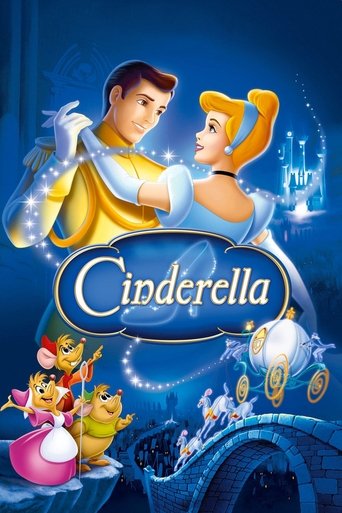
Cinderella
1950 · Film · 74 min
Directed by Clyde Geronimi, Wilfred Jackson, Hamilton Luske
Cinderella has faith her dreams of a better life will come true. With help from her loyal mice friends and a wave of her Fairy Godmother's wand, Cinderella's rags are magically turned into a glorious gown and off she goes to the Royal Ball. But when the clock strikes midnight, the spell is broken, leaving a single glass slipper... the only key to the ultimate fairy-tale ending!
2 positive2 negative9 neutralfrom 13 commenters
Where to watch
No streaming data for this title.



13 comments on Hacker News
Also, remember the marketing idea of the "Disney Vault"? In the 90s, Disney would take all their movies in and out of print basically, only selling tapes some of the time, and they'd charge top dollar for them, because you couldn't just walk into Walmart and grab a copy of "Cinderella" anytime. They created scarcity easily this way, since before ebay, finding specific things like a certain videotape at a thrift store or something was a lot more work. So they would charge like $25 for a decades-old movie and say "Get it now, before it goes back in the vault!"
I can see this happening with games more after the death of physical media. Create artificial scarcity with limited time windows and charge top dollar for old games because there will be literally no way to get them besides on their digital store terms.
And a different site says that Cinderella was the #1 film of 1950.
https://www.the-numbers.com/market/1950/top-grossing-movies
> Cinderella was a box office bomb.
Is that really so? Wikipedia says it was the 5th highest grossing film of 1950. [0] Quoting the same: "Walt Disney Studios' animated film Cinderella debuts. The film is the most successful the studio has made since Dumbo, and saves the studio from four million dollars in debt."
[0]: https://en.wikipedia.org/wiki/1950_in_film.
As much hate as the Xerography process gets, this really wasn't true. The character designs for 101 Dalmatians were incredibly expensive, and they blamed the spots on the dogs. Part of the reason Bluth left was that cost control controls were put into place because of how expensive Dalmatians was.
The real problem is that Disney movies boom or bust. The insane successes (Snow White, Dumbo) were offset by busts (Cinderella, Bambi). Ironically, even though we remember these are huge successes now, Bambi was released in the middle of WW2 when the international market was cut off, and Cinderella was a box office bomb.
Disney still has this problem, which is why the death spiral of a Disney CEO is always when they start greenlighting sequel after sequel.
and owns so much cultural IP
No. That's not cultural IP, that's Disney IP. Disney made a habit of taking stuff that was in the public domain, changing a few things around (even the whole story line) and copyrighted that.
Next time you have the inclination, compare a Disney movie/story/comic that purports to be the same as one of the public domain tales with the original tale. You'll find that the "Disney Creation (c)" is nothing at all like the original.
As an example, compare the original 'Star Wars' franchise from the 1970s with the later Disney knock-offs and see for yourself. As further examples, compare Disney's 'Cinderella' with the original book version, or maybe Disney's 'Alice in Wonderland' that is a weird hodge-podge of TWO of Lewis Carroll's books, 'Alice in Wonderland' and 'Alice Through the Looking-Glass'.
In a romantic sense the idea that a multi-generational back catalog being a profitable pursuit might feel right, but that doesn’t necessarily translate to a marketable product.
Netflix hasn’t needed much of a back catalog to out-earn the competition.
The truth is that back catalogs have the potential to be basically worthless except for a select few “best of the best” classics.
The majority of Disney back catalog content is most certainly not at the level of Snow White or Cinderella. I think about many of their package (anthology) films as a great example of near-unwatchable garbage that only has non-profit historical value.
Media companies quite literally let their back catalogs rot (like the neglect and disinvestment that led to the Universal masters fire of 20008).
I agree, traditional animation was better than modern CGI, but I don't think it's as simple as CGI being an inherently worse medium, but that films are produced more cheaply. Some weeks ago a friend and I were watching and comparing some scenes of Snow White and Cinderella in English and Spanish and were stunned by the singers in both languages. How often do you hear actual opera singers in modern Disney films?
So, yes, what you say may definitely happen, but it's a trend some graphical industries have been on for decades. It's why there are so many fewer professional animators anymore. I wouldn't be surprised if some techniques of traditional animation have been lost by now.
Disney does not own the stories but it owns its films and all associated IP. If you sell a Cinderella T shirt that looks like their Cinderella, you will probably get something in writing from a lawyer before long.
Disney was founded on Mickey Mouse. Yes, they made major motion pictures out of old myths and legends, like Cinderella and Robin Hood, but those stories have always been public domain and you can write a book or movie about them with no problem.
"Mickey Mouse" isn't copyrighted, it's trademarked. There is, I believe, pretty wide consensus that trademarks remain valid as long as they're in use.
"Steamboat Willie" is copyrighted, but I don't know if Disney actually makes any money off of it at all (even if there were a good way to account that). What Disney wants is for you to not be using it.
You might have a better case for, say, Cinderella, a film that they actually do make some money off of. Again, I'm not sure how they'd account for it -- it's available on streaming, and how much of that revenue is due to Cinderella?
Even if you were taking a percentage of their DVD sales, I suspect they'd be happy to pay it. As with Steamboat Willie, their intention is for you not to be using it more than their actual use.
The release of the Disney alternative will be interesting. I haven't read what their plans on but they have always used the "vault" technique [0] for their classic movies (ex. You can only buy Cinderella from retail at certain times). I wonder if they will do away with this technique and simply make those classics available all the time.
0 - https://en.wikipedia.org/wiki/Disney_Vault
"Love -- bah! Just a boy meeting a girl under the right conditions. So, we're arranging the conditions."
--The King, Cinderella (1950 film).
>I know that Disney stops people from taking Walt's original concepts. But is that a bad thing? What concepts did Disney steal? None: he made his own. Other people can do that too.
This is completely wrong. Nearly every famous early work of Disney's was "stolen" from others. Among the more famous are Snow White (1937), Fantasia (1940), Pinocchio (1940), Dumbo (1941), Bambi (1942), /Song of the South (1946), Cinderella (1950), Alice in Wonderland (1951), /Robin Hood (1952), Peter Pan (1953), Lady and the Tramp (1955), Mulan (1998), Sleeping Beauty (1959), 101 Dalmatians (1961), The Sword in the Stone (1963), and The Jungle Book (1967).
The first iteration of Mickey Mouse, called "Steamboat Willie", was copied directly from Buster Keaton's "Steamboat Bill."
This is an excerpt from one of Lawrence Lessig's speeches about the topic: "It was a parody, a take-off; it was built upon Steamboat Bill. Steamboat Bill was produced in 1928, no [waiting] 14 years--just take it, rip, mix, and burn, as he did [laughter] to produce the Disney empire. This was his character. Walt always parroted feature-length mainstream films to produce the Disney empire, and we see the product of this. This is the Disney Corporation: taking works in the public domain, and not even in the public domain, and turning them into vastly greater, new creativity. They took the works of this guy, these guys, the Brothers Grimm, who you think are probably great authors on their own. They produce these horrible stories, these fairy tales, which anybody should keep their children far from because they're utterly bloody and moralistic stories, and are not the sort of thing that children should see, but they were retold for us by the Disney Corporation. Now the Disney Corporation could do this because that culture lived in a commons, an intellectual commons, a cultural commons, where people could freely take and build. It was a lawyer-free zone."
To address your second point, "the idea of capitalism" does not necessarily require giving anyone permanent, state-enforced monopolies of anything, no matter how well written it is. Any justification for copyright has to stem from a benefit to society. Strong arguments can be made for giving creators temporary monopolies of a limited scope, but permanent monopolies are bad for both innovation and the public.