 Hacker Cinema
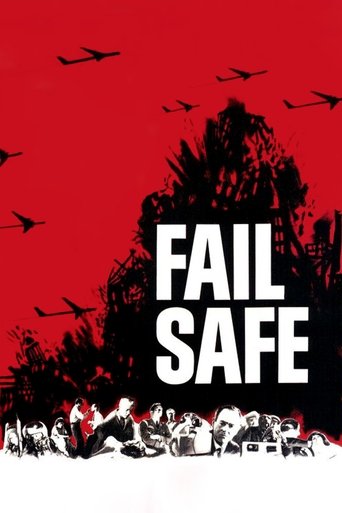
Fail Safe
1964 · Film · 112 min
Directed by Sidney Lumet
Because of a technical defect an American bomber team mistakenly orders the destruction of Moscow. The President of the United States has but little time to prevent an atomic catastrophe from occurring.
8 positive7 neutralfrom 15 commenters
Where to watch
No streaming data for this title.

18 comments on Hacker News
They remade Fail Safe in 2000 as a TV movie, but the 1964 original is the better film.
Something I learned recently is that the film was not exactly singular: Failsafe - a different movie about a Nuclear Incident was being developed at the same time. Stanley Kubrick and Columbia sued them reached a settlement to delay the release of the more serious movie starting Henry Fonda. https://en.wikipedia.org/wiki/Fail_Safe_(1964_film)#Lawsuit
We have technology to address the problem in that Fail Safe movie: https://en.wikipedia.org/wiki/Permissive_action_link
And that's one reason manned bombers are a very important part of the nuclear triad, they can be launched "on warning" and sent the codes to arm their bombs and missiles later.
Nevertheless I have to imagine there are serious barriers to putting an actual nuclear bomb on an unmanned aircraft. Just as our nuclear missile silos are still manned, you want a human(s) at the button as close to the bomb as possible, to avoid accidents resulting from errant, erratic or unexpected behavior, or to be able to clean up after them before they lead to the apocalypse.
Imagine if an unmanned bomber was sent on a mission and you lost contact. There was a movie (Fail Safe) about a manned bomber that happened to and it was scary enough
Fun fact: Fail Safe was released the same year as Dr. Strangelove by the same studio. Directed by Sidney Lumet, it’s also about nuclear war. It’s a fine movie in its own right. From the Wikipedia:
> Fail Safe so closely resembled Peter George's novel Red Alert, on which Dr. Strangelove was based, that Dr. Strangelove screenwriter/director Stanley Kubrick and George filed a copyright infringement lawsuit. The case was settled out of court. The result of the settlement was that Columbia Pictures, which had financed and was distributing Dr. Strangelove, also bought Fail Safe, which had been an independently financed production. Kubrick insisted that the studio release his movie first.
It was based on a non comedy book, ‘Red alert’. There is another film from the time as well , same premise, ‘fail safe’ that is also a serious take on it.
Incidentally, in addition to the Sidney Lumet–directed version of Fail-Safe, there was a live TV version of Fail-Safe directed by Stephen Frears and starring George Clooney. The two filmed versions of the novel have different endings.
Dr Strangelove was originally planned as a serious film until Kubrick realized that there was comedic potential in the subject and he brought in writer Terry Southern.
Kubrick was concerned that Fail-Safe, in production as a film at the same time as Dr Strangelove, could hurt ticket sales for his film and encouraged a lawsuit against Burdick and the producers of the film alleging that Fail-Safe was plagiarized from Red Alert, the source novel for Dr Strangelove.
Fail Safe is was based on a book called 'Fail Safe' while Dr Strangelove was based on one called 'Red Alert'. It's an easy mistake to make as they have incredibly similar plots which really hurt Fail Safe (which I agree is a great movie)
The original “Fail Safe” is a great movie btw, if you’ve never seen it. As mentioned in the article, that and “Dr Strangelove” were based on the same book, with “Fail Safe” being the more sober interpretation. Amazing cast, and Lumet (“Dog Day Afternoon”, “Network”, “Twelve Angry Men”) is a legendary director.
As an aside, “Fail Safe” (1964), is one of the best movies ever made, IMHO, about the risks of technology and warfare. Once you get past the slow pacing, the black and white... it’s an incredible film. It’s based on the same book as Dr Strangelove — but just takes a completely different, dramatic take on the material. You also get a chance to see why Henry Fonda is considered such a legendary actor. Sidney Lumet, the director, is also a legend: “Dog Day Afternoon”, “12 Angry Men”, “Network”...
Related: interviews with Daniel Ellsberg who leaked The Pentagon Papers about cold-war nuclear strategy and military politics. https://www.youtube.com/playlist?list=PLvq2Qc-bxroT2xV7b9pOB8aa4hB9WCmxo
Spoiler alert: Dr. Strangelove and its nemisis, Fail-Safe, were historically-accurate documentaries.
One Cold War era tactic comes to mind, probably void now with modern interception.
A "failsafe point" is where you can stage bombers (or flying bombs in this case) in neutral airspace near your enemy, and have them orbit there for long periods. If things get more tense, you can stage more there without committing to a strike. With tankers, they can park there for days before being swapped out. Then if things turn sour, they're not as far from the target; they can drop to terrain following and go downtown for business. See the awesome Henry Fonda 1964 movie Failsafe for a period story about how talking to your bombers can go wrong.
https://en.wikipedia.org/wiki/Fail-Safe_%28novel%29
Just like, I imagine, most HN readers were exposed to what happened with Apollo XIII or at Dunkirk through the eponymous movies.
But I think there should be a stronger criterion than that before saying that the lack of common knowledge of the effectiveness of DIY civil defense shelters is in part due to how nuclear hazards have been portrayed by Hollywood.
It could be because they aren't effective against the type of nuclear exchange expected during the Cold War.
Most US policy makers, including Eisenhower, were convinced that there was no good civil defense against an all-out nuclear war. This lead to MAD, and the policy of MAD demands that a country not be able to protect its citizens. This was the US policy for most of the Cold War. Which means those Hollywood films reflect US policy.
A problem is, MAD requires an effective nuclear response force, with the expectation that most citizens will die. How do you convince the citizens to fund MAD? One way is to convince them that shelters are effective, even if the high-level planners know that it isn't. This was possible early on because of the secrecy about the nuclear bomb project.
The problem is, civil defense, unlike just about all other aspects of the Cold War, requires convincing the public of its effectiveness. And the government attempts were not convincing. This helped promote anti-proliferation efforts.
Which is why I don't accept your implication that because something is "informed by ... anti-proliferation sentiments" it means that we should ignore it. Those sentiments may have a reasonable basis.
Others believed in NUTS, with the possibility of a limited nuclear exchange, which is survivable for a large country like the US. NUTS played a bigger role during the Kennedy and Reagan administrations, which is why there was more government promotion of civil defense shelters then.
I'm almost certain that Teller would be in the NUTS camp. He certainly had Reagan's ear when he oversold SDI. Even if not, there were plenty of people who were, and those are the sorts of people who would (perhaps optimistically, perhaps reasonably) push that people have a nuclear bomb shelter. Teller's support of civil defense shelters was informed by his full-nuclear-response sentiments, which also "affected public perception in a particular way."
That said, the Cold War context, the idea of having a nationwide civil defense was that, after the few weeks are over and the all-clear signal given, we would help clean up and be able to return to a life that was little different than what we had before.
The reality is that, sure, perhaps a shelter could help millions more people survive the war, but come out to what sort of reality?
And it's not just Hollywood. Even before Dr. Strangelove, there were some widely read fiction books on the topic. The ones I've know are "On the Beach" (1957), "Alas, Babylon" (1959), and "Fail-Safe" (1962). (And a shout-out to "Malevil" (1972), which was the first 'modern' (post-Verne) French science fiction story I read.)
Again, the question isn't if they affected public perception "in a particular way", but rather if they lead to a more complete understanding of the topic.
And I don't think Hollywood's portrayal was much different than what was already well-known at the high policy levels, which is why I don't think it's right to single them out.
Right, thanks for the push. Going to watch the movie now.
FYI: Both the film Fail-Safe and 'Dr Strangelove' are based on that book.
Hi all - I'm the author (backed by a very capable team) of the YouTube nuclear attack video. I appreciate the commentary and the dialogue about Threads, The Day After, The war Game, Fail Safe and other such movies, all of which inspired us in making our own modest production. Ben Marking.
I used collaborative filtering for movie recommendation (http://web.onetel.com/~hibou/morse/MORSE-Paper.html), and it worked well for that, and I'd probably use it for music too. Movies and music have quite complex "structure", making it hard to compare even similar examples. Dr Strangelove's most similar movie is probably Fail-Safe, but the two are still very different in many ways, aren't really interchangeable, and I wouldn't be surprised if someone liked one but not the other.
For beer, although there are many different styles, similar beers could more easily be substituted for each other (e.g. Sierrra Nevada Pale Ale and Brewdog Punk IPA). So if you couldn't get the one you asked for, you'd be happy with the other.
I have no hard evidence, though, and might be wrong. I didn't get the chance to apply my MORSE algorithm to beer, and it wasn't as generally applicable as I'd have liked. (See http://web.onetel.com/~hibou/morse/DeadOnTime.html)
"Fail Safe" [1] is also an excellent movie. I believe it was based on the same book as Strangelove, but is a drama and not a dark comedy. Excellent movie and cast.