 Hacker Cinema
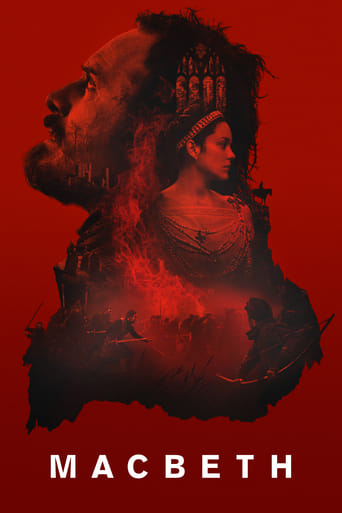
Macbeth
2015 · Film · 113 min
Directed by Justin Kurzel
Macbeth, the Thane of Glamis, receives a prophecy from a trio of witches that one day he will become King of Scotland. Consumed by ambition and spurred to action by his wife, Macbeth murders his king and takes the throne for himself.
2 positive11 neutralfrom 13 commenters
Where to watch
No streaming data for this title.




19 comments on Hacker News
I’m in my fifties and taking a break from work and have now found myself reading Macbeth, Doctor Faustus, along with Gibson’s Sprawl trilogy. My movie watching is now much more auteur and reaching for the unconscious and immaterial experience.
I’ve wonder if I was taught Shakespeare too early, but see it more as an Easter egg or gift waiting for me to catch up. I think more so I was so focused on the rational I was ignoring the other parts though fully immersed in being the other part. Now I see it and appreciate so much have the right lens from early teachings with my experiences. And to your point continuing to learn.
> - Macbeth is old fiction, but some approaches to adapting it are BETTER than others
I did say and mean that.
> - Don't do something "incongruent" and "brazen" like cast a black man and call your movie Macbeth, because that isn't one of the BETTER approaches.
That isn't what I said.
Do cast a black man, do call it Macbeth. But seriously, keep going. It's weird to set something in Medieval Scotland and make just one guy a-historical. Make half the cast black, or whatever. It's seems like restraint or half-measure to try to keep in tradition in every other way but a single character. There's no reason you can't go full Bridgerton. I think that would serve it better.
I hope that's clear. I'm not sure if you actually aren't capable of grasping, or refuse to do so because you'd rather project racism. It's a bit weird.
Another user mentioned people are looking for "depth and coherent world building". I think if it feels coherent then it works.
> fail to actually make a point about why people are complaining about Gladiator 2
Dude. You brought up Gladiator 2, not me. Ask them why they're complaining, because I sure didn't.
> As it stands, you have drawn a rhetorical distinction between fictional Macbeth and the also-fictional Gladiator 2 without actually saying how they're different vis a vis performer ethnicity, other than "more people care about" Gladiator 2.
I don't know anything about Gladiator 2 other than it's an entirely new spectacle.
Oh dear. Sorry. If you truly didn't mean to say:
- Macbeth is old fiction, but some approaches to adapting it are BETTER than others
- Don't do something "incongruent" and "brazen" like cast a black man and call your movie Macbeth, because that isn't one of the BETTER approaches.
- But honestly, no one cares because ugh Macbeth is so played out, NO ONE gives a damn.
Then you shouldn't have said those things?
As it stands, you have drawn a rhetorical distinction between fictional Macbeth and the also-fictional Gladiator 2 without actually saying how they're different vis a vis performer ethnicity, other than "more people care about" Gladiator 2.
You accuse me of being obtuse and then fail to actually make a point about why people are complaining about Gladiator 2, only that bringing up Macbeth is dumb because who cares about stupid Macbeth.
You don't understand why I would point out that Gladiator is unapologetically fiction in my reply to your comment?
I'm not sure why you're denying that you implied that diversity is fine in movies that don't do well. What other conclusion am I supposed to draw - especially in the context of this discussion - from your assertion that "no one cares about Macbeth" ?
I'm puzzled why your points are all now strictly based on how well the movies have done at the box office. You were talking about artistic and stylistic judgments before. Now it's about the business?
I'm not sure you know what you're trying to say.
> Ridley Scott is on record as being extremely exasperated with historians when it comes to his historical films. So I'm not quite sure what you're getting at.
This is a bizarre non-sequitur. You might as well have said "My friend Mike likes pizza, so I'm not sure what you're getting at". What's the point?
> These are very bizarre claims you make very confidently.
https://www.imdb.com/find/?q=macbeth -- count them.
The latest ones were flops. For instance Macbeth 2015 grossed $16 million worldwide against its production budget of $20 million. So yeah, I make the claim "confidently".
> I don't see how both of these aren't equally applicable to Gladiator 2
You brought up Gladiator 2! And speaking of bizarre claims, for Gladiator to have been "done to death", it would have needed a sequel!
> It was fine to make Macbeth black because no one was going to see it anyway?
No. This has to be a weird projection because I did not say anything near that.
Whitey Macbeth has been done many times, no one's being deprived of Whitey Macbeth. My answer to those who complain is: if you're watching, it's for you. If not you're not watching, it's not for you. Producers are banking on someone watching.
> It was a good idea to make Macbeth black because controversy?
Probably.
Not really. You can transpose a plot and/or create something based on another work with the freedom to do anything you want (see: Throne of Blood, based on MacBeth), and people will be singing your praises generations later. If conversely you take on the original name, script, characters, historical setting, aesthetic, etc collectively as if to approximate high faithfulness to the original work (one that is not genre fantasy), then putting a brazen change front-and-center (like a black Scottish king) sticks out. It will draw more attention than anything else, and maybe that's the point. There are a ton of Macbeth adaptations, they're not super-duper cheap to make, and they often lose money.
It's just an artistic/stylistic judgement, not a complaint (very few readers here are likely to go see another in the pile of Macbeth movies). A modern day adaptation even with all the original names and dialog would still work better. I don't have a horse in the race because I don't care to see yet another Macbeth.
Gladiator is fiction that is extremely loosely based on historical people and events. Gladiator 2 must necessarily be even more inaccurate if it maintains continuity with the first movie.
Ridley Scott is on record as being extremely exasperated with historians when it comes to his historical films. So I'm not quite sure what you're getting at.
> a) Macbeth's been done to death > b) no one gives a damn about Macbeth
These are very bizarre claims you make very confidently.
I don't see how both of these aren't equally applicable to Gladiator 2, the sequel(!) to one of the worst Best Picture winners in history.
> So in fact you aren't likely to see this done for every film set in a historical period all the time, and the minor controversy and trolling if anything helps create buzz for a film that will otherwise flop anyway. Were you going to see it in theaters? Statistically, not likely.
So... what are you saying exactly? It was fine to make Macbeth black because no one was going to see it anyway? It was a good idea to make Macbeth black because controversy?
The clearest point you are making is that you cannot see outside your own point of view when it comes to race in cinema.
Macbeth is fiction, albeit written long ago. Even so, I think some approaches to modern adaptation are better than others.
For instance, you can go the route of Throne of Blood. It transposes the plot to feudal Japan, and doesn't call itself Macbeth. This allows you to hit all the story beats with the freedom to change literally anything else you want, and still be "faithful" in its adaptation. I'd argue it's also a more intriguing approach for film.
Alternatively, you can opt for the original dialog, names, historical setting, and aesthetic. If you go this way, with a story set in Medieval Scotland that is not genre fantasy, then having something as incongruent as a change of race in the main character will stick out. Notwithstanding, here no one cares because a) Macbeth's been done to death, b) no one gives a damn about Macbeth. You can of course suggest that people are nonplussed about this for movies in general, but if they aren't invested in any way they may not see your film either.
So in fact you aren't likely to see this done for every film set in a historical period all the time, and the minor controversy and trolling if anything helps create buzz for a film that will otherwise flop anyway. Were you going to see it in theaters? Statistically, not likely.
It's hard to take Macbeth seriously as a history... what with the witches and all. His source is a piece of propaganda that makes Richard III look like a documentary.
As a drama, the fact that the Macbeths appear to have zero children is very important. Fathers and sons are recurring themes -- Duncan's rebuff of Macbeth as the next King, Macduff and his son, Siward and Young Siward, etc.
The absence of a descendant for Macbeth is evocative, especially given Lady Macbeth's line that she has "given suck". It doesn't get a lot of attention past that one, but it appears that within the context of the play, they had a child who died young.
These are facts about the play that inform an actor and director making character choices. They're free to ignore them and focus on other things. (Honestly, it's not clear that Shakespeare really thought that through, either.)
> Shakespeare’s plays, according to Knights, were first and foremost “dramatic poems,” works of literary art unified through metaphor and language, rather than a record of interactions between characters. To treat Macbeth as the final episode in the life of Macbeth was to confuse literature and history, to take the figures of drama for real persons, with biographies that reached back before the beginning of the play and, if they survived, into its imaginary future.
While I'll agree with Knights that "How many children" is an absurd and pointless question, I otherwise disagree with his position.
For example, a King of Scotland (well, Alba) named Macbeth was a historical figure and people watching the play would know this. It doesn't make Macbeth one of the historical plays, but it's a deliberate call out to context (else he could have named the character "King Bob", as he did with the characters Romeo and Juliet, or King Lear).
Both art and discourse are full of such, often not even deliberately invoked by the speaker or author. We just swim in multiple contexts simultaneously.
I've read about half of them, seen more than a bunch live and in film, enough to annoy the kids.
Some versions I like:
* David Tenant's Much Ado about Nothing. Kenneth Branagh's is good too, and easier to find.
* Branagh's Henry V.
* I actually like Mel Gibson's Hamlet.
* Almost any Midsummer's Night Dream. It's just a fun play, even kids can enjoy it.
* The Coen Bros' Macbeth on AppleTV
* Rosencrantx and Guildenstern are Dead. Hamlet, but exits are entrances.
> ... a Texas Mennonite, who begs the soldiers not to march on to Mexico, saying ominously: “The wrath of God lies sleeping. […] Hell ain’t half full. Hear me. Ye carry war of a madman’s making onto a foreign land. Ye’ll wake more than the dogs.”
The "disordered Mennonite" further tells the irregulars "If ye cross yon river ye'll not cross it back".
This prophecy is delivered in a barroom at the border, one of three auguries of doom delivered by various elders the Kid happens upon. With these McCarthy repeatedly points the reader back to a long heritage of epic tragedy: Moby Dick, Macbeth, and The Iliad.
Any other obsessive re-reader out there care to recall the other two such episodes?
Ok, ok...ok. Hear me out. What about a prequel to Macbeth. Macduff and Macbeth origin stories. Hollywood is where the real money is so we'll skip the stage and go straight to film. Not film. Films. We'll split it into 3 (yes, three!) films since there is so much to be told. But since there isn't that much to be told, we'll import a few characters from other Shakespearian plays ...especially those that don't fit the timeline....Tybalt the thane of East Fife, anyone?
Macbeth isn't actually being emphasised in that sentence, rather it is using italics to demarcate the title of a work. A music album or movie's name would also appear italicised. (If they've done it right Macbeth should only be in an <i>, or <span class="art-title">, rather than an <em>, though who knows what their CMS allows/is capable of)
What we get today is the anti-hero. The inheritors of the tragedy are movies like Fight Club, The Godfather, etc. Shakespeare used the anti-hero very well: Richard III, Othello, and Macbeth all resonate very strongly with modern audiences.
I'm not entirely sure I'd put Hamlet in that category, and really points up what you're saying. Hamlet is tragic in the Greek sense, a concept we rarely get today. Hamlet's more heroic than anti-heroic: he's got a body count but he's not vicious about it. He at least wants to be a good person -- not just by his own lights but by what he thinks others expect of him. (Unlike the more vicious anti-heroes, who don't see themselves as evil but aren't averse to having other people see them that way.)
The interesting point underlying this rather silly discussion:
The genre of "tragedy" is nearly forgotten today, while having been extremely popular throughout history.
In most modern fiction we have a hero which is supposed to be virtuous and sympathetic ("likable"). If they have flaws they will either be insignificant and endearing, or the hero will overcome these flaws through the arc of the story. The villain is the antagonist in the story, and is a bad guy, but is eventually defeated by the hero through the strengths of the personal qualities of the hero. The hero is often a "nobody" in the beginning but achieves some respect and status at the end, while the bad guy gets justly punished for his evil deeds.
A tragedy is a completely different genre. In a tragedy we have a great person which is brought down by destiny and their own flaws. The protagonist of a tragedy is not supposed to an ideal of virtue. The author of the article seem surprised that Hamlet is not idealized but rather acts both stupidly and unfairly. But look at the other tragedy protagonists - Richard II, Richard III, Macbeth, Othello, King Lear, Romeo and Juliet. They are all severely flawed and make disastrous mistakes. We are supposed to empathize with these characters, not sympathize.
On the other hand the they are not getting "justly punished" either. Richard III is clearly an evil man, but Othello is the manipulated victim. Romeo and Juliet is not doomed through their own actions but through the destiny of their families which they are not able to escape. And poor Ofelia. A tragedy is not moralistic in the way that everyone get their just desert - destiny can be completely unfair.
So how could anyone designate Hamlet as the "worst villain" compared to someone like Macbeth or Richard III? Probably because the writer thinks Macbeth and Richard III are supposed to be "bad guys" but Hamlet is supposed to be a "good guy", and his flaws therefore are less acceptable. E.g if a bad guy is sexist, we consider it consistent with his badness, but if a good guy is sexist we consider it as if the author condones sexism, which is more problematic. But this is reading Hamlet if it was a Hollywood movie, not a tragedy.
So why have tragedy gone out of fashion to the extend that a person writing about Shakespeare does not understand the genre? Probably because in modern society we believe in meritocracy and the pursuit of happiness. We are supposed to take control over our own destiny, and so cannot believe that we have flaws which cannot be overcome, or in an unfair destiny which we have no say over.
To be fair, Akira Kurosawa was influenced by spaghetti westerns[0] and one of his films (Throne of Blood) is just Macbeth in feudal Japan, so the copying goes both ways.
[0]https://www.thebubble.org.uk/culture/film/kurosawa-and-the-wild-west/
Ah, but the difference between a causal and a teleological view of the universe is just that -- they're different points of view. There is no actual difference in outcome. Variational physics is the same physics expressed differently.
This is true for the heptapods (at least in the story), who do not require causal explanation for their actions, but not for Louise, at least in the movie, as her perception of time does have actual (and very significant) consequences, which kind of defeat the entire idea and turn it into a time-travel story. Actually, in the movie this is also not true for the heptapods, who do have a time-traveling causal explanation for their actions (they do what they do because they will need humanity in the future).
You don't need to actually remember the future for you to view life as teleological. In fact, the teleological point of view is central to some human philosophies (of fate and predestination) without turning its believers into p-zombies (at least, not as far as we know). Fatalism doesn't require that you know the future for you to act. In fact, you may believe that the past offers cause, but you believe that it is just a perception, while the "true" (and possibly unknown) reason is teleological.
That "memetic virus" is no science fiction, and has been a part of human philosophy since forever. What is Oedipus Rex (429 BC) or even the bible (esp. in Genesis) if not a teleological view of life? And, of course, the story of Cassandra, who is cursed with the power of prophecy. There's also Macbeth, which is a little different as knowledge of the future is what sets things in motion. I personally found Chiang's story to be a rather poor treatment of the subject compared to other, older and better known ones, and the movie, while better executed, destroyed the story's philosophical point, however simplistic in its treatment.
In any event, teleology provides a narrative for millions of believers to this day, and you don't need to know the future in order to be a fatalist.
Not to be dense, but I think that publication agrees with my point. The abstract advocates the responsible use of media, not its abolition, and about midway through the piece draws this distinction:
It is not violence itself but the context in which it is portrayed that can make the difference between learning about violence and learning to be violent. Serious explorations of violence in plays like Macbeth and films like Saving Private Ryan treat violence as what it is—a human behavior that causes suffering, loss, and sadness to victims and perpetrators. In this context, viewers learn the danger and harm of violence by vicariously experiencing its outcomes.
. . . which is more or less what I was saying. It's not the medium, it's the message.
Certainly, it makes the point that taken as a whole, media like television and video games don't treat violence well, and hence if you track how much kids are watching without being concerned about what, you see negative consequences. And I'd certainly agree with that. But I don't think such an average figure merits demonization of the medium as a whole.
I still think the crucial point is whether you're writing about and exploring life; whether you're doing philosophical teaching -- in a word, whether you're consuming literature -- or whether it's just entertainment. I hold that the vast majority of works in any medium are just entertainment, but that there are worthwhile ones, even in video games.