 Hacker Cinema
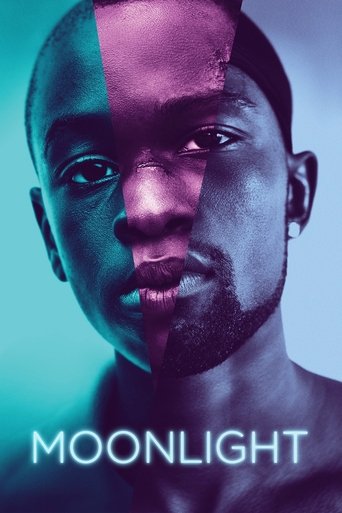
Moonlight
2016 · Film · 112 min
Directed by Barry Jenkins
The tender, heartbreaking story of a young man’s struggle to find himself, told across three defining chapters in his life as he experiences the ecstasy, pain, and beauty of falling in love, while grappling with his own sexuality.
7 positive1 negative11 neutralfrom 19 commenters
Where to watch
No streaming data for this title.

19 comments on Hacker News
Here is the full list of the 551 movies and TV shows being removed: https://www.playstation.com/en-us/legal/psvideocontent/
Top movies include Apocalypse Now, The Deer Hunter, The Graduate, Moonlight, Manchester by the Sea, Room, Silver Linings Playbook, Terminator 2: Judgment Day and Pan's Labyrinth.
The 90s films mentioned in this post are works of art and the actors and creators were artists. Compensation sustains the art, but it’s not the primary purpose.
Netflix is a business. The content on Netflix is largely designed or purchased with a primary goal of engaging paying users.
We can find plenty of films that are works of art after the 90s. One Battle After Another is a recent one that comes to mind. Parasite, No Country for Old Men, Arrival, Moonlight, Tree of Life, Midsommar, Mandy…
I dunno, 2015, I'm a little weak on this year: It Follows, Creed, Ex Machina, Max Max: Fury Road, Sicario, The Hateful 8. I'd watch those again with someone any time, and recommend all of them often. Several on my to-watch list most of which I expect to be good, like Queen of the Desert, While We're Young, Slow West, and The Overnight, just haven't made it to them yet. Not an exhaustive list, just gleaned from some titles I have at hand.
2016: Green Room, The Nice Guys, Hail Caesar!, The Neon Demon, Swiss Army Man, Hunt for the Wilder People, The VVitch, Train to Busan, Shin Godzilla, Moana (hey, I like this one), Arrival. Moonlight's on my to-watch and is supposed to be really good.
2017 (I've done OK on catching up with these!): The Lost City of Z, Dunkirk, Low Life, Good Time, Logan Lucky (absolutely slept on, kills it as a feel-good lightweight small-stakes heist movie), Blade Runner 2049, The Death of Stalin (I liked this less than a lot of folks, but given how widely-loved it was, I'm probably the idiot here), One Cut of the Dead, You Were Never Really Here. The Planet of the Apes movie from that year, plus Phantom Thread, and The Little Hours are to-watch for me and come highly recommended.
2018: Annihilation, Isle of Dogs, Upgrade, Sorry to Bother You, High Life, Eighth Grade, the Suspiria remake. To-watch that I expect to be good include Champion (Korean arm wrestling movie—there's another movie by the same name that year), First Reformed, BlacKkKLansman, The Favourite, The Wolf House, Climax, and some others.
2019: HUGE year for the particular (small) set I'm seeing on my list, including a ton to-watch but a bunch I've seen. Uncut Gems, The Lighthouse, Knives Out, Little Women, JoJo Rabbit, Ready or Not, Parasite, Midsommar, The Art of Self Defense, maybe Marriage Story (but if you've seen one Baumbach movie, you've kinda seen them all, and I'm not sure I'd put it above The Squid and the Whale). Midway's a well-above-average war movie and pairs great with Tora, Tora, Tora! as a crazy-long double feature in a really fun way. To-watch list is nuts and I really need to dedicate a month or so to filling out my watched-list for this year: First Cow, The Irishman, Portrait of a Lady on Fire, Bacurau, Once Upon a Time in Hollywood, The Farewell, The Souvenir, Blow the Man Down, The Vast of Night, Her Smell, Funan.
It basically just keeps going like that, year after year, and I've barely even tried to dredge up good movies for most of those years, the bulk of it's just stuff that's risen to my attention one way or another, and I'm terrible at keeping up with foreign film especially. I also left off some that a lot of folks would probably include, like at least one Mission Impossible (aside from MI2, I think these are all pretty good action movies, though quality varies a bit) and Avengers: Endgame which, opinion on the rest of Marvel aside (I think it's mostly kinda lazy crap? But was basically entertained for most of them regardless, so I guess I can't complain too much) was a hell of an event. Also Black Panther, which everyone loved but I was pretty meh on (I hate the entire end fight, and it's looooong)
Citizen Kane is on iPlayer at the moment for those with access:
https://www.bbc.co.uk/iplayer/episode/b0074n82/citizen-kane
Moonlight is too.
Interesting article that shows via data that yes, critics are losing sync with audiences. Not that they were ever in sync? Although the data suggests that actually they are not that far off.
For me, I've always attributed a big difference of critics vs the general population is that critics have seen 10x the movies and so movies an audience finds interesting are often "been there, done that, and better" to a critic.
Other things I see which I'm not sure the cause and effect are movies that seem (to me) to be highly rated by critics for their message, direct or indirect, and not for whether they are actually good movies. An example to me (I know it's mistake to list one but I'm going to do it anyway), is Moonlight (2016). I'm not saying it's a bad movie but movie of the year? I saw it and other than remembering that it's about gay black men I remember absolutely nothing about the movie. It had zero impact for me. My feeling is it was chosen for its messages. That black men can be gay too. That black actors should be given more diversity in roles. That there should be more diverse movies with black leads. All of which I agree with. But the movie itself, while definitely a well made movie, had zero impact on me as a movie. I don't remember it. Conversely say, Women in the Dunes (1964), that movie will stick with me for the rest of my life.
Another random personal observation is it seems like "they" (the creators), have, at least for documentaries, figured out the formula for always making them crowd pleasers. They're the highest rated category both by my own experience looking up movies, and by the article. For me though, I've pretty much decided not to watch documentaries anymore because I see the formula and because I see they are super manipulative. Following the formula they can make you believe almost any conclusion about their topic.
Every era is an era of horrible films. That’s Sturgeon’s law for you.
Looking at the 2010s as a whole, we got to watch some amazing films.
We got great hard sci-fi like Gravity, Arrival, Ex Machina. The coming of age genre saw entries like Ladybird, Eighth Grade and Booksmart. Animation reached new heights with films like Inside Out, Spider-Man into the Spiderverse, and Kubo and the Two Strings.
We got comedies like The Artist, Grand Budapest Hotel, Death of Stalin, and Jojo Rabbit. Dramas like Moonlight, Fences, Spotlight, Parasite, Blue Jasmine.
Even in the ever-popular comic book genre, we got Logan and Joker playing at a very different level.
But also, it was the decade of the MCU. Let’s not underestimate what Disney has achieved with that — one big overarching story spanning over twenty films, bringing much deeper character development and more serious themes than what we’d gotten used to from blockbusters.
It was added to the Merriam-Webster dictionary in 2017:
chiefly US slang
: aware of and actively attentive to important facts and issues (especially issues of racial and social justice)
But we will only succeed if we reject the growing pressure to retreat into cynicism and hopelessness. … We have a moral obligation to "stay woke," take a stand and be active; challenging injustices and racism in our communities and fighting hatred and discrimination wherever it rises.
— Barbara Lee
… argued that … Brad Pitt is not only woke, but the wokest man in Hollywood … because he uses his status—and his production company Plan B—to create space for artists of color, with such films as 12 Years a Slave, Selma, and the upcoming film Moonlight.
— Giselle Defares
They wouldn't be making over a dozen films a year if they weren't making money. Hereditary was their top grossing at like $80 million and was a $10 million film. Lady bird did $79 million on a $10 million budget as well. Moonlight did $65 million on a $4 million budget.
Maybe I'm just if ignorant about what it takes to make a movie.
But 25 million seems like a lot for a small film that's mainly script and acting.
Horror movies require a ton of special effects which I imagine is where huge budgets start to come into play.
But many of the best movies I've ever seen don't require tons of special effects.
Taxi driver, good will hunting, the godfather, moonlight, etc.
It's possible if the quality is there.
The last Transformers movie was literally targeted at audiences in China. So maybe it's just market forces...
If you indicated that you want to see more minorities cast - then you have the option of going to see Moonlight, over La-la-land.
This will put a lot of smaller/indie movies out of contention. Particularly from non-minority foreign countries. Meanwhile, recent best picture winners were rather homogeneous: Parasite Won in 2019. Moonlight in 2017.
> So you get popular and uncontroversial.
I agree with you, but I don't know if that's the right way to describe them. Looking in the top 10 I can see, to name a few, Moonlight, BlacKkKlansman and Get Out, all items that SHOULD be discussed. I think these also include movies that have a social message that critics agree need to be discussed.
While I love RottenTomatoes for Movies, I find it abysmal for TV Shows. Here are some shows with a >90% score:
- Almost all seasons of Supernatural
- Seasons 3 & 4 of Veep
- Seasons 4, 5 & 7 of New Girl
- Season 2 of The Flash
- Season 2-4 of Arrow
Now I'm not saying that those shows are all shit (tho they are certainly not in my ballpark), but I doubt anyone thinks of them as 100% shows, in the same sense that Moonlight is a 98% movie.
The problem comes with few reviews (which is also a thing with more niche-y movies), which is probably amplified in later seasons, where reviewers who don't like it stopped watching.
Putting the beauty and power of going to the movie theater aside, I think what is most powerful about Netflix, and something they learned from HBO, is how to give the directors/writers/producers more autonomy over their work. This is something TV execs have failed to do again and again. I think the problem is this does not translate to cinema. Films are a much more tight medium where spreading your wings and entertaining a multitude of ideas fudges the thrust of the narrative. With TV, we are willing to entertain long arches of story that wind and weave without a clear endpoint or direction. Let’s take Game of Thrones, for example, it’s rarely quite clear what is going to happen. We do have the specter of the Khaleesi and the white walkers arriving on the shores of Westeros, but throughout you have an overarching theme of uncertainty with any and all of the characters. Cinema would not allow this kind of uncertainty. And that’s exactly one of the reasons why superhero movies do so well. They have a clear and crisp narrative that we go to the cinema to satisfy. Being nuanced in film is much harder because in film you also have to be blunt. In film, you must pay more close attention to the heroes journey. In TV, you can hack and toy with it.
This is why I think Netflix thrives in TV shows but flounders in cinema. Cinema requires tight thinking and TV requires open thinking. Netflix, by its business model and Silicon Valley culture, is inherently an open culture. They are willing to entertain and support the ideas of creators. Now, you might argue, hey look at A24, they allow their creators a lot of space and still pull off great cinema like Ex Machina and Moonlight. I think Netflix hasn’t quite made it there yet but is inching towards it with movies like Annihilation. Annihilation also tries to do too much but it is succinct as compared to Bright. That’s A24’s strength it picks and guides its creators towards succinct storylines that, in the end, are powerful.
I think the best example of the above points is how weak Netflix superhero shows are overall compared to its big hits like Stranger Things and House of Cards. With superhero stories, they are inherently tight: the hero must win. There isn’t much room for subtlety and so these shows tend not to catch on. It doesn’t play to Netflix’s open-ended storytelling strengths (and granted their production value is usually B level). Whereas with Stranger Things, the open-ended nature of the story keeps the viewer entranced.
Unless Netflix hires some people who understand these fundamental issues at its top levels, it will be hard for them to really innovate on cinema. IMHO.
An interesting article, most certainly.
I suppose the immediate response is the critic sphere is heavily self selected for people who really like books / movies / comics / etc. So what to most normal people would seem like flowery platitudes and a cultural aversion to tough talk might actually be a completely genuine love of the medium itself. If you just love to read, it's not vapid pleasantness to call every book fun and a joy - it's just how you genuinely feel.
>I hate to sound like a philistine, but audience-critic discrepancies often occur when a work is less than pleasant to sit through, whether because of The Sorrow and the Pity–like length (a growing problem, pun intended) or grim subject matter. Take last year’s Best Picture winner, Moonlight, which has a 98 critics’ and 79 audience score on Rotten Tomatoes, and which I haven’t seen. The Rotten Tomatoes blurb calls it “The tender, heartbreaking story of a young man’s struggle to find himself, told across three defining chapters in his life as he experiences the ecstasy, pain, and beauty of falling in love, while grappling with his own sexuality.” I can get that at home.
I think this is another element of the critic sphere being very self selected. For whatever reason it selects for literary realist types who honestly care more about depressing stories featuring puppies with broken legs than any kind of sci-fi, fantasy, etc. genre film that's merely fun and not "meaningful". The critics aren't behaving fallaciously or malevolently, they as a group simply have genuinely different preferences for entertainment.
>Here’s the heart of the problem: The set of critics’ and audiences’ interests do not perfectly overlap but rather form a Venn diagram.
Ultimately, this is the real problem whatever is causing the divergence in interests. It makes it hard to use critics, and harder to identify the genuine diamonds in the rough for you personally.
My personal solution is simply look to the average person directly. The internet is full of forums, and many of them discuss whatever medium you happen to care about, and those forums are invariably going to have plenty of threads along the lines of "What is your favorite lost gem?", "What movie do you think flew under the radar?" "What deserved more credit than it got?".
>A movie designed to do well on a RT score needs to please everyone. The end result is something that tries to be bland, uninteresting, and inoffensive.
This is demonstrably untrue. Here is a link (along the left column) of the top RT movies for each year from 2014-2016:
https://www.rottentomatoes.com/top/
Sure there are some blockbusters, but there are also many excellent, interesting, engaging, even daring films like Moonlight, Hell or Highwater, Manchester by the Sea, Brooklyn, Mad Max: Fury Road, It Follows, Boyhood, Nightcrawler, and Birdman. And those are just among the top 10 scores for each year; if you expanded to movies in the 90% range of each year you'd have a large number of excellent choices.
I couldn't find a list of the top-rated RT movies for 2017, but (I think) currently the highest-rated among them is Get Out, a film specifically made to be the precise opposite of "bland, uninteresting, and inoffensive".
I submit that you simply choose to watch bad movies.
> I've seen this version of Make used to build a feature animated film. Witnessing the versatility of that feature film's multitude of software and renders and composites all built through Make taught me Make is the only tool needed for any building of anything.
Awesome, tell us more! Which film was this? Or if you can't say, what year was it made? I have to imagine The Makefile Architecture is still pretty popular in VFX pipelines.
I run a SaaS that's made end credits for hundreds of feature films (including "Moonlight"). Our render pipeline uses The Makefile Architecture.
It's a really nice piece actually.
I have to confess I've never seen Moonlight, but it's probably at the top of my list of recent films to see. I just haven't had time to watch anything lately.
My one comment is that I think the phenomenon being observed isn't unique to racism or Moonlight or films--I think it's related to a work having a narrow audience and then that audience widening. The observation that "as Moonlight’s acclaim grew, the film’s release widened from 650 theaters (November 18) to 1564 (post-Oscars)" is important.
I've noticed this with blu-rays and books on Amazon as well. I've seen this with certain technical books a lot; initially they are highly rated, and then as word of mouth spreads, and they get introduced as textbooks, and people start mistaking them as introductions to a topic, you start seeing people get frustrated that they aren't what they were looking for, even though the problem is the book was never for them to begin with. I suspect there is something unique about Moonlight, vis-a-vis racism and concerns about "reverse racism" at the Oscars (which in its strict form is undermined by the high critic ratings--you'd have to argue the white guilt extends to critics, who I don't think experienced any change in that one way or another over recent years), but I also think something about going from niche to widely viewed also is relevant.
It would be interesting to compare Moonlight's ratings to other films that had big increases in distribution in a short time, especially those that went from arthouse to widespread distribution. My guess is you would see similar phenomena.
I'm familiar with how to do analyses to examine bias, etc. and as far as I know IMDb doesn't have the fine-grained level of ratings you'd need. For example, you'd want to show that somehow more specific subratings and their relationships with some overall rating changes.
There is rating by demographic, and it would be interesting to see how that might have changed over time--for example, if the demographic groups doing the ratings changed, or if the relationship between demographic and rating changed. I don't think IMDb gives that kind of fine-grained detail.
You could go over the top as much as you want, though--doing topic analysis of written reviews over time, etc.
Also, please watch Moonlight, if you have not. It's more about the age old question of identity and growing up than any movie in recent history (including Boyhood).