I am thinking a Black Mirror-like scenario, that in the peak of the episode, someone's life is at risk, and they got the speed-limiter to 10km/h (due to past offenses) and the baddie can run fast, catch them, kill them. (kinda like 15MM or Nosedive but for driving speed)
Huh, i guess i both agree and disagree with this article.
I disagree that black mirror has to save the world. Art doesn't have to literally save the world to be useful, it just has to add to the conversation. The fact we are talking about it proves that it has.
On the other hand, i've never really liked black mirror that much. It feels polemical to me. Its unrelenting pessimism robs it of nuance, which makes it feel flat to me. To be clear it doesn't have to be happy, it can still be grim and dark, but when every character is a terrible character, it undermines the story
Take the episode "nosedive" where everyone is obsessed with social media ratings. Compare it to other people who copied it (meow meow beans in community, or majority rule in the orvile). I think the other tv shows did it better and honestly made technology look worse, because they had characters that weren't cartoon villians.
Maybe the part i don't like about black mirror is not that it showd technology stripping people of their hummanity but that all its characters already lack humanity so there is nothing to strip, which is kind of boring.
Isn't this the plot to the episode "Nosedive" of Black Mirror? Isn't the outcome of such a system obvious? It's very clear that allowing people to rank one another in a way that results in dire economic outcomes results in a deeply bifurcated society, and in this scenario there's no out.
Your credit score just measures your reliability in repaying loans no? It only affects your ability to get loans no?
It’s no different from a driving test which measures you ability to drive and only affects your eligibility to drive.
We use such specialised tests with clear “passing” conditions that only affect a specific part of our lives all the time.
Social credit systems seem far more far reaching from what I have heard - affects your ability to get loans, buy property, travel, … etc. Your score also depends on pleasing certain people in society rather meeting some objective criteria - reminds me of the Black Mirror episode “Nosedive”.
So the only ones staying are the power tripping losers?
That will bode well for the health of the platform. /s
Then again, maybe such platforms were never “healthy” to begin with. Instead of healthy open discussion, the karma system creates a scenario no different from the Black Mirror episode “Nosedive”.
Anyway, the problem with 5 star based rating is that everything below 5 star will actually hurt your rating, so it become sort of binary: 5 Star is OK, everything else is bad.
360 feedback usually happens a few times a year while Dot Collector feedback seems like it's for every meeting [0][1]. This reminds me of the Black Mirror episode "Nosedive" where everyone is rating everyone for every social interaction (e.g. saying "hi" or paying a cashier).
Recognize the difference between a centralized score and a relative score.
In the model I proposed, your "score" of anyone else would only be affected by people who you've selected to "score" others. This is exactly how people build trust mentally today, but assisted by a graph that lets you expand your trust network beyond Dunbar's number, which is required for filtering modern media.
The Dystopian centralized credit score seen in the Black Mirror episode "Nosedive" is what will happen if we fail to build something capable of calculating relative trust relationships.
> now this reminds me of that black mirror episode, nosedive.
now I understand more of where you're coming from. I humbly suggest that you assign less significance to the points on your comments. I've been on this site for about a year. I have some highly rated comments and some negative comments. looking at my comment history, I am more and more convinced that the points rating is a noisy signal and its harmful to consider the points as very significant, especially as pertains to specific comments.
ok. i see what you mean. what a waste of time. i really don't know what to say.
is it the hubris of our time that we imagine that our shallow disapproval has value even when we are faceless/anonymous. now this reminds me of that black mirror episode, nosedive.
The original owner is much kinder than me because I honestly would have plastered the person's name who refused to return the money once I had gotten it from the courts.
Hard for me to not be a pessimist when thinking about the future because it always leads me to believe there will be a social point system like that episode on TV series Black Mirror.
“The episode is set in a world where people can rate each other from one to five stars for every interaction they have, which can impact their socioeconomic status”
Anecdotally it looks like I have a 4.75 rider rating which I was hit by a low rating one time because the driver cancelled the ride probably because it wasn’t very far or some other reason. Extending this to real world penalties changes behavior. Ever do a customer interaction where the seller (say a car dealer or a mortgage broker) tells you a survey will be coming and to please rate then 5 stars?
For those interested in what can happen, I'd recommend watching Psycho-Pass [0], which revolves entirely around a civilization with citizen score. Good stuff happens (nobody locks their homes anymore), but potential criminals are taken out with no form of judgement whatsoever (à la Minority Report).
Edit: and also, shorter and not any less scary, that one episode of Black Mirror [1]
I don't know for sure, but I don't think Bandersnatch drove the Netflix interactivity work, rather vice versa. Charlie Brooker (whose previous work includes reviewing video games and TV shows, both of which underpin aspects of Bandersnatch, not least the name itself) is an obvious choice for Netflix to approach to see if this has wings, because if Brooker can't do anything with it, then it's not going to come off any better in someone else's hands. Also the Black Mirror anthology style means a misstep is easily forgiven / forgotten by fans. If you hate "San Junipero" (you are a weird person and don't deserve love) that doesn't taint "Nosedive" or "White Bear". If you found "Shut Up And Dance" too awful to think about, you can enjoy "Hang The DJ" or "The National Anthem" despite that. If "Bandersnatch" failed it wouldn't change anything else, at worst fans would be annoyed that time was wasted filming for Bandersnatch instead of some other episode.
Netflix had previously landed several less important interactive works in 2018, such as Puss in Boots, before attempting Bandersnatch. And this approach is effective at reducing bootlegging - there aren't existing tools that let "pirates" make an interactive video, so if you want the actual experience you'll be stumping up for Netflix. That means it helps underpin their financials.
This is not like the Black Mirror episode, Nosedive (or a similar episode of the Orville), because people aren’t rating others and scores aren’t known at all. The behavior changes from constantly rating and being rated by lots of subjective raters is what scared me in the episode.
This is similar to other risk or trust algorithm used by banks, healthcare, ctrfit agencies, email services, etc.
It could be bad depending on what Apple does with it, obviously, but this seems like a way integrate more device data into their fraud detection methods.
I wouldn't mind a Nosedive redux episode where you discover she is part of an experiment by an AI to see how quickly people can drop off and keep them bumping along the bottom of society. Sort of social Flappy Bird.
Yeah, season 3 episode 1 "nosedive"—worth the watch (on Netflix). You don't need to see any other black mirror episodes to get it. (Don't watch S1E1 1!)
If anyone wants to see some of the negative effects of a persistent 'social score' that affects real life I recommend this Black Mirror episode: https://en.wikipedia.org/wiki/Nosedive.
Not literature per se, but two episodes of Black Mirror come to mind:
"Hated in the Nation." Online mobs lead to death in real life because of a scifi twist involving artificial swarms/hives of bees. I won't get into details so as not to spoil the ending, but it deals rather directly with the issues raised in the article.
"Nosedive." Less directly related, but hits the nail on the head with respect to the employment concerns raised by the article.
> There was a Black Mirror episode on giving every person on the globe their own rating. It seems that may be the actual destination that we're headed for.
"Nosedive".
One of the scariest things I've ever seen on screen. I joke about how realistic black mirror is but that episode was too much. Beyond uncanny. It was incredibly hard to watch and I hated every second of it. Awful. Cannot recommend it enough.
Somewhat related, my son showed me a program from Britain called "Black Mirror" (https://en.wikipedia.org/wiki/Black_Mirror) The shows are an hour or so long, and it's not a series with a long-running plot, but each episode is separate (à la The Twilight Zone). We watched one called "Nosedive" (https://en.wikipedia.org/wiki/Nosedive), which was set in a future dystopia where everybody was socially rated and that rating was visible to others. Remember the almost-startup from last year, Peeple.com? Yikes!
I didn't see this as their basic premise. Their basic premise seems to hinge on the idea of "tipping people's niceness". If I am nice and helpful, then I should expect to earn a penny. And I should do the same to others.
That's actually very similar to the plot of Black Mirror's Nosedive episode.
I tried to hang on there but I didn't find much motivation to "earn anything". I am not even sure why I should reward anyone there.
 Hacker Cinema

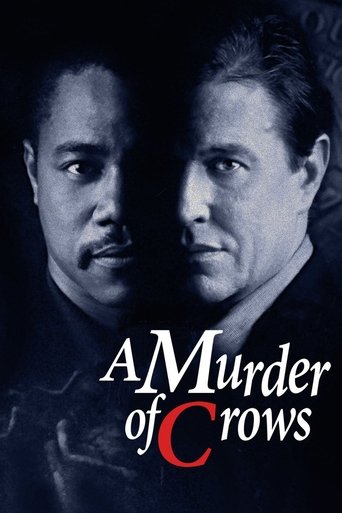
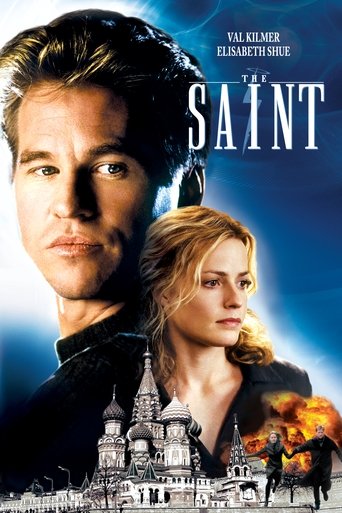
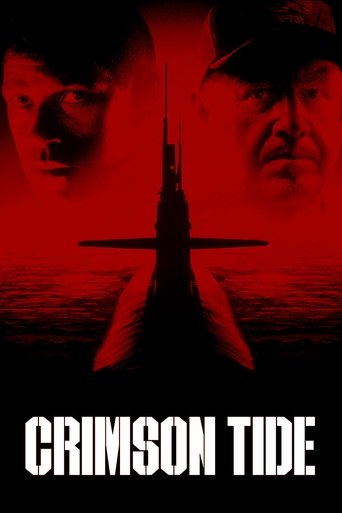
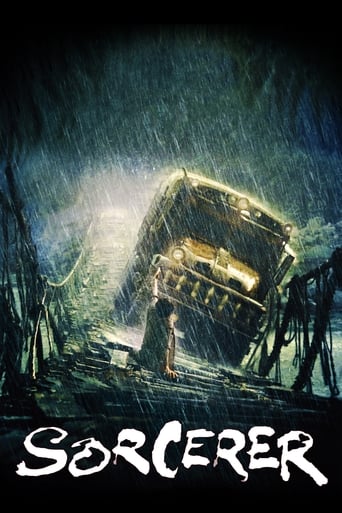
37 comments on Hacker News
The Orville is excellent. I am a fan. Here is another show/episode that is very similar and relevant here : https://en.wikipedia.org/wiki/Nosedive_(Black_Mirror)
Obligatory link to the relevant Black Mirror episode: https://en.wikipedia.org/wiki/Nosedive_(Black_Mirror)
I am thinking a Black Mirror-like scenario, that in the peak of the episode, someone's life is at risk, and they got the speed-limiter to 10km/h (due to past offenses) and the baddie can run fast, catch them, kill them. (kinda like 15MM or Nosedive but for driving speed)
Huh, i guess i both agree and disagree with this article.
I disagree that black mirror has to save the world. Art doesn't have to literally save the world to be useful, it just has to add to the conversation. The fact we are talking about it proves that it has.
On the other hand, i've never really liked black mirror that much. It feels polemical to me. Its unrelenting pessimism robs it of nuance, which makes it feel flat to me. To be clear it doesn't have to be happy, it can still be grim and dark, but when every character is a terrible character, it undermines the story
Take the episode "nosedive" where everyone is obsessed with social media ratings. Compare it to other people who copied it (meow meow beans in community, or majority rule in the orvile). I think the other tv shows did it better and honestly made technology look worse, because they had characters that weren't cartoon villians.
Maybe the part i don't like about black mirror is not that it showd technology stripping people of their hummanity but that all its characters already lack humanity so there is nothing to strip, which is kind of boring.
Isn't this the plot to the episode "Nosedive" of Black Mirror? Isn't the outcome of such a system obvious? It's very clear that allowing people to rank one another in a way that results in dire economic outcomes results in a deeply bifurcated society, and in this scenario there's no out.
Your credit score just measures your reliability in repaying loans no? It only affects your ability to get loans no?
It’s no different from a driving test which measures you ability to drive and only affects your eligibility to drive.
We use such specialised tests with clear “passing” conditions that only affect a specific part of our lives all the time.
Social credit systems seem far more far reaching from what I have heard - affects your ability to get loans, buy property, travel, … etc. Your score also depends on pleasing certain people in society rather meeting some objective criteria - reminds me of the Black Mirror episode “Nosedive”.
Don’t think they are really comparable.
So the only ones staying are the power tripping losers?
That will bode well for the health of the platform. /s
Then again, maybe such platforms were never “healthy” to begin with. Instead of healthy open discussion, the karma system creates a scenario no different from the Black Mirror episode “Nosedive”.
Check out the Black Mirror episode called ‘Nosedive’.
https://en.m.wikipedia.org/wiki/Nosedive_(Black_Mirror)
If you've seen the Black Mirror episode "Nosedive," well, that's the answer to this question.
Do you remember that Black Mirror episode where people rated each other?
https://en.wikipedia.org/wiki/Nosedive_(Black_Mirror)
Anyway, the problem with 5 star based rating is that everything below 5 star will actually hurt your rating, so it become sort of binary: 5 Star is OK, everything else is bad.
> This reminds me of the Black Mirror episode "Nosedive"
I shall check it out!
360 feedback usually happens a few times a year while Dot Collector feedback seems like it's for every meeting [0][1]. This reminds me of the Black Mirror episode "Nosedive" where everyone is rating everyone for every social interaction (e.g. saying "hi" or paying a cashier).
[0] https://www.businessinsider.com/coinbase-asking-staff-rate-each-other-thumbs-up-down-report-2022-5
[1] https://qz.com/1071749/bridgewater-associates-ceo-ray-dalio-explains-the-dot-collector-feedback-tool-his-company-uses-to-rate-employees/
Isn't this the plot of a Black Mirror episode?
https://en.wikipedia.org/wiki/Nosedive_(Black_Mirror)
Recognize the difference between a centralized score and a relative score.
In the model I proposed, your "score" of anyone else would only be affected by people who you've selected to "score" others. This is exactly how people build trust mentally today, but assisted by a graph that lets you expand your trust network beyond Dunbar's number, which is required for filtering modern media.
The Dystopian centralized credit score seen in the Black Mirror episode "Nosedive" is what will happen if we fail to build something capable of calculating relative trust relationships.
See also this Black Mirror episode: https://en.wikipedia.org/wiki/Nosedive_(Black_Mirror)
> now this reminds me of that black mirror episode, nosedive.
now I understand more of where you're coming from. I humbly suggest that you assign less significance to the points on your comments. I've been on this site for about a year. I have some highly rated comments and some negative comments. looking at my comment history, I am more and more convinced that the points rating is a noisy signal and its harmful to consider the points as very significant, especially as pertains to specific comments.
ok. i see what you mean. what a waste of time. i really don't know what to say.
is it the hubris of our time that we imagine that our shallow disapproval has value even when we are faceless/anonymous. now this reminds me of that black mirror episode, nosedive.
https://en.wikipedia.org/wiki/Nosedive_(Black_Mirror)
https://www.youtube.com/watch?v=oLc2E4P87QE
It's exactly like the premise for Black Mirror episode "Nosedive"!
The original owner is much kinder than me because I honestly would have plastered the person's name who refused to return the money once I had gotten it from the courts.
Hard for me to not be a pessimist when thinking about the future because it always leads me to believe there will be a social point system like that episode on TV series Black Mirror.
https://en.wikipedia.org/wiki/Nosedive_(Black_Mirror)
The Black Mirror episode “Nosedive” comes to mind.
https://en.wikipedia.org/wiki/Nosedive_(Black_Mirror)
“The episode is set in a world where people can rate each other from one to five stars for every interaction they have, which can impact their socioeconomic status”
Anecdotally it looks like I have a 4.75 rider rating which I was hit by a low rating one time because the driver cancelled the ride probably because it wasn’t very far or some other reason. Extending this to real world penalties changes behavior. Ever do a customer interaction where the seller (say a car dealer or a mortgage broker) tells you a survey will be coming and to please rate then 5 stars?
For those interested in what can happen, I'd recommend watching Psycho-Pass [0], which revolves entirely around a civilization with citizen score. Good stuff happens (nobody locks their homes anymore), but potential criminals are taken out with no form of judgement whatsoever (à la Minority Report).
Edit: and also, shorter and not any less scary, that one episode of Black Mirror [1]
[0] https://myanimelist.net/anime/13601/psycho-pass
[1] https://en.wikipedia.org/wiki/Nosedive_(Black_Mirror)
This is so much like the Black Mirror episode "Nosedive" that it's almost not funny
I don't know for sure, but I don't think Bandersnatch drove the Netflix interactivity work, rather vice versa. Charlie Brooker (whose previous work includes reviewing video games and TV shows, both of which underpin aspects of Bandersnatch, not least the name itself) is an obvious choice for Netflix to approach to see if this has wings, because if Brooker can't do anything with it, then it's not going to come off any better in someone else's hands. Also the Black Mirror anthology style means a misstep is easily forgiven / forgotten by fans. If you hate "San Junipero" (you are a weird person and don't deserve love) that doesn't taint "Nosedive" or "White Bear". If you found "Shut Up And Dance" too awful to think about, you can enjoy "Hang The DJ" or "The National Anthem" despite that. If "Bandersnatch" failed it wouldn't change anything else, at worst fans would be annoyed that time was wasted filming for Bandersnatch instead of some other episode.
Netflix had previously landed several less important interactive works in 2018, such as Puss in Boots, before attempting Bandersnatch. And this approach is effective at reducing bootlegging - there aren't existing tools that let "pirates" make an interactive video, so if you want the actual experience you'll be stumping up for Netflix. That means it helps underpin their financials.
Also check out the brilliant Black Mirror episode 'Nosedive' on a similar theme
So which is worse, the Black Mirror scenario (everyone rates each other), or the Chinese real-life version (the Communist Party rates you)?
Is it better to fear the State or your fellow citizens?
The Black Mirror episode, btw: https://en.wikipedia.org/wiki/Nosedive_(Black_Mirror)
This is not like the Black Mirror episode, Nosedive (or a similar episode of the Orville), because people aren’t rating others and scores aren’t known at all. The behavior changes from constantly rating and being rated by lots of subjective raters is what scared me in the episode.
This is similar to other risk or trust algorithm used by banks, healthcare, ctrfit agencies, email services, etc.
It could be bad depending on what Apple does with it, obviously, but this seems like a way integrate more device data into their fraud detection methods.
I wouldn't mind a Nosedive redux episode where you discover she is part of an experiment by an AI to see how quickly people can drop off and keep them bumping along the bottom of society. Sort of social Flappy Bird.
That last line was almost a direct quote from the Black Mirror episode "Nosedive".
Yeah, season 3 episode 1 "nosedive"—worth the watch (on Netflix). You don't need to see any other black mirror episodes to get it. (Don't watch S1E1 1!)
If anyone wants to see some of the negative effects of a persistent 'social score' that affects real life I recommend this Black Mirror episode: https://en.wikipedia.org/wiki/Nosedive.
Seems a bit like the Black Mirror episode[1] "Nosedive".
1: https://en.wikipedia.org/wiki/Nosedive
Not literature per se, but two episodes of Black Mirror come to mind:
"Hated in the Nation." Online mobs lead to death in real life because of a scifi twist involving artificial swarms/hives of bees. I won't get into details so as not to spoil the ending, but it deals rather directly with the issues raised in the article.
"Nosedive." Less directly related, but hits the nail on the head with respect to the employment concerns raised by the article.
It's actually explored in an episode of Black Mirror called Nosedive. Pretty convincing and scary.
> There was a Black Mirror episode on giving every person on the globe their own rating. It seems that may be the actual destination that we're headed for.
"Nosedive".
One of the scariest things I've ever seen on screen. I joke about how realistic black mirror is but that episode was too much. Beyond uncanny. It was incredibly hard to watch and I hated every second of it. Awful. Cannot recommend it enough.
This quote makes me picture the Black Mirror episode: Nosedive. I hope this is not the future of employee feedback.
Somewhat related, my son showed me a program from Britain called "Black Mirror" (https://en.wikipedia.org/wiki/Black_Mirror) The shows are an hour or so long, and it's not a series with a long-running plot, but each episode is separate (à la The Twilight Zone). We watched one called "Nosedive" (https://en.wikipedia.org/wiki/Nosedive), which was set in a future dystopia where everybody was socially rated and that rating was visible to others. Remember the almost-startup from last year, Peeple.com? Yikes!
I didn't see this as their basic premise. Their basic premise seems to hinge on the idea of "tipping people's niceness". If I am nice and helpful, then I should expect to earn a penny. And I should do the same to others.
That's actually very similar to the plot of Black Mirror's Nosedive episode.
I tried to hang on there but I didn't find much motivation to "earn anything". I am not even sure why I should reward anyone there.