I guess the good examples where music could be an important driver to the movies popularity (or revival of popularity) might be: "Requiem for a dream" and "Das Boot". Also for me personally - "The Mission" as incredible score by Ennio Morricone has brought me tia film I'd rather ignore. Other (also personal) example is " The Spawn" with it's mind-blowing OST.
I was referencing the one you were implicitly defending that started this line of chatter: https://www.ala.org/bbooks/frequentlychallengedbooks/top10 Most of the books from that list are widely available and easily accessible. The 'under threat' rhetoric is just from them being removed from some schools due to content being deemed age inappropriate. Those pg13 movies with nudity tend to be things like a few seconds of sideboob in a shower or whatever.
The top book on that 'challenged' list is a diary style book of a 13 year old girl who is sold into sex slavery, repeatedly raped, abused, and so on - with descriptions of each 'encounter.' The book is meant to be, and indeed is, extremely disturbing as it's part of the author's activism against sex trafficking throughout the world - as it was based on real events as per her research. In any case, it most certainly is not PG13 by any stretch of the imagination. It's much closer to something like Requiem for a Dream than it is to Tomb Raider.
I also think that's a great book to have on top, because it emphasizes that the issue isn't ideological, but content. I think there's few people who would claim Sold doesn't have tremendous value, or that it should be banned. But there's going to be a lot of people that don't want books like that anywhere near children. And for good reason - it's the same reason I wouldn't really care if my kids wanted to watch Total Recall or Terminator, but no way would I let them watch Requiem for a Dream. The violence and triple titted aliens of Total Recall are borderline comical, but I don't think stuff that gives you that awful 'ughhhh' feeling like Requiem for a Dream (or indeed - Sold) is something that's going to be at all healthy for a child's development.
I empathize w/ your take. I've occasionally responded similarly to the thoughtless use of "cancer" in shallow analogies, as a survivor who's also watched it kill several people I dearly love. I don't have direct experience w/ heroin, but the film "Requiem For A Dream" was unforgettable and helps me better understand its evil.
Unfortunately, whether it's a deadly drug or a deadly disease, these casual references are unlikely to drop from public discourse anytime soon. And I personally would rather live in a world where insensitive or potentially-triggering language is gently discouraged, than one where the pendulum swings too far the other way towards censorship or radical left woke cancel culture. Words can be unintentionally callous without being "micro-aggressions". (And I say that as a liberal progressive.)
Thanks for posting in a personal and persuasive manner, instead of anger. Yours is the more effective approach anyway.
I'm particularly glad to see the "Destroying culture" segment, though brief, as it touches on my main objection to modern advertising. In the piece, he mentions how an old work was re-purposed and "ruined" for him - though the phrasing sounds extreme, I completely understand. The concept described, as I interpret it, is about sparking an internal pleasure center for the purpose of inserting a commercial prompting to engage. This is especially problematic with "wants" type purchases - luxury items, status, etc. - compared to "needs" where a specific company is trying to differentiate itself from the pack.
I remember the hullaballoo when the Rolling Stones licensed "Start Me Up" to Microsoft. Last night, during the Superbowl, Meg Ryan and Billy Crystal reunited for a mayonnaise commercial aping a scene from "When Harry Met Sally" and I chuckled to myself how it was probably missing 2/3s of the viewership on the reference. Using Iggy Pop's "Lust for Life" by Carnival Cruise lines only sparks memories for me of Danny Boyle's "Trainspotting" and obviously they don't care. Same goes for when "Lord of the Rings" trailers had the Kronos Quartet playing under them, specifically the track featured in "Requiem for a Dream."
Honestly my breaking point was for a car insurance commercial where an accident occurred and the driver pulled an entirely new car from the trunk of the damaged car to represent the ease of returning to the prior state. It felt so absolutely deceptive I never will let it go. But that's not even the low point.
Pharmaceutical companies are now portraying "mini-movies" with the full narrative arc to create the sensation that a full and happy life is possible if only you ask your Doctor about some random-ass pill for a condition likely best treated by a change of lifestyle. The one I have in mind is a football coach where he's a family man, a teacher, and then gets a commemorative portrait unveiled at a game because he's so beloved. The culture damage of these bastardizations of narrative and story are a runaway freight train - always in slow motion mind you - and every time you see a historical figure selling you something, just remember that they're dead and couldn't complain. If it wasn't for Crispin Glover's lawsuit win all those years ago, Kurt Cobain might be selling anti-depressants and Jimi Hendrix a Kia or something.
I esteem & enjoy Requiem for a Dream, but I couldn't bear watching it again, despite a dozen tries. By that measure it's the best horror movie of all time.
You have a bad DVD player and good internet. Lots of people have the opposite: crummy internet where there's no guarantee that they'll get through a streamed movie without buffering issues.
On the article itself: indeed sometimes I enjoyed the directors commentaries as much as the films or shows themselves. In particular Requiem for a Dream, where the director's commentary adds a lot of context.
What a great question! Many interesting movies to check out in these comments!
My own list, I re-watch movies the same way I re-listen to music, often to get in a particular mode of thinking, as they become familiar, I mostly daydream while appreciating some particular concept and whatever new minutiae, or ways of understanding, creeps into my mind.
Hackers - 30+ times, for dreaming about a world that never was and never will be, for reminding myself how cool computers used to seem.
The Crow - 20+ times, for thinking about the world
Koyaanisqatsi - 15+ times, for thinking about my life in the world
Alien - 10+ times, for thinking about the future that passed us by
Terminator 1 and 2 - 10+ times, for examining a time that never was, or passed me by, and because Arnold is awesome!
A Clockwork Orange, 10+ times, to reflect on violence and aesthetic
Event Horizon, 10+ times, mostly for the aesthetic, and who dosen't love spaceships from hell ?
1984 - 5+ times, for thinking about humanity and society
Requiem for a Dream - 5+ times, for thinking about the value of life, and what society is
Once upon a time in the west - 5+ times, for thinking about loss, revenge and justice
Genocyber - 5+ times, to think about what life is for anyway
Stalker - 5+ times, frankly, mostly to look at the pretty pictures.
Lots of other amazing movies, I probably forgot some (time to watch again?)
These are just my favorites, and in the order of which the popped into my mind.
- Office Space, 1999 (especially for people who work at offices) - The Matrix, 1999 - Fight Club, 1999 :)
Umm, what else? - Spirited Away, 2001 (and many others from Miyazaki) - Requiem for a Dream, 2000 (Very Heavy addiction-related film! I actually got watery eyes just by typing this, I've seen it too many times.) - Joker, 2019 - Full Metal Jacket, 1987 (and many others from Kubrick, such as Dr. Strangelove and The Shining) - Django Unchained, 2012 (and many others from Tarantino, at least Pulp Fiction) - Alien, 1979 - The Silence of the Lambs, 1991 - Saw, 2004
I made a bit longer list, so that I can share the link to my friends.
Actually there are many quirky ones which came to my mind, such as Borat, the South Park movie, Team America, Airplane! (alternatively titled Flying High!), Idiocracy and Hangover, but I wouldn't say these are in the must-see category. Actually I wouldn't even recommend these to most people, if I didn't know what kind of humor they like.
Recently, Midsommer. I think if you go into it with an open mind (and not get too weirded out by the gore) it asks some really fascinating anthropological and social questions.
By the end of the movie, I was almost entirely on the side of the culture and their behavior made complete sense to me. During the course of the movie I experienced a shift of position and perspective and continues to affect me 4 years later.
All the token others… Pi, Memento, Waking Life, Fight Club, Requiem for a Dream, etc. etc.
I felt like Midsommer was the best interesting film in decades.
Are you reading by opening up to page 1 and reading through to the end? Don't do that. I know, I know, spoilers, but unless you're reading mysteries, it's not a big deal. The best fiction isn't just the ending. Everyone knows Captain Ahab dies at the end of Moby Dick, but that doesn't spoil anything.
So, read the first chapter. Read the beginning and end of the rest of the chapters – a few paragraphs, a page, something. Read the last chapter.
Analyze the story: make a list of characters and their relationships to each other. If there are people related to each other, make a family tree. Consider the locations: map them out, especially if they reference real world locations. Get a feel for how the story moves through the world. Tolkien's books are famous for including the family trees of his characters, timelines, and world maps. Do that.
Try reading a novel that's been made into a good film. Follow along reading and comparing the film adaptation to the novel. Something like C. S. Forester's book The African Queen and the 1951 film directed by John Huston.
Pick a novel that riffs on subjects you're already into. Sylvia Plath's The Bell Jar involves psychology as a major plot element, as do One Flew Over the Cuckoo's Nest and Requiem for a Dream. All three have been adapted into excellent films.
I don't necessarily disagree with this as a rule of thumb, but I thought it would be fun to come up with a few counter-examples. Most of these I would consider "artsy-fartsy" or "artsy-fartsy lite" movies that are popular with audiences but less so with critics.
Lost Highway (1997) - 68% Tomatometer - 87% Audience Score
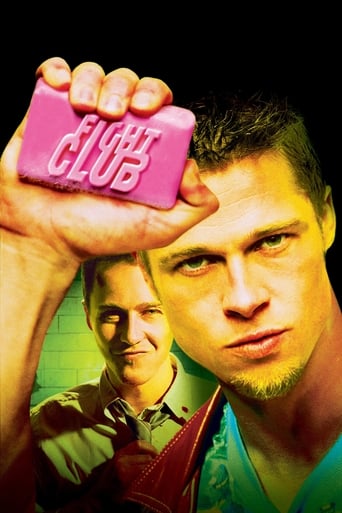
Fight Club (1999) - 79% Tomatometer - 96% Audience Score
American Psycho (2000) - 68% Tomatometer - 85% Audience Score
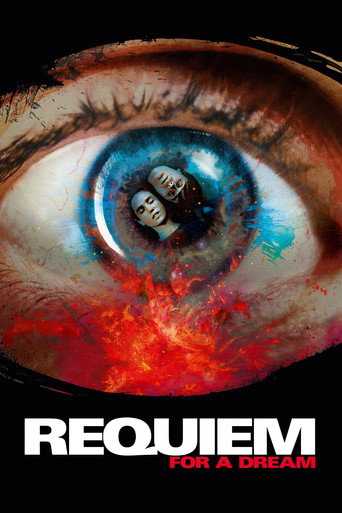
Requiem for a Dream (2000) - 78% Tomatometer - 93% Audience Score
Dancer in the Dark (2000) - 69% Tomatometer - 91% Audience Score
I remember my trauma after watching grim and depressing movie "Requiem for a Dream" including the scene when mother of protagonist joins some cult or MLM and becomes addicted to some drugs. In the end I realized "it's just a movie, it's all good". Now I see my parents uncritically consuming mostly on mobile portals with "news", social media, obvious propaganda which agitates and addicts them. What's worse they ask me whether I'm with or against them on the topics. I'm terrified and heartbroken.
There are several doomsday movies that predate The Road, were better at the time, and hold up far better today, IMO. Children of Men (2005) would be my top suggestion. The rare movie I've gone back and watched multiple times. You know why it's good? Because the central premise didn't come true (humanity is infertile), but we live in that dystopia now anyway. It's like Black Mirror but for the police state. It didn't go into hyperbole like The Road or The Day After Tomorrow. It was a realistic, slow-motion apocalypse. Going out with a whimper instead of a bang.
However, Children of Men is admittedly not as bleak as The Road, so not a fair comparison. If you really want a film that produces bottomless despair in the viewer, I recommend Threads (1984) instead. It was produced by the BBC on a shoestring budget, and yet it's still a better film. I can't say I recommend it, but if you do watch it, the ending is on par with Requiem for a Dream for being memorable and filled with doom and horror.
The Road just wasn't very good IMO. No Country for Old Men, on the other hand? Same writer, different genre, but excellent.
> Yeah but this is 2022 are there even movie theaters anymore?
My uninformed and probably stupid thoughts:
Hollywood was doing some amazing movies in the 90ish (think Seven, The Matrix, Requiem for a Dream etc). It was a mix of new and established players that were allowed to innovate and be creative. Then Hollywood became more risk averse, I assume because sales were unpredictable and production companies wanted guarantees similar to other industries' large investments. So they started recycling ideas, produce sequels and trading IP rights for dudes in specifically colored spandex suits, which came with a guaranteed fanbase that would watch anything with the brand. This eventually became the MCU-type of crap where everything is a 4th wall joke packed with references to current events, leading to a shelf life less than a year and plots became an afterthought. The sales mindset went as far as putting stuff in the movie for the sake of producing a compelling trailer. At the same time TV was taking the Hollywood's lunch money, but for some reason they doubled down on the approach and blamed streaming for their failures.
The issue isn't the format though, or that everyone has Netflix on their microwave display now. There are still great movies today, and if you get a chance to watch one in a good theatre it's a mesmerizing experience. Me and my partner watched The Joker, 1917 and Dune in Alamo Drafthouse (a theater that has zero-tolerance to texting/talking and serves food & drinks). It's an experience that trumps even great TV shows, when done right. It's just sad that it's so rare.
> Satoshi Kon, the director of Perfect Blue and Paprika
(Perhaps these examples were saved for the subscribers-only section) Quite notable is the influence of those two films on later Western films--elements shots in Black Swan and Requiem for a Dream match those in Perfect Blue; the same for Inception and Paprika.
kids is a cool film, but not much of a cautionary tale. it's more like a 90s urban euphoria, in that the message is really more to adults: "this is what teenagers are actually doing right now".
what (imo) would make requiem for a dream really effective is that it shows the transition from the "honeymoon phase" of drug use to the "consequences phase" really well. I think this is the part that teenagers really don't understand (or at least I didn't). when you're starting out, it can seem like a lot of the anti-drug messaging is just fear mongering (and it is, to an extent). but most people that age don't yet have the perspective to distinguish between harmless fun and a slow motion crisis.
trainspotting is also great, and a bit more realistic than requiem for a dream. but if I had to pick one of the two to show to teens, I'd probably pick the former.
Well, if we're thinking about the moral messages of some of these old tales, I've always thought Requiem could be a good movie to show tweens+ as a cautionary against drug abuse. If Disney threw in an evil witch selling smack, a few catchy songs, a handful of dead parents, and a handsome prince to kiss Harry's arm back to life then I bet they'd have... well, maybe not a hit. But it would be something, and I'd watch it.
I only saw Requiem for a Dream when it was in the theatre and other than the soundtrack from PWEI's Clint Mansell, what I remember about it at the time was sitting in the theatre watching it and thinking that I had picked the worst date movie ever.
Some months later, she evened the score with American Psycho, so it netted out. I remember people talking about Perfect Blue, but anime wasn't my thing other than Ghost in the Shell being part of the 90s hipster/geek crossover canon.
* The Silence of the Lambs
* The Shining
* Shawshank Redemption (novella but I'll allow it)
* Brokeback Mountain (same)
* No Country for Old Men
* Little Women (there are a few versions to choose from but I would choose the 1994 adaptation myself, thought he 2019 version was very good)
* Requiem For a Dream
* Lolita
* Roots (mini-series but I think we should allow it)
That's what I can think of off the top of my head.
Going off the tangent here, Grave of the fireflies was the most depressing movie I ever saw. Number two on my list, Requiem for a dream, is a distant second.
As a rule, I avoid depressing content and was wholly unprepared for the emotional pounding I got.
Watch (both) if you haven't, they're great movies, but brace yourself.
I grew up near the heroin junkie city of The Netherlands (Heerlen) which also attracted a lot of junkies from the Aachen area. I got a fear of needles likely influenced by the needles on the streets. Thanks also to everyone mentioning which cities contain needles on the ground, I forgot about it being a possible thing (I would not visit such a city, and I live/work near Amsterdam, go figure). Getting my COVID-19 shots was a serious hurdle because of my fear of needles. It also likely influenced my disgust of prostitution (a lot of the female heroin junkies turned to prostitution). Most of these people were homeless, too.
They (local gov) tried a lot of things to fix the problem. Play classical music at the gathering area (the train/bus station). Free methadone. Free needles. Free heroin I don't believe was tried. Give the homeless a task like selling a newspaper called 'street journal', watching everyone pass by looking down on the seller. Cynical me would say these people passed away. I met one of them at a work reintegration company, and I recognized him right away. He had HIV. Though this was in ~2006. I let him listen to one of my favourite music at that time, and I remember he enjoyed it.
I learned of the popular drugs in first of high school (age 12), as part of education (alcohol, cannabis, XTC, heroin/cocaine). In my late young adulthood I ended up trying quite some drugs. Mostly psychedelics, never heroin (or cocaine), and amphetamine only once (from which I know how it feels to be an asshole). They are far too addicting, and destroy lives. I've been addicted to nicotine/cigarettes though, but so has 25+% (?) of society. It was tough getting rid of that habit (I am probably still 'addicted to it' just not practicing).
Lots of good movies (and books) were made about heroin addiction. Wir Kinder Von Bahnhof Zoo. Requiem For A Dream. Trainspotting. Just to name a few. The social setting a (young) person is in is going to have a huge influence. Sure, its also a matter of morals and values and parenthood, but how can I affect which friends my children are going to have in school?
Wow, all of them, you must watch a ton of movies too. So you know my difficulty in finding new ones, maybe! Ides of March I haven't seen, that looks great! And I actually agree with your ranking perfectly. I only feel bad that nightcrawler and prisoners are side by side, when there's a pretty wide gulf between them in terms of how memorable they are.
I assume you've seen Place Beyond the Pines since it has Ryan Gosling, and Requiem for a Dream I think everyone's seen, and idk if you'd like Irréversible; I didn't because its story doesn't quite keep up with its violence, but it is quite a jarring film.
Frankly, excluding movies that are only exhibitions of violence and don't have a story to match, there are precious few movies in this vein! Precious few films have the power to truly shock the audience, at least in this way. OH! Cloverfield Lane is pretty solid. Very tense.
Note that I'm only mentioning movies that are striking for their tension or sudden spikes of violence, since that was the original topic. Just remembered Fatal Attraction, too!
> If you want a weirder launching off point, watch koyaanisqatsi and look up Philip Glass who made the soundtrack - that's an interesting avenue, albeit not very mainstream.
Omg that film is absolutely amazing (maybe the best thing I've seen in the past 10 years) and easily half of the effect is the music.
For epic scores you can't also go wrong with "Requiem for a Dream"...
First, the Last Starfighter. My mom said this was the first movie I stayed awake for the entire time as a toddler, and while I don't remember seeing it in a theater, I think this made me instantly interested in everything computers and space, and I eventually became a rocket scientist (kinda). Yay!
Network - It was made a long time ago, but it's really about Facebook. Watch it.
Requiem for a dream - I'll never forget this movie, ever. This will make you want to quit all your drugs.
Hearts of Darkness (A Filmmaker's Apocalypse) - This is the making of Apocalypse Now, and it's amazing. It's so much more than a documentary about how to make a movie, it's about life, movie making, and youtube, long before it existed.
Wargames - still relevant about how technology could destroy us. I feel like this is the Ferris Bueller's Day Off for Hackers.
Well, first of all, most TV programs I know are catering to an audience that is clearly not fitting my expectations of quality information or even entertainment. The mother from "requiem for a dream" comes to mind when I think about average TV entertainment.
What adds to that, is that I really can't stand the style of action movies produced since about 2010. They are heavily overloaded and lack a story that is worth following.
Maybe I am getting old, but I constantly feel like being wound up by TV programs these days.
Fair enough, but do note that's not what most people (or dictionaries) mean by "escapism" -- and your interpretation will puzzle people who use it in a derogatory manner. When discussing fiction such as movies, books or shows, the most commonly accepted meaning is of a thrilling fantasy, usually with a strong component of wish-fulfillment or adventure, that allows one to be distracted of the boring realities of actual life.
Neither Requiem for a Dream nor Irréversible are escapism in that sense. In fact they are terrifying movies, with zero wish-fulfillment, and which often remind you of real life rather than distracting you from it.
As an aside, if what you got from those movies was "at least I don't have it that bad" then you got a completely different message than me...
I tend to agree. Movies in general seem to be escapism[0]. Even incredibly depressing/artful movies like Requiem For A Dream, Joker (since it was brought up on this thread), Irréversible, The Truman Show, Martyrs, Saw, etc. are a form of escapism.
Now, each person may have their own preferences as to what type of escapism they want, but ultimately it's really just spending a few hours at a theatre or in front of a TV.
(We could argue about the intellectual merits of each of the films I've mentioned, but that's irrelevant as to whether they're escapism or not.)
Hot take: The problem isn't "shallow movies" or similar. It's that well-enough-off people are increasingly getting bored.
Also, Tideland is a weird example to use because it is so intentionally awful. It's on the list of films such as Requiem for a Dream that I'm glad I watched but somehow doubt I will ever watch a second time. A lot of the critics are right about Tideland that it is an awful, miserable experience to watch but many of those low "number" reviews also suggest seeing it or experiencing it for yourself, because that's also the art to it, the subjective experience. (Which is why review scores are useless metrics because art is subjective and averaging a bunch of subjective numbers together doesn't do anything but give you a random number. Metacritic and Rotten Tomatoes are interesting random numbers, but they can't actually tell you if the art was good or not.)
Requiem for a Dream. Since I saw it as a teen ~15 years ago, it hasn't slipped my mind.
It's has an effective anti-drug message, probably more than any other movie or documentary I've seen. And it does this without being an "anti-drug" movie, belaboring you with facts and stats.
It's a heart breaking drama, because it goes beyond drugs. Because what the characters are really seeking isn't a quick fix, but an ability to connect with others.
"And perhaps if others saw more realistic portrayals of poverty in the movies, they might be more receptive to programs that would help them instead of demeaning and punishing them."
I would love an example where 'realistic portrayals' of a given subject in movies led to changes in public policy / public perception.
If anything, I would argue that popular films, just like other art forms, are more likely to serve as a barometer of society's perception/reception of a given subject than as something that ignites the change.
Take the war in Vietnam in the 60's and 70's - I'm not sure you could make 'The Deer Hunter' in '68, or 'The Green Berets' in '78.
Or the war on drugs - movies like Trainspotting, Requiem for a Dream, or Traffic certainly showed a realistic side of drugs and addiction... and yet the war on drugs has only intensified since their popular releases.
> I'd say you want an interesting but expect incredible production values
Smoke was an interesting movie, and cost $7M. (It didn't make much more but it wasn't a failure.)
Moon was a fantastic movie, and cost $5M. The little CGI it had was pretty obvious but didn't affect the viewing experience. (It also made near-zero returns.)
Requiem for a Dream was - and remains - an outstanding film. It flopped in box office but must have made pretty penny on home sales.
Dead Man is an interesting movie, and still one of my favourites. It works on the audience for the same reason Apocalypse Now does: episodic films in general are considered "artsy" and hard to chew, but turn them into thoughtful road movies and the audience enjoys the experience.
Pan's Labyrinth is just damn good. It cost €13.5 to make, and grossed $37M. Home sales must have added even more since then.
All the films above are both interesting and, in terms of bloated Hollywood budgets, were cheap to make. I would take any one of them over the perfumed sewage that floods the film theaters. And for reference, I did see Doctor Strange in a cinema so I do have a metric for calibration. My opinion stands.
You could imagine my surprise when hearing The Kronos Quartet teme for Requiem For A Dream being used in a trailer for one of the Lord of the Rings franchise pictures.
The one that cracks me up still is Carnival cruises using Iggy Pop's "Lust for Life" which coincidentally a lot of people associate with the film Trainspotting.
Yes, maybe in one focus they are outliers, but the assumptions and parameters of the statistic should be qualified before dismissing the true harm alcohol causes. It's like the 'how would you like to die' game, slow or fast.
A DUI can be fatal on your first drunk at any age. I know personally of a college roommates brother, who was a straight A student, and got drunk for the third time in his life, and wound up killing somebody with his car. He went away for manslaughter. I'd say the side-effect there was pretty 'oh boy' for him and the victim. Think of how many people you may have seen go into a car after a few drinks, and how many of them actually got pulled over or fined for DUI. A lot of people drive under the influence and fly below the radar of the statistics. I have acquaintances and business associates who have been doing it for years.
Heroin and meth are stigmatized, and not a industrially-produced, government-controlled product like alcohol. They are almost always impure with other deleterious ingredients. Pure heroin used to be released on purpose in my old neighborhood in the 70s and 80s under somebody's 'brand' to hype sales of their 'product' for a few weeks even at the expense of a few overdoses.
Alcohol is under government regulation per % of alcohol per type of beverage, health inspections, and additives. People have a casual drink at lunch, but you don't see somebody whip out a needle at a casual business lunch, so meth and heroin tend to be relegated to dark alleys, loners at home, parties, etc...
The typical photo of a toothless, emaciated person comes from the side-effects of societal stigmatization, remaining in the shadow of crime, and less acceptance for that type of substance. There are plenty accounts of functional heroin addicts, and I knew/know a few personally. Their colleagues would never know. They eat right, go to work, and just use weekly and sometimes daily.
There are 17 times as many alcoholics as meth addicts per a 2012 study [1]. And alcohol kills slowly. Even the healthiest person who has 3 or more drinks a day is putting mileage on their body, the liver in particular, not to mention the mental effects. Choose your poison - one's government and socially embraced, the other(s) are associated with criminals and 'addicts'.
For a quick, non-academic feel of what I am trying to convey, watch and compare 'Requiem for A Dream' with any of the 'Hangover' movies. Can you find a meth/heroin movie like the 'Hangover' movies? A comedy that a broad range of people view and laugh at. Why not? The movie has what, 2 sequels already?
mainstream: American beauty, Pulp fiction, No country for old men, American History X, Saving Private Ryan, Taken, The pianist
classics: Lawrence of Arabia, The Shawshank Redemption, 2001: A Space Odyssey, Terminator I & II
hipster: Knife in the water (Polanski), Come and See (Idi i smotri - best war movie I've seen), Haute Tension (french horror movie), Requiem for a Dream, Trainspotting, City of God, Blue Is the Warmest Color, Goodbye Lenin, The cube
It seems with all the media that's been produced about heroin addiction (movies like Requiem for a Dream, Trainspotting, Traffic, etc...) that the risks of shooting up are fairly well known.
Yet, people still continue to use and get addicted to the drug. I feel a great deal of pity for the people whose lives have been destroyed by heroin, not just because of their addiction, but because of the underlying pain that must have been there for them to get to that point.
The site for the film Requiem For a Dream was always one of my favorites. It was still online as of a couple years ago but appears to finally be gone. But thankfully here's an archive:
FTA: "social may pose an existential threat to Google’s style of search"
No. Sometimes I want general information: "what is the airspeed of a laden swallow?" Sometimes I want information dependent upon the interests of the hundred or so people I know: "what do you all do in Toledo?" Sometimes I want information dependent upon my interests: "if I enjoyed 'Requiem for a Dream', what other movies should I watch?"
These things conflict: I could not possibly care less what my friends think is the airspeed of a laden swallow.
I use Google for #1, Facebook for #2, and several other sites for #3. Google has (or had) a perfectly viable business providing the best answers to general questions, and it's a shame that they're screwing it up.
Well I do think violent films are called out, though definitely less often because games are relatively new. IIRC there were many people attempting to link the Columbine shooting and the Matrix, which had just been released.
I must say I can't watch films like Se7en, American Psycho, Requiem for a Dream, Clockwork Orange without being thoroughly disturbed; this is true to a lesser extent with novels, but I can control virtually everything about the experience. I guess what I'm trying to say is it wouldn't surprise me at all if any number of these media encouraged past people to commit crimes, but that doesn't imply they wouldn't have done anything had they not seen/read/played whatever inspired them.
The movie Requiem for a Dream is, to me, a perfect example of a high quality movie that I will not watch twice.
The acting, directing, cinematography, pacing, and sound design are all excellent. However, the film is such a grueling emotional experience, I don't foresee myself sitting down with it again.
Contrast that to, say, Airplane. It's a good movie. Funny. If I'm bored in a hotel room, I'll watch it again. However, it is emphatically not a "great film."
Inception wasn't that big a risk. Nolan had proved he could do ideas (Memento), he'd proved he could do big budget (two Batman films) and he was willing to stick major stars in it (including arguably the biggest star on the planet). They then backed that up with a $100m advertising budget.
In many ways it was an art house sci-fi film but in many others it did everything by the book for a big budget movie (proven track record, stars, special effects and action then hype it to the hilt).
You're right that the pattern is towards the more conservative but I'm not sure that Inception was a massively out there move.
Requiem for a Dream is a completely different beast and shows the other way you can do it even now. That was a cheap film - £5m or so. Adjust for inflation and you get maybe double that, which is still less than 5% of the budget of the Avengers.
That sort of film can be funded by smaller production companies, by larger studios (often as vanity / credibility projects - Schindler's List was seen that way when it was signed off though I doubt the studio will admit that now) and in a host of other ways. I can certainly see large studios funding things like that almost as part of an incubator model - giving new directors who seem promising a stage to show what they can do before they let them loose on something larger.
> So, to minimize losses caused by piracy, make your movie not suck.
Yes, but it doesn't work exactly like that. s/not suck/profitable.
This just means that instead of taking chances on a film which is a big risk (think Inception), we will simply see more and more super hero movies and more and more sequels. There is much less of a margin of error when people are downloading things.
I think there's little or no room for a "Requiem for a Dream" type of film in the coming years. Maybe kickstarter will have to be the avenue to make movies like that.
This kind of argument is exactly the kind which leads to the problems. First, you assume that AO means sex. Second, you assume that if it's AO, it can't be subjectively of high quality.
The easiest way to shoot down your arguments is to google lists of movies rated NC-17, which is the rating which disallows anyone under 18 from watching a movie, and which is the functional equivalent of ESRB's AO.
Among that list you will see movies like Requiem for a Dream, and documentaries like This Film is Not Yet Rated, which is actually very relevant to this whole discussion. (The film actually chose to be unrated, as being rated would have earned the documentary NC-17).
I found the movie didn't make a whole lot of sense at times. It felt like the writer cut a lot of corners when it came to the whole logical coherency of the plot. Maybe if we blow something up they won't notice!
The plot was entertaining and a good idea, but it left a lot to be desired. It's not destined to become a classic like: Fight Club, 12 Monkeys, Requiem for a Dream, Primer. If you enjoyed Inception, do yourself a favor and check those out if you haven't seen them.
Great movie! I'm a big fan of the director Darren Aronofsky, I would recommend his other works Requiem for a Dream and The Fountain if you haven't seen them.
 Hacker Cinema

47 comments on Hacker News
I guess the good examples where music could be an important driver to the movies popularity (or revival of popularity) might be: "Requiem for a dream" and "Das Boot". Also for me personally - "The Mission" as incredible score by Ennio Morricone has brought me tia film I'd rather ignore. Other (also personal) example is " The Spawn" with it's mind-blowing OST.
I was referencing the one you were implicitly defending that started this line of chatter: https://www.ala.org/bbooks/frequentlychallengedbooks/top10 Most of the books from that list are widely available and easily accessible. The 'under threat' rhetoric is just from them being removed from some schools due to content being deemed age inappropriate. Those pg13 movies with nudity tend to be things like a few seconds of sideboob in a shower or whatever.
The top book on that 'challenged' list is a diary style book of a 13 year old girl who is sold into sex slavery, repeatedly raped, abused, and so on - with descriptions of each 'encounter.' The book is meant to be, and indeed is, extremely disturbing as it's part of the author's activism against sex trafficking throughout the world - as it was based on real events as per her research. In any case, it most certainly is not PG13 by any stretch of the imagination. It's much closer to something like Requiem for a Dream than it is to Tomb Raider.
I also think that's a great book to have on top, because it emphasizes that the issue isn't ideological, but content. I think there's few people who would claim Sold doesn't have tremendous value, or that it should be banned. But there's going to be a lot of people that don't want books like that anywhere near children. And for good reason - it's the same reason I wouldn't really care if my kids wanted to watch Total Recall or Terminator, but no way would I let them watch Requiem for a Dream. The violence and triple titted aliens of Total Recall are borderline comical, but I don't think stuff that gives you that awful 'ughhhh' feeling like Requiem for a Dream (or indeed - Sold) is something that's going to be at all healthy for a child's development.
I empathize w/ your take. I've occasionally responded similarly to the thoughtless use of "cancer" in shallow analogies, as a survivor who's also watched it kill several people I dearly love. I don't have direct experience w/ heroin, but the film "Requiem For A Dream" was unforgettable and helps me better understand its evil.
Unfortunately, whether it's a deadly drug or a deadly disease, these casual references are unlikely to drop from public discourse anytime soon. And I personally would rather live in a world where insensitive or potentially-triggering language is gently discouraged, than one where the pendulum swings too far the other way towards censorship or radical left woke cancel culture. Words can be unintentionally callous without being "micro-aggressions". (And I say that as a liberal progressive.)
Thanks for posting in a personal and persuasive manner, instead of anger. Yours is the more effective approach anyway.
I'm particularly glad to see the "Destroying culture" segment, though brief, as it touches on my main objection to modern advertising. In the piece, he mentions how an old work was re-purposed and "ruined" for him - though the phrasing sounds extreme, I completely understand. The concept described, as I interpret it, is about sparking an internal pleasure center for the purpose of inserting a commercial prompting to engage. This is especially problematic with "wants" type purchases - luxury items, status, etc. - compared to "needs" where a specific company is trying to differentiate itself from the pack.
I remember the hullaballoo when the Rolling Stones licensed "Start Me Up" to Microsoft. Last night, during the Superbowl, Meg Ryan and Billy Crystal reunited for a mayonnaise commercial aping a scene from "When Harry Met Sally" and I chuckled to myself how it was probably missing 2/3s of the viewership on the reference. Using Iggy Pop's "Lust for Life" by Carnival Cruise lines only sparks memories for me of Danny Boyle's "Trainspotting" and obviously they don't care. Same goes for when "Lord of the Rings" trailers had the Kronos Quartet playing under them, specifically the track featured in "Requiem for a Dream."
Honestly my breaking point was for a car insurance commercial where an accident occurred and the driver pulled an entirely new car from the trunk of the damaged car to represent the ease of returning to the prior state. It felt so absolutely deceptive I never will let it go. But that's not even the low point.
Pharmaceutical companies are now portraying "mini-movies" with the full narrative arc to create the sensation that a full and happy life is possible if only you ask your Doctor about some random-ass pill for a condition likely best treated by a change of lifestyle. The one I have in mind is a football coach where he's a family man, a teacher, and then gets a commemorative portrait unveiled at a game because he's so beloved. The culture damage of these bastardizations of narrative and story are a runaway freight train - always in slow motion mind you - and every time you see a historical figure selling you something, just remember that they're dead and couldn't complain. If it wasn't for Crispin Glover's lawsuit win all those years ago, Kurt Cobain might be selling anti-depressants and Jimi Hendrix a Kia or something.
I esteem & enjoy Requiem for a Dream, but I couldn't bear watching it again, despite a dozen tries. By that measure it's the best horror movie of all time.
You have a bad DVD player and good internet. Lots of people have the opposite: crummy internet where there's no guarantee that they'll get through a streamed movie without buffering issues.
On the article itself: indeed sometimes I enjoyed the directors commentaries as much as the films or shows themselves. In particular Requiem for a Dream, where the director's commentary adds a lot of context.
What a great question! Many interesting movies to check out in these comments!
My own list, I re-watch movies the same way I re-listen to music, often to get in a particular mode of thinking, as they become familiar, I mostly daydream while appreciating some particular concept and whatever new minutiae, or ways of understanding, creeps into my mind.
Hackers - 30+ times, for dreaming about a world that never was and never will be, for reminding myself how cool computers used to seem.
The Crow - 20+ times, for thinking about the world
Koyaanisqatsi - 15+ times, for thinking about my life in the world
Alien - 10+ times, for thinking about the future that passed us by
Terminator 1 and 2 - 10+ times, for examining a time that never was, or passed me by, and because Arnold is awesome!
A Clockwork Orange, 10+ times, to reflect on violence and aesthetic
Event Horizon, 10+ times, mostly for the aesthetic, and who dosen't love spaceships from hell ?
1984 - 5+ times, for thinking about humanity and society
Requiem for a Dream - 5+ times, for thinking about the value of life, and what society is
Once upon a time in the west - 5+ times, for thinking about loss, revenge and justice
Genocyber - 5+ times, to think about what life is for anyway
Stalker - 5+ times, frankly, mostly to look at the pretty pictures.
Lots of other amazing movies, I probably forgot some (time to watch again?)
Bonus:
TV Shows I've watched more than 10 times:
Star Trek TNG
Neon Genesis Evangelion
These are just my favorites, and in the order of which the popped into my mind.
- Office Space, 1999 (especially for people who work at offices) - The Matrix, 1999 - Fight Club, 1999 :)
Umm, what else? - Spirited Away, 2001 (and many others from Miyazaki) - Requiem for a Dream, 2000 (Very Heavy addiction-related film! I actually got watery eyes just by typing this, I've seen it too many times.) - Joker, 2019 - Full Metal Jacket, 1987 (and many others from Kubrick, such as Dr. Strangelove and The Shining) - Django Unchained, 2012 (and many others from Tarantino, at least Pulp Fiction) - Alien, 1979 - The Silence of the Lambs, 1991 - Saw, 2004
I made a bit longer list, so that I can share the link to my friends.
Actually there are many quirky ones which came to my mind, such as Borat, the South Park movie, Team America, Airplane! (alternatively titled Flying High!), Idiocracy and Hangover, but I wouldn't say these are in the must-see category. Actually I wouldn't even recommend these to most people, if I didn't know what kind of humor they like.
Recently, Midsommer. I think if you go into it with an open mind (and not get too weirded out by the gore) it asks some really fascinating anthropological and social questions.
By the end of the movie, I was almost entirely on the side of the culture and their behavior made complete sense to me. During the course of the movie I experienced a shift of position and perspective and continues to affect me 4 years later.
All the token others… Pi, Memento, Waking Life, Fight Club, Requiem for a Dream, etc. etc.
I felt like Midsommer was the best interesting film in decades.
Are you reading by opening up to page 1 and reading through to the end? Don't do that. I know, I know, spoilers, but unless you're reading mysteries, it's not a big deal. The best fiction isn't just the ending. Everyone knows Captain Ahab dies at the end of Moby Dick, but that doesn't spoil anything.
So, read the first chapter. Read the beginning and end of the rest of the chapters – a few paragraphs, a page, something. Read the last chapter.
Analyze the story: make a list of characters and their relationships to each other. If there are people related to each other, make a family tree. Consider the locations: map them out, especially if they reference real world locations. Get a feel for how the story moves through the world. Tolkien's books are famous for including the family trees of his characters, timelines, and world maps. Do that.
Try reading a novel that's been made into a good film. Follow along reading and comparing the film adaptation to the novel. Something like C. S. Forester's book The African Queen and the 1951 film directed by John Huston.
Pick a novel that riffs on subjects you're already into. Sylvia Plath's The Bell Jar involves psychology as a major plot element, as do One Flew Over the Cuckoo's Nest and Requiem for a Dream. All three have been adapted into excellent films.
I don't necessarily disagree with this as a rule of thumb, but I thought it would be fun to come up with a few counter-examples. Most of these I would consider "artsy-fartsy" or "artsy-fartsy lite" movies that are popular with audiences but less so with critics.
Lost Highway (1997) - 68% Tomatometer - 87% Audience Score
Fight Club (1999) - 79% Tomatometer - 96% Audience Score
American Psycho (2000) - 68% Tomatometer - 85% Audience Score
Requiem for a Dream (2000) - 78% Tomatometer - 93% Audience Score
Dancer in the Dark (2000) - 69% Tomatometer - 91% Audience Score
Oldboy (2003) - 82% Tomatometer - 94% Audience Score
The Prestige (2006) - 77% Tomatometer - 92% Audience Score
Joker (2019) - 69% Tomatometer - 88% Audience Score
I remember my trauma after watching grim and depressing movie "Requiem for a Dream" including the scene when mother of protagonist joins some cult or MLM and becomes addicted to some drugs. In the end I realized "it's just a movie, it's all good". Now I see my parents uncritically consuming mostly on mobile portals with "news", social media, obvious propaganda which agitates and addicts them. What's worse they ask me whether I'm with or against them on the topics. I'm terrified and heartbroken.
There are several doomsday movies that predate The Road, were better at the time, and hold up far better today, IMO. Children of Men (2005) would be my top suggestion. The rare movie I've gone back and watched multiple times. You know why it's good? Because the central premise didn't come true (humanity is infertile), but we live in that dystopia now anyway. It's like Black Mirror but for the police state. It didn't go into hyperbole like The Road or The Day After Tomorrow. It was a realistic, slow-motion apocalypse. Going out with a whimper instead of a bang.
However, Children of Men is admittedly not as bleak as The Road, so not a fair comparison. If you really want a film that produces bottomless despair in the viewer, I recommend Threads (1984) instead. It was produced by the BBC on a shoestring budget, and yet it's still a better film. I can't say I recommend it, but if you do watch it, the ending is on par with Requiem for a Dream for being memorable and filled with doom and horror.
The Road just wasn't very good IMO. No Country for Old Men, on the other hand? Same writer, different genre, but excellent.
> Yeah but this is 2022 are there even movie theaters anymore?
My uninformed and probably stupid thoughts:
Hollywood was doing some amazing movies in the 90ish (think Seven, The Matrix, Requiem for a Dream etc). It was a mix of new and established players that were allowed to innovate and be creative. Then Hollywood became more risk averse, I assume because sales were unpredictable and production companies wanted guarantees similar to other industries' large investments. So they started recycling ideas, produce sequels and trading IP rights for dudes in specifically colored spandex suits, which came with a guaranteed fanbase that would watch anything with the brand. This eventually became the MCU-type of crap where everything is a 4th wall joke packed with references to current events, leading to a shelf life less than a year and plots became an afterthought. The sales mindset went as far as putting stuff in the movie for the sake of producing a compelling trailer. At the same time TV was taking the Hollywood's lunch money, but for some reason they doubled down on the approach and blamed streaming for their failures.
The issue isn't the format though, or that everyone has Netflix on their microwave display now. There are still great movies today, and if you get a chance to watch one in a good theatre it's a mesmerizing experience. Me and my partner watched The Joker, 1917 and Dune in Alamo Drafthouse (a theater that has zero-tolerance to texting/talking and serves food & drinks). It's an experience that trumps even great TV shows, when done right. It's just sad that it's so rare.
> Satoshi Kon, the director of Perfect Blue and Paprika
(Perhaps these examples were saved for the subscribers-only section) Quite notable is the influence of those two films on later Western films--elements shots in Black Swan and Requiem for a Dream match those in Perfect Blue; the same for Inception and Paprika.
Relevant Every Frame a Painting video essay: https://www.youtube.com/watch?v=oz49vQwSoTE
kids is a cool film, but not much of a cautionary tale. it's more like a 90s urban euphoria, in that the message is really more to adults: "this is what teenagers are actually doing right now".
what (imo) would make requiem for a dream really effective is that it shows the transition from the "honeymoon phase" of drug use to the "consequences phase" really well. I think this is the part that teenagers really don't understand (or at least I didn't). when you're starting out, it can seem like a lot of the anti-drug messaging is just fear mongering (and it is, to an extent). but most people that age don't yet have the perspective to distinguish between harmless fun and a slow motion crisis.
trainspotting is also great, and a bit more realistic than requiem for a dream. but if I had to pick one of the two to show to teens, I'd probably pick the former.
>"Requiem for a Dream"
Well, if we're thinking about the moral messages of some of these old tales, I've always thought Requiem could be a good movie to show tweens+ as a cautionary against drug abuse. If Disney threw in an evil witch selling smack, a few catchy songs, a handful of dead parents, and a handsome prince to kiss Harry's arm back to life then I bet they'd have... well, maybe not a hit. But it would be something, and I'd watch it.
I only saw Requiem for a Dream when it was in the theatre and other than the soundtrack from PWEI's Clint Mansell, what I remember about it at the time was sitting in the theatre watching it and thinking that I had picked the worst date movie ever.
Some months later, she evened the score with American Psycho, so it netted out. I remember people talking about Perfect Blue, but anime wasn't my thing other than Ghost in the Shell being part of the 90s hipster/geek crossover canon.
Requiem for a dream is one of the most disturbing movies I have ever seen and yet it's poetic.
A few more great books that beget great films:
* The Silence of the Lambs * The Shining * Shawshank Redemption (novella but I'll allow it) * Brokeback Mountain (same) * No Country for Old Men * Little Women (there are a few versions to choose from but I would choose the 1994 adaptation myself, thought he 2019 version was very good) * Requiem For a Dream * Lolita * Roots (mini-series but I think we should allow it)
That's what I can think of off the top of my head.
Going off the tangent here, Grave of the fireflies was the most depressing movie I ever saw. Number two on my list, Requiem for a dream, is a distant second.
As a rule, I avoid depressing content and was wholly unprepared for the emotional pounding I got.
Watch (both) if you haven't, they're great movies, but brace yourself.
I grew up near the heroin junkie city of The Netherlands (Heerlen) which also attracted a lot of junkies from the Aachen area. I got a fear of needles likely influenced by the needles on the streets. Thanks also to everyone mentioning which cities contain needles on the ground, I forgot about it being a possible thing (I would not visit such a city, and I live/work near Amsterdam, go figure). Getting my COVID-19 shots was a serious hurdle because of my fear of needles. It also likely influenced my disgust of prostitution (a lot of the female heroin junkies turned to prostitution). Most of these people were homeless, too.
They (local gov) tried a lot of things to fix the problem. Play classical music at the gathering area (the train/bus station). Free methadone. Free needles. Free heroin I don't believe was tried. Give the homeless a task like selling a newspaper called 'street journal', watching everyone pass by looking down on the seller. Cynical me would say these people passed away. I met one of them at a work reintegration company, and I recognized him right away. He had HIV. Though this was in ~2006. I let him listen to one of my favourite music at that time, and I remember he enjoyed it.
I learned of the popular drugs in first of high school (age 12), as part of education (alcohol, cannabis, XTC, heroin/cocaine). In my late young adulthood I ended up trying quite some drugs. Mostly psychedelics, never heroin (or cocaine), and amphetamine only once (from which I know how it feels to be an asshole). They are far too addicting, and destroy lives. I've been addicted to nicotine/cigarettes though, but so has 25+% (?) of society. It was tough getting rid of that habit (I am probably still 'addicted to it' just not practicing).
Lots of good movies (and books) were made about heroin addiction. Wir Kinder Von Bahnhof Zoo. Requiem For A Dream. Trainspotting. Just to name a few. The social setting a (young) person is in is going to have a huge influence. Sure, its also a matter of morals and values and parenthood, but how can I affect which friends my children are going to have in school?
Wow, all of them, you must watch a ton of movies too. So you know my difficulty in finding new ones, maybe! Ides of March I haven't seen, that looks great! And I actually agree with your ranking perfectly. I only feel bad that nightcrawler and prisoners are side by side, when there's a pretty wide gulf between them in terms of how memorable they are.
I assume you've seen Place Beyond the Pines since it has Ryan Gosling, and Requiem for a Dream I think everyone's seen, and idk if you'd like Irréversible; I didn't because its story doesn't quite keep up with its violence, but it is quite a jarring film.
Frankly, excluding movies that are only exhibitions of violence and don't have a story to match, there are precious few movies in this vein! Precious few films have the power to truly shock the audience, at least in this way. OH! Cloverfield Lane is pretty solid. Very tense.
Note that I'm only mentioning movies that are striking for their tension or sudden spikes of violence, since that was the original topic. Just remembered Fatal Attraction, too!
Ooh, and Ex Machina in its own way.
> If you want a weirder launching off point, watch koyaanisqatsi and look up Philip Glass who made the soundtrack - that's an interesting avenue, albeit not very mainstream.
Omg that film is absolutely amazing (maybe the best thing I've seen in the past 10 years) and easily half of the effect is the music.
For epic scores you can't also go wrong with "Requiem for a Dream"...
First, the Last Starfighter. My mom said this was the first movie I stayed awake for the entire time as a toddler, and while I don't remember seeing it in a theater, I think this made me instantly interested in everything computers and space, and I eventually became a rocket scientist (kinda). Yay!
Network - It was made a long time ago, but it's really about Facebook. Watch it.
Requiem for a dream - I'll never forget this movie, ever. This will make you want to quit all your drugs.
Hearts of Darkness (A Filmmaker's Apocalypse) - This is the making of Apocalypse Now, and it's amazing. It's so much more than a documentary about how to make a movie, it's about life, movie making, and youtube, long before it existed.
Wargames - still relevant about how technology could destroy us. I feel like this is the Ferris Bueller's Day Off for Hackers.
And lastly, who could forget, Hackers.
Well, first of all, most TV programs I know are catering to an audience that is clearly not fitting my expectations of quality information or even entertainment. The mother from "requiem for a dream" comes to mind when I think about average TV entertainment. What adds to that, is that I really can't stand the style of action movies produced since about 2010. They are heavily overloaded and lack a story that is worth following. Maybe I am getting old, but I constantly feel like being wound up by TV programs these days.
Fair enough, but do note that's not what most people (or dictionaries) mean by "escapism" -- and your interpretation will puzzle people who use it in a derogatory manner. When discussing fiction such as movies, books or shows, the most commonly accepted meaning is of a thrilling fantasy, usually with a strong component of wish-fulfillment or adventure, that allows one to be distracted of the boring realities of actual life.
Neither Requiem for a Dream nor Irréversible are escapism in that sense. In fact they are terrifying movies, with zero wish-fulfillment, and which often remind you of real life rather than distracting you from it.
As an aside, if what you got from those movies was "at least I don't have it that bad" then you got a completely different message than me...
I tend to agree. Movies in general seem to be escapism[0]. Even incredibly depressing/artful movies like Requiem For A Dream, Joker (since it was brought up on this thread), Irréversible, The Truman Show, Martyrs, Saw, etc. are a form of escapism.
Now, each person may have their own preferences as to what type of escapism they want, but ultimately it's really just spending a few hours at a theatre or in front of a TV.
(We could argue about the intellectual merits of each of the films I've mentioned, but that's irrelevant as to whether they're escapism or not.)
Hot take: The problem isn't "shallow movies" or similar. It's that well-enough-off people are increasingly getting bored.
[0] Hell, I'd even extend that to most art.
Also, Tideland is a weird example to use because it is so intentionally awful. It's on the list of films such as Requiem for a Dream that I'm glad I watched but somehow doubt I will ever watch a second time. A lot of the critics are right about Tideland that it is an awful, miserable experience to watch but many of those low "number" reviews also suggest seeing it or experiencing it for yourself, because that's also the art to it, the subjective experience. (Which is why review scores are useless metrics because art is subjective and averaging a bunch of subjective numbers together doesn't do anything but give you a random number. Metacritic and Rotten Tomatoes are interesting random numbers, but they can't actually tell you if the art was good or not.)
Requiem for a Dream. Since I saw it as a teen ~15 years ago, it hasn't slipped my mind.
It's has an effective anti-drug message, probably more than any other movie or documentary I've seen. And it does this without being an "anti-drug" movie, belaboring you with facts and stats.
It's a heart breaking drama, because it goes beyond drugs. Because what the characters are really seeking isn't a quick fix, but an ability to connect with others.
The last paragraph of the piece kinda struck me:
"And perhaps if others saw more realistic portrayals of poverty in the movies, they might be more receptive to programs that would help them instead of demeaning and punishing them."
I would love an example where 'realistic portrayals' of a given subject in movies led to changes in public policy / public perception.
If anything, I would argue that popular films, just like other art forms, are more likely to serve as a barometer of society's perception/reception of a given subject than as something that ignites the change.
Take the war in Vietnam in the 60's and 70's - I'm not sure you could make 'The Deer Hunter' in '68, or 'The Green Berets' in '78.
Or the war on drugs - movies like Trainspotting, Requiem for a Dream, or Traffic certainly showed a realistic side of drugs and addiction... and yet the war on drugs has only intensified since their popular releases.
> I'd say you want an interesting but expect incredible production values
Smoke was an interesting movie, and cost $7M. (It didn't make much more but it wasn't a failure.)
Moon was a fantastic movie, and cost $5M. The little CGI it had was pretty obvious but didn't affect the viewing experience. (It also made near-zero returns.)
Requiem for a Dream was - and remains - an outstanding film. It flopped in box office but must have made pretty penny on home sales.
Dead Man is an interesting movie, and still one of my favourites. It works on the audience for the same reason Apocalypse Now does: episodic films in general are considered "artsy" and hard to chew, but turn them into thoughtful road movies and the audience enjoys the experience.
Pan's Labyrinth is just damn good. It cost €13.5 to make, and grossed $37M. Home sales must have added even more since then.
All the films above are both interesting and, in terms of bloated Hollywood budgets, were cheap to make. I would take any one of them over the perfumed sewage that floods the film theaters. And for reference, I did see Doctor Strange in a cinema so I do have a metric for calibration. My opinion stands.
You could imagine my surprise when hearing The Kronos Quartet teme for Requiem For A Dream being used in a trailer for one of the Lord of the Rings franchise pictures.
The one that cracks me up still is Carnival cruises using Iggy Pop's "Lust for Life" which coincidentally a lot of people associate with the film Trainspotting.
Yes, maybe in one focus they are outliers, but the assumptions and parameters of the statistic should be qualified before dismissing the true harm alcohol causes. It's like the 'how would you like to die' game, slow or fast.
A DUI can be fatal on your first drunk at any age. I know personally of a college roommates brother, who was a straight A student, and got drunk for the third time in his life, and wound up killing somebody with his car. He went away for manslaughter. I'd say the side-effect there was pretty 'oh boy' for him and the victim. Think of how many people you may have seen go into a car after a few drinks, and how many of them actually got pulled over or fined for DUI. A lot of people drive under the influence and fly below the radar of the statistics. I have acquaintances and business associates who have been doing it for years.
Heroin and meth are stigmatized, and not a industrially-produced, government-controlled product like alcohol. They are almost always impure with other deleterious ingredients. Pure heroin used to be released on purpose in my old neighborhood in the 70s and 80s under somebody's 'brand' to hype sales of their 'product' for a few weeks even at the expense of a few overdoses.
Alcohol is under government regulation per % of alcohol per type of beverage, health inspections, and additives. People have a casual drink at lunch, but you don't see somebody whip out a needle at a casual business lunch, so meth and heroin tend to be relegated to dark alleys, loners at home, parties, etc...
The typical photo of a toothless, emaciated person comes from the side-effects of societal stigmatization, remaining in the shadow of crime, and less acceptance for that type of substance. There are plenty accounts of functional heroin addicts, and I knew/know a few personally. Their colleagues would never know. They eat right, go to work, and just use weekly and sometimes daily.
There are 17 times as many alcoholics as meth addicts per a 2012 study [1]. And alcohol kills slowly. Even the healthiest person who has 3 or more drinks a day is putting mileage on their body, the liver in particular, not to mention the mental effects. Choose your poison - one's government and socially embraced, the other(s) are associated with criminals and 'addicts'.
For a quick, non-academic feel of what I am trying to convey, watch and compare 'Requiem for A Dream' with any of the 'Hangover' movies. Can you find a meth/heroin movie like the 'Hangover' movies? A comedy that a broad range of people view and laugh at. Why not? The movie has what, 2 sequels already?
[1] https://www.drugabuse.gov/publications/research-reports/methamphetamine/what-scope-methamphetamine-abuse-in-united-states
mainstream: American beauty, Pulp fiction, No country for old men, American History X, Saving Private Ryan, Taken, The pianist
classics: Lawrence of Arabia, The Shawshank Redemption, 2001: A Space Odyssey, Terminator I & II
hipster: Knife in the water (Polanski), Come and See (Idi i smotri - best war movie I've seen), Haute Tension (french horror movie), Requiem for a Dream, Trainspotting, City of God, Blue Is the Warmest Color, Goodbye Lenin, The cube
Requiem for a Dream
edit come on downvoters, the similarities between this story and the tooth grinding inducing diet pills in the rather magnificent movie are obvious
It seems with all the media that's been produced about heroin addiction (movies like Requiem for a Dream, Trainspotting, Traffic, etc...) that the risks of shooting up are fairly well known.
Yet, people still continue to use and get addicted to the drug. I feel a great deal of pity for the people whose lives have been destroyed by heroin, not just because of their addiction, but because of the underlying pain that must have been there for them to get to that point.
The site for the film Requiem For a Dream was always one of my favorites. It was still online as of a couple years ago but appears to finally be gone. But thankfully here's an archive:
http://archive.hi-res.net/requiem/
FTA: "social may pose an existential threat to Google’s style of search"
No. Sometimes I want general information: "what is the airspeed of a laden swallow?" Sometimes I want information dependent upon the interests of the hundred or so people I know: "what do you all do in Toledo?" Sometimes I want information dependent upon my interests: "if I enjoyed 'Requiem for a Dream', what other movies should I watch?"
These things conflict: I could not possibly care less what my friends think is the airspeed of a laden swallow.
I use Google for #1, Facebook for #2, and several other sites for #3. Google has (or had) a perfectly viable business providing the best answers to general questions, and it's a shame that they're screwing it up.
Well I do think violent films are called out, though definitely less often because games are relatively new. IIRC there were many people attempting to link the Columbine shooting and the Matrix, which had just been released.
I must say I can't watch films like Se7en, American Psycho, Requiem for a Dream, Clockwork Orange without being thoroughly disturbed; this is true to a lesser extent with novels, but I can control virtually everything about the experience. I guess what I'm trying to say is it wouldn't surprise me at all if any number of these media encouraged past people to commit crimes, but that doesn't imply they wouldn't have done anything had they not seen/read/played whatever inspired them.
* Primer (fantastic puzzle movie, filmed on a $7,000 budget)
* Abre Los Ojos (Vanilla Sky is the shitty American remake of this film)
* Revolution #9 (best fictional depiction of schizophrenia I've ever seen)
* Memento (filmed backwards, about a man with a 5 minute memory)
* Fight Club
* The Game
* Naked Lunch (the last good Cronenberg movie)
* Videodrome
* Dead Ringers
* Zoo: A Zed and Two Noughts
* Last Year at Marienbad
* Requiem for a Dream
The movie Requiem for a Dream is, to me, a perfect example of a high quality movie that I will not watch twice.
The acting, directing, cinematography, pacing, and sound design are all excellent. However, the film is such a grueling emotional experience, I don't foresee myself sitting down with it again.
Contrast that to, say, Airplane. It's a good movie. Funny. If I'm bored in a hotel room, I'll watch it again. However, it is emphatically not a "great film."
Inception wasn't that big a risk. Nolan had proved he could do ideas (Memento), he'd proved he could do big budget (two Batman films) and he was willing to stick major stars in it (including arguably the biggest star on the planet). They then backed that up with a $100m advertising budget.
In many ways it was an art house sci-fi film but in many others it did everything by the book for a big budget movie (proven track record, stars, special effects and action then hype it to the hilt).
You're right that the pattern is towards the more conservative but I'm not sure that Inception was a massively out there move.
Requiem for a Dream is a completely different beast and shows the other way you can do it even now. That was a cheap film - £5m or so. Adjust for inflation and you get maybe double that, which is still less than 5% of the budget of the Avengers.
That sort of film can be funded by smaller production companies, by larger studios (often as vanity / credibility projects - Schindler's List was seen that way when it was signed off though I doubt the studio will admit that now) and in a host of other ways. I can certainly see large studios funding things like that almost as part of an incubator model - giving new directors who seem promising a stage to show what they can do before they let them loose on something larger.
> So, to minimize losses caused by piracy, make your movie not suck.
Yes, but it doesn't work exactly like that. s/not suck/profitable.
This just means that instead of taking chances on a film which is a big risk (think Inception), we will simply see more and more super hero movies and more and more sequels. There is much less of a margin of error when people are downloading things.
I think there's little or no room for a "Requiem for a Dream" type of film in the coming years. Maybe kickstarter will have to be the avenue to make movies like that.
This kind of argument is exactly the kind which leads to the problems. First, you assume that AO means sex. Second, you assume that if it's AO, it can't be subjectively of high quality.
The easiest way to shoot down your arguments is to google lists of movies rated NC-17, which is the rating which disallows anyone under 18 from watching a movie, and which is the functional equivalent of ESRB's AO.
Among that list you will see movies like Requiem for a Dream, and documentaries like This Film is Not Yet Rated, which is actually very relevant to this whole discussion. (The film actually chose to be unrated, as being rated would have earned the documentary NC-17).
I found the movie didn't make a whole lot of sense at times. It felt like the writer cut a lot of corners when it came to the whole logical coherency of the plot. Maybe if we blow something up they won't notice!
The plot was entertaining and a good idea, but it left a lot to be desired. It's not destined to become a classic like: Fight Club, 12 Monkeys, Requiem for a Dream, Primer. If you enjoyed Inception, do yourself a favor and check those out if you haven't seen them.
Great movie! I'm a big fan of the director Darren Aronofsky, I would recommend his other works Requiem for a Dream and The Fountain if you haven't seen them.