 Hacker Cinema
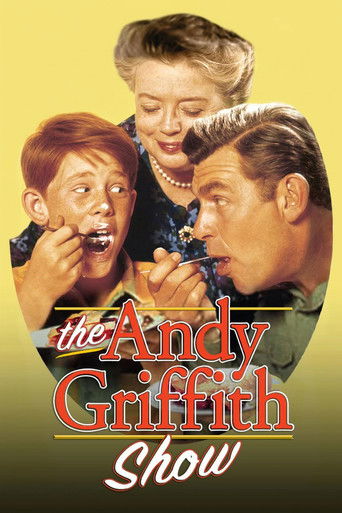
The Andy Griffith Show
1960 · TV series · 25 min episodes · 8 seasons
Created by Sheldon Leonard, Danny Thomas
Andy Taylor is the widowed sheriff of the fictional small community of Mayberry, North Carolina. His life is complicated by an inept, but well-meaning deputy, Barney Fife, a spinster aunt and housekeeper, Aunt Bee, and a precocious young son, Opie. Local ne'er-do-wells, bumbling pals, and temperamental girlfriends further complicate his life.
1 positive2 negative10 neutralfrom 13 commenters
Where to watch
No streaming data for this title.

13 comments on Hacker News
When/where I grew up (the United States), private planes were thought of as auto-un-aliving machines for Doctors and Dentists.
Boomers and older generations tended to think of them as part of rural life. E.g. farmers would sometimes put an airstrip on a spare field. There's an episode of Mayberry (The Andy Griffith Show) in which Aunt Bea gets her pilots license.
Let's not assume things about age. I'm old enough to remember holding the stupid rabbit ears. Never liked the Andy Griffith show though. I've also spent plenty of nights sitting a fire with a bunch of nomads in the middle of nowhere.
It's not fundamentally different from media today. Audiobooks, Twilight Zone, Black Mirror, Disney movies, true crime media, etc. People don't choose these for lack of alternatives. They're activities people like (excepting the parents forced to watch Frozen for the thousandth time).
Strong oral storytelling cultures also have many, many stories available to them. It's not as tedious as syndicated TV was. Two examples of collections that survive to the modern day are the Jewish bible (old testament) and the Christian New Testament, each of which has dozens of stories you're likely familiar with no matter your religious background. They're not communicated solely through everyone sitting down around a campfire, and not every recitation is in the formal verbiage of the source material. Often recitation is associated with a calendar (e.g. the sermon schedules ministers follow in modern churches, or performed only at particular seasonal festivals). Different recitations are often performed in new ways to adjust things to the audience (e.g. referencing recent events) or with slight changes to keep things fresh. So on and so forth. It's a much richer world than you may be aware of.
It's not boredom.
Says someone who didn't listen to an old timers 70th rendition of the same old story.
There are stories, and then there are stories. I grew up pre-Internet with limited books, no way to get more, 3 fuzzy TV channels on a good day, and nothing else.
People today don't even know what boredom is. You don't know what boredom is, until you've watched the same episode of The Andy Griffith Show 15 times, and still think it is entertaining.
Now go to pre-literate times. No TV. Yes, stories are fun.
But hearing the same story over and over 1000 times is only fun if you're so bored, any external stimulus is a blessing.
> I defy you to watch something like a Harold Lloyd movie involving a clock and not have sweaty palms or at least a mildly elevated ... emotional response of some sort.
Be that as it may, there's probably a day coming where only a handful of people on the planet even know who that is. Or who have even seen those films. And it'll be like that for most of our now-popular cultural artifacts.
How many newspaper stories from the 1700s have you read? The culture of those people died with them, and so too will it be with us.
Nobody is going to grow up to the Mighty Morphin Power Rangers anymore. Nobody is going to watch The Andy Griffith Show or see Last Action Hero. Even if it happens on a rare occasion, those numbers will pale in comparison to the number of Fortnite players. Or whatever's popular in the coming decades.
Our world is ephemeral and dies with us. We should enjoy our media while it is relevant to us, because that's what it's good for. Telling stories in a framework that speaks to us. In the future, it'll be a relic. An artifact of a time long ago, whose people are all dead, and whose lessons may need to come with a history book.
Apart from students of anthropology, the vast majority of future people will probably find our cultural works to be boring, irrelevant, and unworthy of their attention.
When I was a kid I was watching old reruns one day on a sick day and I saw a black and white episode of the Andy Griffith show where some rich fatcat from the city had a telephone in his car.
This was in black and white so I assume the episode was from the late 40's early 50's. I was really shocked that they had cell phones back then.
I watch good movies many times. I keep them on a loop while studying, or working. In college, I always had an Oliver Stone film on. At the time the duality between good, and evil, was always on my mind.
I must have watched Wall Street, and Platoon, a few hundred times.
I won't even estimate how many times I have watched Hictchcock films.
And the number of times I have watched Giant, or Citizen Cane, is embarrassing.
I have old movies playing all the time. I don't actually watch them, but I find them comforting in a weird way, esoecially black, and white films. I think the old, good movies take a part of my brain away from reality? I listen to them while working,
Yes--how can I find Platoon comforting? At that point in my life, Charlie Sheen's character, and his father's, reminded me there are moral people still left. Maybe only in fantasy though?
I get what you are saying though. I have The Andy Griffith show on all the time.
(fun murky fact, I think true, fact about the Andy Griffith show. They didn't bother to copyright the episodes. For years people could sell copies of the show without copyright concerns. I think it's copy written now though.)
Tax law 101: You cannot turn a transaction for a product into a pair of "gifts" between the parties. Where both parties are subject to contracts for services or payments, there are no gifts. Similarly, all "gifts" from employers to employees are considered non-gift income.
A car given to an employee as a "gift" is income to the employee and a taxable deduction by the employer. See Duesenberg (I'm trying to find the citation. I only remember that it involved an expensive car given to a senior employee in the early years of US income tax.)
And there is an Andy Griffith Show episode about this, about Aunt May having to pay income tax on prizes. The tax man was played by the guy who played the priest on MASH.
"While in Hollywood, Aunt Bee wins several new appliances on a TV quiz show, but when she returns home she loses her friends as a result. William Christopher plays the IRS agent who visits the Taylors to collect taxes on the prizes."
https://en.wikipedia.org/wiki/List_of_The_Andy_Griffith_Show_episodes
Beautiful, thanks for sharing. I'm quite inclined to agree with Mr. Faunce. On a semi-related note, while watching the 50s TV show "The Andy Griffith Show" you can notice that Andy has a print of the "Angelus" above his fireplace. Neat little touch, I thought.
Barber shops are traditionally, and presently, social gathering spots. Go to proper barber shops, not hair cutting chains, and you'll see people just sitting around hanging out talking.
https://en.wikipedia.org/wiki/Barber
>Barbershops are also places of social interaction and public discourse. In some instances, barbershops are also public forums. They are the locations of open debates, voicing public concerns, and engaging citizens in discussions about contemporary issues.
https://nmaahc.si.edu/blog/community-roles-barber-shop-and-beauty-salon
>Since the turn of the 19th century, beauty salons and barber shops have served as special places among African Americans. They have been places not only to get hair care services but locations where black people could be vulnerable and talk about issues of importance in the community. There were spaces where customers played games such as chess, cards, and dominoes, while having conversations about local gossip, politics, and community affairs.
And this isn't just an African American thing, it's a white thing, it's a Hispanic thing, it's an everyone thing.
Here's an article about how governments and non-profits are using salons and the like to help educate people about things, like getting help for domestic violence
https://www.governing.com/topics/mgmt/gov-barbershops-hair-salons-illinois.html
Recently in the medical drama New Amsterdam one of the main characters tried to set up a clinic in a low-income neighborhood barber shop (and it was likely taken directly from this real news https://www.nbcnews.com/health/heart-health/cutting-hair-blood-pressure-how-black-barbershops-can-save-lives-n855771 ).
Why do you think there is a line of films called Barbershop?
Or that on shows and movies of yesteryear, like The Andy Griffith Show, barbershops were hubs of the community where the men went (and still do) go to socialize?
https://www.thefader.com/2017/10/23/black-barbershops-photo-essay-interview
https://www.wnyc.org/story/fear-black-barbershop/
https://www.artofmanliness.com/articles/rediscovering-the-barbershop/
https://www.forbes.com/sites/bisnow/2017/07/06/barbershops-are-back-and-bucking-retail-trends/
https://www.ogleschool.edu/blog/resurgence-of-the-great-american-barbershop/
https://business.mindbody.io/education/blog/barber-shops-trend-will-not-fade-away
https://nearsay.com/c/456502/306271/why-barbershops-have-seen-a-resurgence-in-popularity
https://scandinaviantraveler.com/en/lifestyle/retro-barbershops-are-making-a-trendy-comeback
I agree with you as I've binged many a TV show, but Netflix's algorithm doesn't feel right, just yet, though from the article, it seems like overall the data isn't the driver, just a guide, and it definitely helps put me on the right direction to look. They seem to be focusing on the personal side of viewing, instead of just broad assumptions. And they even seem to be aware of the fact that we're often different personas depending on the day of the week or time of day (example: I've been watching the Andy Griffith Show at night to wind down for bed, and after a certain time at night, my Continue Watching list places Andy Griffith first ahead of the last TV show I watched), so while I think it could lead to a lot of tropes and send ups of the same basic show, at least according to the article and my own anecdota, they do seem to culturally realize that the data should lead to better personal viewing preferences.
Website overloaded... here's a cache.
http://webcache.googleusercontent.com/search?q=cache%3Ahttps%3A%2F%2Fweb.law.duke.edu%2Fcspd%2Fpublicdomainday%2F2017%2Fpre-1976
"What books would be entering the public domain if we had the pre-1978 copyright laws?"
Harper Lee, To Kill a Mockingbird John Updike, Rabbit, Run Joy Adamson, Born Free: A Lioness of Two Worlds William L. Shirer, The Rise and Fall of the Third Reich: A History of Nazi Germany Friedrich A. Hayek, The Constitution of Liberty Daniel Bell, The End of Ideology: On the Exhaustion of Political Ideas in the Fifties Arthur M. Schlesinger, Jr., The Politics of Upheaval: The Age of Roosevelt Dr. Seuss, Green Eggs and Ham and One Fish Two Fish Red Fish Blue Fish Scott O’Dell, Island of the Blue Dolphins John Barth, The Sot-Weed Factor Jean-Paul Sartre, Critique de la raison dialectique
"Consider the films and television shows from 1960 that would have become available this year."
The Time Machine Psycho Spartacus Exodus The Apartment Inherit the Wind The Magnificent Seven Ocean’s 11 The Alamo The Andy Griffith Show (first episodes) The Flintstones (first episodes)
Also listed: songs from 1960 (e.g. Elvis's "It's Now or Never"), and copyrighted scientific research from 1960 still behind paywalls (e.g. 1960 papers on the structure of hemoglobin and myoglobin).
Yes, I understand that. Every system has good folks and bad folks. But at some point, systems reach a state where the people trying to do good in the world are actually part of the problem, not part of the solution. At that point, the system itself is bad.
In the states it matters whether you torture people. Sure, bad folks get away with it, but if you get caught, you can be assured that the system will work against you. Same goes, mostly, for killing people without reason. Several public incidents over the last few years have shown this. I think the trick is to have video footage handy.
False arrest? Not so much. Police harassment? I'm sure there are cases brought to trial, but it's really rare. Taking your money when you didn't do anything? As we can see, that's already part of the system.
So over time, the system slips into being, for lack of a better word, "evil". More and more stuff that was out of bounds becomes normal. Sadly, I honestly think the reason for this is just officers trying to do a good job. Maybe cutting a corner here or there. No evil intent required.
This is going to sound weird, but if you'd like a good example of how the US traditionally felt about Law Enforcement, watch a few episodes of the old TV show "The Andy Griffith Show" with Don Knotts in there. Perhaps follow that up with a couple of episodes of "Dragnet"
These are highly-sanitized 60s shows, but it's clear that for a population who had most men return from armed combat in WWII or Vietnam, over-zealous macho policemen were a cause of great amusement. When real crimes did occur, the cops were considered just part of the population, perhaps with more analytical skills and with a job most people wouldn't like, but not that different from anybody else.
I believe that attitude started turning in the mid 70s with the Dirty Harry movies. Crime was considered a terrible problem, and the courts were considered to be advocating letting criminals rampage. Then we had the organized crime mania. Then drugs. With each public fear-fest, legislators gave the police more and more power -- just to use against the terrible threat of the current day, of course. It didn't work out that way. Now we have cops using organized crime and drug laws against some yokel growing 3 pot plants in his basement.
The author blames the modern sitcom's remoteness from working and lower-middle class concerns with their creators' immunity from the recent recession. In place of everyday situations, we have shows set in "soundstages and writers’ rooms," the haunts of the out-of-touch in New York and LA. So you wind up with a show with this sort of genesis:
Our creator was once a prominent writer and performer on a comedy sketch show, which aired live every Saturday night from an NBC studio in New York. It ran for 90 minutes. After their time on the show came to an end, our creator decided to pitch a sitcom based on their experiences there. The lead character is the head writer on a comedy show, similarly produced in New York. They must balance their work in the writers' room and their personal life, though this turns out to be difficult. A pilot is made, and our creator plays the lead.
Modern viewers may recognize this as 30 Rock, but it is in fact The Dick Van Dyke Show. It is based not on SNL but on a direct ancestor, Your Show of Shows. Carl Reiner's performance in the pilot may have dissuaded executives from casting him in the commissioned series (hence Dick Van Dyke), while Tina Fey remained the lead in her own version. But otherwise the parallel rings a sight near perfect.
The author stumbles over himself insisting, however, that while The Dick Van Dyke Show did not give vent to working and lower-middle class concerns, it did at least feature characters who "had careers" and were definitely of a class. As if the same were not true of shows like 30 Rock (which is at times obsessed with class difference), or of Parks and Recreation and The Office. These do not depict realistic workspaces, but why place that demand on a sitcom? And why not place the same demand on, yes, The Honeymooners, Taxi, The Mary Tyler Moore Show, I Love Lucy, The Beverly Hillbillies, Green Acres, The Andy Griffith Show, and on and on. In all cases the demands of the form—and in almost all cases the demands of overly long tenures—stretched the premises and the rare attempts at realism very thin.
I think you can make an argument that the most popular comedies available right now—whether on TV or at the movie theaters—are unflinchingly escapist. (Though, as the article notes in its discussion of an episode each of Horace and Pete and Girls, this has not gone unnoticed or unremarked by all of the shows' writers. Still, these two are not the most popular things around by any stretch.) Similarly, Fred Astaire and Ginger Rogers were seen to traipse across exclusive resorts, high-class stages, ballroom floors, and Venice, in elaborate dresses and a "top hat, white tie, and tails"—all during the Great Depression. Sometimes hard circumstances produce a public clamoring for comment; sometimes the public just wants a reprieve.