 Hacker Cinema
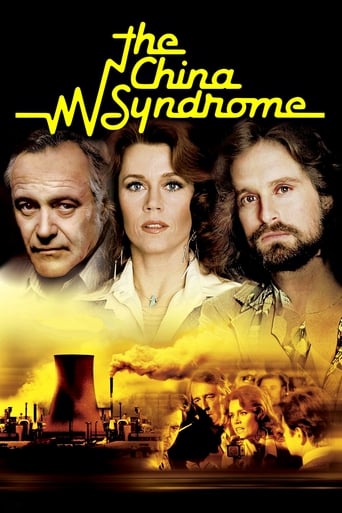
The China Syndrome
1979 · Film · 122 min
Directed by James Bridges
While doing a series of reports on alternative energy sources, opportunistic reporter Kimberly Wells witnesses an accident at a nuclear power plant. Wells is determined to publicize the incident, but soon finds herself entangled in a sinister conspiracy to keep the full impact of the incident a secret.
4 positive25 neutralfrom 29 commenters
Where to watch
No streaming data for this title.


31 comments on Hacker News
1. Lot of nuclear fission products from Chernobyl catastrophe have already decay ed away. There was mapping done for the long term plan of shrinking the Chernobyl exclusion zone.
"In the long term, the Ukrainian radiation protection authorities can use the BfS measurement data as a planning basis for reassessing the size of the exclusion zone. The data can be used to assess which areas of the exclusion zone could be reopened for use."
https://www.bfs.de/SharedDocs/Pressemitteilungen/BfS/EN/2022/006.html
https://www.bbc.com/news/science-environment-47227767
The Russian invasion of Ukraine has halted the reassessment of Chernobyl exclusion zone, Ukraine has currently much bigger problems than Chernobyl. One could also say that, the decline of nuclear power in Europe because of Chernobyl accident caused much stronger dependency of Europe on Russian fossil fuels and indirectly supported the Russian invasion of Ukraine by bringing a lot of European money to Russia.
2. They got the currency symbol wrong in the cleantechnica article. "First estimates included costs as high as ¥1 trillion (US$13 billion), as cited by the Japanese Prime Minister at the time, Yoshihiko Noda "
"In 2016, Japan's Ministry of Economy, Trade and Industry estimated the total cost of dealing with the Fukushima disaster at ¥21.5 trillion (US$187 billion)"
https://en.wikipedia.org/wiki/Fukushima_nuclear_accident_cleanup
Lot of missing nuclear electricity production after 2011 in Japan was replaced with electricity production from imported LNG. Because of impacts Iran war on LNG gas delivery Japan is now rapidly moving to restart nuclear power plants.
https://www.politico.com/news/2026/04/18/japan-nuclear-fukushima-energy-00816474
3. Three Mile Island was very costly destruction of power generation asset without impacts on the public health, but it caused mass panic amplified by the simultaneous release of the The China Syndrome movie.
https://en.wikipedia.org/wiki/Three_Mile_Island_accident#Activism_and_legal_action
Other industries also don't pay insurance representing the true potential cost of a large disasters.
"US law requires payment of 8 cents per barrel of oil to the Oil Spill Liability Trust Fund for all oil imported or produced. In exchange for the payment, operators of offshore oil platforms, among others, are limited in liability to $75 million for damages, which can be paid by the fund, but are not indemnified from the cost of cleanup. As of 2010, before payouts related to the Deepwater Horizon drilling rig explosion, the fund stood at $1.6 billion.
The hydroelectric industry is not generally held financially liable for catastrophic incidents such as dam failure or resultant flooding. For example, dam operators were not held liable for the 1977 failure of the Teton Dam in Idaho that caused approximately $500 million in property damage."
https://en.wikipedia.org/wiki/Price%E2%80%93Anderson_Nuclear_Industries_Indemnity_Act#Compared_to_other_industries
It was a drama TV show, not a documentary. Whey compare it with TV shows, like Simpsons or movies like The China Syndrome, it was accurate.
"according to INSAG-1, the main cause of the accident was the operators' actions, but according to INSAG-7, the main cause was the reactor's design."
https://en.wikipedia.org/wiki/Investigations_into_the_Chernobyl_disaster
How do you measure health effects of different sources of electric energy? If you compare deaths per TWh, then nuclear power is much, much safer then coal energy.
https://ourworldindata.org/grapher/death-rates-from-energy-production-per-twh
Nuclear power has problem with public perception.
One source of this media. Media loves to write and talk about nuclear incidents and really blow this out of proportion to real health hazards. For decades, newsrooms have operated under the premise that 'if it bleeds it leads'. If something happen infrequently and could have big impact on many people it makes more interesting news story.
Flight industry has similar public perception problem. Transport statistic shows that travel by airplane is safer the car, yet much more people fear flying then driving. A deadly airplane crash is reported in all newspapers, the daily deaths from the car crashes are not even mentioned.
Popular tv-series "The Simpsons" (three eyed fish, green radioactive goo), movies Spiderman (if I get bitten by a radioactive spider), Hulk (gamma rays make you super strong), China Syndrome, the german movie "Die Volke", etc., doesn't help much with education about nuclear power.
Deaths from burning coal don't get much attention in the media, because the happen continuously each year, over decades.
https://www.thelancet.com/journals/lanres/article/PIIS2213-2600(16)30198-9/abstract
It happens. The Jaws movies brought a lot of shark panic to public consciousness despite how utterly rare shark attacks are. The China Syndrome's effect on the nuclear industry given it's timing with Three Mile island.
Probably more that I'm not aware of but it's common enough phenomenon.
The China Syndrome was a great movie! Looking forward to a revival of this great genre.
Maybe I was bored, and my mind wandered into something fanciful. No harm no foul, except it seems to have perturbed you. So I like to shoot short films and fun things with friends, and we're always chatting about random things from life that could be spun into a short story. It's habit. Never seemed to have bother anyone till now.
Are you the type that gets irritated when people call out "great name for a band" during normal conversations. Some people just catch onto things in conversation and the mind takes its own spin on it. It can make for great conversations. Unless you're just against having fun.
Edit: never mind the plot of China Syndrome was an industrial accident, yet a very compelling plot. Or "Sully", or the one where Denzel inverts the plane to avoid tragedy, or any of the other numerous plots involving industrial accidents like CHUD!!!
Huh? I see one article about Twitter on the front page right now and one article that might be tangentially related. New is getting spammed with that stuff but not a lot is floating to the top. It’s like that quote from the movie The China Syndrome: “the system worked”
> which obviously hits closer to home.
Maybe, but as I said I've watched it in Italy, as Italian, and almost everyone was watching it that night.
Also, I was merely pointing out that before Threads there was this other movie that pioneered the idea of the atomic holocaust.
There's also China Syndrome from 1979, but even though I think it's a better movie than The day after, the premise is different and the threat is the atomic energy industry, not warheads.
The accident at Three Mile Island and the film "China Syndrome" turned the public against it in America. The prejudice still lingers. I was working as a reactor tech on a nuclear submarine shortly after and decide before I got out that there was no future in nuclear. I became a computer programmer instead. Alvin Toffler's book "The Third Wave" convinced me to do this.
I can see how OP means just that. Nuclear construction went from skyrocketing to free fall after Ronda’s starring in The China Syndrome led her to become an anti-nuclear hyperevangelist. People listened to her and the Three Mile Island incident shortly thereafter could plausibly be said to have been blown way out of proportion with her amplifying voice.
It’s not unreasonable to think that if that movie and Fonda’s anti-nuclear bent never happened, nuclear would have become so profligate that nothing Putin did would have given him a hold over the Western energy sector.
>> Most documentaries have always been very low on information density.
Except everything done by the BBC. I am so sick of slow-paced american docs that inevitably swing into conspiracy rants and crying interviews. If there is a BBC doc availible on a subject, that is the one i will risk my hour of free time watching.
I too watched the 3 Mile Island netflix thing. The only fact i trust is the coincidence of The China Syndrome hitting theaters the week prior the accident, and only after i verified through imdb.
Old people vote more. Old hippies vote harder. Hippies are impressionable and watched a lot of Hollywood movies like:
https://en.wikipedia.org/wiki/The_China_Syndrome
And more recently:
https://en.wikipedia.org/wiki/Chernobyl_(miniseries)
Jane Fonda is a sexy grandma who still got it, she stopped the war in Vietnam and got us in shape. With our powers combined, we are Captain Planet? We were elected to lead not to read!
Here is an additional thought: if you dedicate an entire party completely and totally to solving one problem, what happens to them if the problem actually gets solved?
Seems like a single issue politician is exclusively incentivized to shift blame in order to get re-elected rather than, you know, do anything constructive.
France is something like 70%+ nuclear powered, they got it all sorted for the rest of the century. Not much for the greenie weenies to do.
I long thought that the simultaneous release of "The China Syndrome" and TMI led to public fear of nuclear power (TMI happened two weeks after the movie debuted!). But apparently people have studied this and these disasters really didn't have a major effect -- public sentiment generally stayed the same around the time of the accidents[1]
[1] - This link only covers Chernobyl and Fukushima: https://www.ans.org/news/article-321/new-polls-show-substantial-support-for-nuclear-energy/
"Many countries see nuclear power as the only real opportunity, at least in this century, to reduce the dependence of their economic well-being on foreign oil-an energy source of uncertain availability, growing price, and ultimate exhaustion. The U.S., by contrast, has a major domestic energy source- coal-but its use is not without penalties, and our plans also call for the use of nuclear power as a share in our energy production." Jimmy Carter April 7, 1977
Wouldn't exactly call that "killing off nuclear power" - Three Mile Island and the movie The China Syndrome did that. The movie was released ~2 weeks before the accident on March 28, 1979.
Not on that list is the Three Mile Island accident that happened almost simultaneously with the release of the movie "The China Syndrome", seven years before Chernobyl. In the US at least, I suspect that was very influential.
> clean shift to a predominantly nuclear grid started closing in the 1980s.
Our nuclear future was toast by April 1979 because of an extremely unfortunate coincidence:
March 16, 1979: Premiere of the film The China Syndrome - the plot to which involves a near-miss at a nuclear power plant that could have "render[ed] an area the size of the state of Pennsylvania uninhabitable."
March 28, 1979: Three Mile Island power plant in Pennsylvania has a major meltdown that destroys one of its two units and releases a small amount of radioactive material into the surrounding environment.
If you are in love ad your beloved expects to have electricity, take them to see “The China syndrome” and any number of documentaries on how power generation is damaging the planet ;)
How much of the resistance to nuclear power in the US was due to the very unfortunately combination of the Three Mile Island incident and the release of the movie The China Syndrome both happening within two weeks of each other? Add in the nuclear arms race of the time and the emotional aspect for anything nuclear becomes even greater.
Nuclear power:
https://www.nytimes.com/1979/09/25/archives/haydens-start-a-52city-nuclear-protest-80-endorsement-withheld.html
After the movie the China Syndrome and the Three Mile Island accident, no one wanted nuclear power.
Thanks. That's more or less what I expected.
"China Syndrome" was an influential film. But until Fukushima, I don't believe that we saw melted core "lava" reach groundwater.
I also find it interesting that the "China Syndrome"[2] speculation is pretty much completely debunked.
That term was never meant to be taken literally, in the movie where it originates it is presented as a fanciful exaggeration meant to emphasize the seriousness of the risk. The actual plot concerns the risk of groundwater contamination following a nuclear accident, not a planet-piercing tunnel.
> melted core material would just keep melting into the ground until it "got to china"
aka "China Syndrome", just like the 1979 film:
https://en.wikipedia.org/wiki/Nuclear_meltdown#China_syndrome
> In the late 1970s and 1980s, Americans fretted a lot about something called “The China Syndrome.” The idea was that in the case of a nuclear reactor meltdown, the fiery radioactive core would burn a hole through the earth and come out somewhere north of Peking
Good grief, no. It was a colorful metaphor in the industry for explaining the self-sustaining problem with meltdowns: the fuel was very dense and would naturally flow and pool together, remaining a cohesive blob even as it escaped its containiment. Other runaway reactions naturally disperse and explode, meltdowns don't. So the failure mode analysis needs to worry about what happens long after it leaves the building and hits bedrock.
It was also the title of a pretty good movie, FWIW.
It appears to be based on a quote from the 1979 film "The China Syndrome".
https://en.wikipedia.org/wiki/Nuclear_meltdown#China_syndrome
> Please saw the movie the China syndrome and then 3 mile island happened.
Yeah, I'm surprised by how little attention this gets. A significant accident occurred that wasn't supposed to, and subsequent investigations showed that there were significant lapses, including from regulators. People can't be experts in nuclear plant design, construct, regulation, inspections, etc., so they need to be able to rely on the authorities in charge. When that trust is betrayed, it naturally has consequences. You can't just say to people, "Well, yeah, last time we told you to trust us we were completely wrong, but this time will be different!"
When problems happen that aren't supposed to happen, people are naturally going to be overly cautious and skeptical of future assurances. That's not an entirely unreasonable reaction.
What do you mean "politicization"? Please saw the movie the China syndrome and then 3 mile island happened. Then people were very afraid. These were real possibilities. Does anyone want to live near a nuclear power plant? Do you? I sure as hell would not. How can you twist fear of a disaster in "politicization"?
You are also looking thru the lens of our current situation. Very little was being discussed about the risks of global warming and greenhouse gasses back in the heyday of nuclear power, i.e. the 1970's. The last nuclear power plant in the US was built in the 1970s, which was when the last major accident that happened in the US (3 mile Island). That's not even considering Chernobyl.
"Remind me again why we can't have nuclear power?"
Ignorance and fear.
The Three Mile Island accident (1979) took place less than two weeks after the release of the movie The China Syndrome, the plot of which featured a coverup of a major nuclear accident. Activists seized the opportunity, and then-President Jimmy Carter (who had personal experience with nuclear engineering) failed to properly rein in public fears or beliefs about the accident (https://news.google.com/newspapers?id=sM1RAAAAIBAJ&sjid=W20DAAAAIBAJ&pg=7107%2C772506). Despite a tenuous-at-best link between the accident and human health (https://en.wikipedia.org/wiki/Three_Mile_Island_accident#Health_effects_and_epidemiology), for the longest time it was considered a "disaster". Growth of the nuclear industry in the United States took a major hit at this point.
Subsequent films such as Silkwood and general Cold War nuclear war fears did little to change the opinion of the layman that nuclear == bad.
The 1986 Chernobyl accident further reinforced these beliefs. People focused on the aftermath of the explosion and the Soviet coverup and generally ignored the underlying causes such as the antiquated design of the reactor and operator error. This incident had a major negative effect on the nuclear industry.
The 2011 Fukushima accident was an trainwreck of corporate negligence and insufficient government oversight. The facility, which had been operating since 1971, performed as intended when the earthquake struck but the subsequent tsunami breached the insufficient (identified as such since 2008) seawall and took out the generators powering the shutdown.
All these incidents demonstrate cases where negligence or antiquated design can lead to disaster. But few take a look at the successes. France, for instance, is a major user of nuclear energy and has avoided catastrophe (https://en.wikipedia.org/wiki/Nuclear_power_in_France#Accidents_and_incidents).
Fear of nuclear power is akin to "reefer madness" nonsense in the 1940s and 1950s.
> the "China Syndrome" hypothesis
Having seen the movie, suspect that a lot of people saw what they wanted to see, and not what the movie actually said. I'm fairly certain the comment about the core melting "all the way to China" was a joke/hyperbole.
Deer kill more people than sharks, but one is more fearsome. Jaws and The China Syndrome have served the same purpose. It wouldn't hurt for some folks to start making some pro-nuclear movies.
Think about the best military movies you've seen. Do they "dumb down" the technology? In my experience, no.
It's accurately portrayed. At the same time, it's not the center of the story. That is still the human component.
They spent a lot of time/effort in "Saving Private Ryan" getting the sound of the M1 clip ejection right. But nobody ever comments on or explains this in the movie.
Veterans watching the movie said they "got that right".
(I'm not saying that "Saving Private Ryan" doesn't bend reality in some ways for the sake of the story. But they didn't... have Rambo take out a platoon with his bowie knife.)
("Band of Brothers" is another good choice -- the mini-series precursor to "Saving Private Ryan".
Then there are, for example, some of the older, somewhat spartan but impactfully understated British films, whose titles I can't think of right now. It was actually films like these that I was thinking more of, when I started writing this, before those contemporary items came to mind.)
If done properly, such portrayals can convey a quiet, authoritative air that is actually more convincing than some of the "explained"... "exaggeration" and/or simplification that exists in many movies including some big budget production.
Aiding this might be spending some time actually explaining these things, in some depth, to the actors, so that they can portray them with some understanding, rather than simply parroting the script.
Of course, you might have to convince/sell a potential purchaser/producer on this idea, to help the technical content go down.
P.S. I should probably shut up, now.
But, I think there is something to an accurate portrayal that is the richer for not being too self-conscious (on screen).
P.P.S. A few random films, with different topics, where this might apply, that I'm happening to think of upon this unplanned attempt to come up with some relevant examples.
"China Syndrome" (although I'm a bit hesitant, having only seen this with commercials and while somewhat distracted)
"Traffic" -- the older, European mini-series version, from the 1980s
Watch "Eat Drink Man Woman" and see how much of a feel for 90's (upper classs-ish) Taipei you walk away with. (Although, admittedly, as I understand it Ang Lee brings a certain outside or cross-cultural perspective to it from his having spent significant time abroad.)
There are probably many better examples, but that's what my tired mind can dredge up, at the moment. And I think this represents a variety of things where authenticity enhances rather than confuses or degrades.
P.P.P.S. See P.S., above. ;-)
What's funny is that they even get Three Mile Island wrong, everyone regularly confuses it with a movie The China Syndrome that was released around the same time.